The Department of War's publication of the fourth tranche of records under the Presidential Unsealing and Reporting System for UAP Encounters (PURSUE) uncovers a structural deficit in civilian analytical frameworks. Public analysis consistently misinterprets raw tactical intelligence as anomalous propulsion or extraterrestrial technology due to a fundamental misunderstanding of sensor architecture and military reporting mechanisms. The true value of the 40 newly declassified files—spanning 14 documents, 19 videos, four audio files, and three images—lies not in the confirmation of exotic physics, but in what they reveal about the vulnerabilities of sovereign airspace instrumentation and human observation under high-stress operational conditions.
Analyzing these records requires dismantling the sensationalism and applying rigorous systematic classification to the data provided by the All-domain Anomaly Resolution Office (AARO). This analysis isolates the operational variables, mechanics of sensor errors, and structural protocols governing these newly released military incidents. If you enjoyed this article, you should check out: this related article.
The Tri-Focal Classification of Airspace Intrusions
To accurately evaluate the PURSUE Release 04 data, incidents must be filtered through a strict taxonomy rather than treating them as a monolithic mystery. The data splits into three distinct operational buckets:
- Instrumental Artifacts: Events where the perceived anomaly is a product of the sensor mechanism itself rather than an external physical object.
- Sovereign Reconnaissance Penetrations: Unfractionated, low-signature physical platforms designed to operate near or within controlled airspace for intelligence collection.
- Unresolved Anomalous Signatures: High-threshold events where data parity is insufficient to establish a definitive physical or mechanical cause.
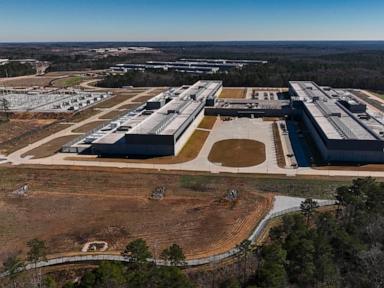
The September 2015 incident over the Pantex nuclear weapons facility near Amarillo, Texas, demonstrates the operational friction between the second and third categories. According to the declassified Energy Department file, a localized lock-down occurred after two security officers tracked an object via binoculars for up to two minutes. The officers explicitly stated they could not identify a propulsion system before the object tracked north offsite. For another look on this development, check out the latest coverage from Ars Technica.
The immediate public hypothesis assumes an exotic propulsion system. A rigorous structural analysis presents an entirely different mechanism: a lighter-than-air or low-acoustic unmanned aerial system (UAS) operating at an altitude where standard combustion signatures are absent. The lack of an observable propulsion system is a known design characteristic of modern battery-powered or glider-based reconnaissance platforms, not an automatic indicator of non-terrestrial technology.
The Mechanics of Sensor Distortion and Parallax
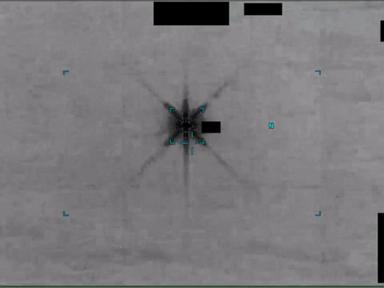
A recurring bottleneck in analyzing declassified military videos is the over-reliance on infrared (IR) sensor footage without accounting for the mathematics of the imaging platform. The fourth batch features a 2025 video captured by a military sensor under the Indo-Pacific Command, tracking an area of contrast resembling a six-pointed star over the Yellow Sea.
The geometry of a six-pointed star in an infrared tracking system points directly to internal optics rather than the physical structure of the target. When an intense, concentrated heat source or highly reflective object interacts with the internal aperture mechanism of a military-grade forward-looking infrared (FLIR) or electro-optical system, it frequently creates a diffraction pattern or lens flare. This phenomenon is amplified by the internal tracking loops trying to maintain contrast lock on a distant object.
A similar diagnostic applies to the range fouler debrief from a 2020 Navy encounter over the Atlantic Ocean, describing a dark, maroonish object roughly 12 to 15 feet in height. When military aircrews execute high-velocity maneuvers while tracking a slower-moving target, the human eye and onboard sensors are subjected to a powerful optical illusion known as the parallax effect.
$$\text{Apparent Velocity} = \frac{v_{\text{observer}} \cdot d_{\text{target}}}{d_{\text{background}}}$$
If the observer is traveling at Mach 1.2 and the target is a drifting aerodynamic balloon traveling at 15 knots, the rapid angular change relative to the background gives the false mathematical impression that the target is moving at extreme, non-aerodynamic velocities. The data points to a physical object, but its seemingly anomalous performance characteristics disappear when the observer's motion vector is subtracted from the telemetry.
Historical Baselines and the Nuclear Facility Correlation
The inclusion of a 1949 transcript from a Los Alamos conference introduces a vital historical baseline for evaluating modern UAP data. Top physicists from the Manhattan Project attempted to isolate the cause of "green fireballs" observed over the nuclear laboratory. The primary hypothesis centered on an undocumented meteoric phenomenon, though astronomers noted the trajectories deviated from typical meteorite drops.
The persistent correlation between UAP reports and nuclear infrastructure—stretching from Los Alamos in 1949 to Pantex in 2015—is frequently weaponized by speculative theorists. Viewed through a cold strategic lens, this correlation is driven by two highly practical variables:
- Sensor Density: Nuclear fabrication and storage facilities feature the highest concentration of localized radar, optical, and human surveillance assets on the planet. An anomaly that goes completely unnoticed over an open agricultural area is guaranteed to be detected, logged, and investigated over a nuclear exclusion zone.
- Adversarial Targeting: Foreign intelligence services prioritize these specific geographic coordinates for intelligence, surveillance, and reconnaissance (ISR) operations. The concentration of reports is a structural footprint of targeted espionage, not a cosmic coincidence.
The First-Hand Observer Fallacy
The most compelling narrative elements of Release 04 are the vivid testimonies of military aviators. One pilot, with 28 years of service across the Air Force and Navy, documented a 2019 encounter over the Eastern U.S., describing an object with flight characteristics "unlike anything I had seen." He tracked the high-speed object for 10 to 15 seconds before activating recording equipment.
Human testimony, even from highly trained military aviators, is a deeply flawed foundation for scientific analysis. Pilots are trained to execute split-second tactical decisions based on relative motion, threat profiles, and rapid visual scanning. They are not trained laboratory physicists capable of calculating the precise size, distance, or velocity of an uncooperative target without sensor verification.
When a pilot encounters an unfamiliar platform—such as a proprietary electronic warfare drone or a highly specialized radar-reflection balloon—their internal cognitive database fails to find a match. This cognitive gap translates into an assessment of "anomalous behavior." The second limitation is the human visual system's inability to calculate the true scale of an object in a featureless sky; a small balloon close to the cockpit is frequently misidentified as a massive craft moving at hypersonic speeds miles away.
Strategic Operational Recommendations for Airspace Management
The primary takeaway from the PURSUE disclosures is that the United States government remains structurally unequipped to instantly differentiate between sensor anomalies, foreign espionage platforms, and domestic hardware. The government's official stance—stating these are unresolved cases where they are unable to make a definitive determination—is a candid admission of an intelligence capability gap.
To bridge this gap, defense infrastructure must move away from public document dumps and implement a cold, data-driven modernization protocol:
- Sensor Fusion Standardization: Aircrews must stop relying on single-source IR or visual confirmation. Target validation protocols must require simultaneous cross-spectrum verification across active radar, passive radio frequency (RF) tracking, and multi-band infrared.
- Automated Aperture Calibration: Onboard software must be updated to automatically detect and flag internal optical artifacts, such as the diffraction spikes seen in the Yellow Sea footage, removing human error from the initial threat assessment.
- Declassification Velocity Integration: Rather than processing historical records on a multi-decade delay, low-level airspace intrusions must be analyzed by automated machine-learning models in real time to isolate known adversarial drone signatures from truly unclassifiable phenomena.
The current PURSUE releases are a valuable exercise in public transparency, but they ultimately confirm that the real threat to national security is not the presence of unexplained technology. The threat is an analytical system that cannot reliably identify known objects within its own borders.
For a deeper look into the official release details and a breakdown of the specific declassification protocols executed under this transparency drive, you can review this Pentagon UFO Files Broadcast. This video delivers direct journalistic reporting on the scope of the declassified files and the administrative mandates driving the ongoing PURSUE disclosures.