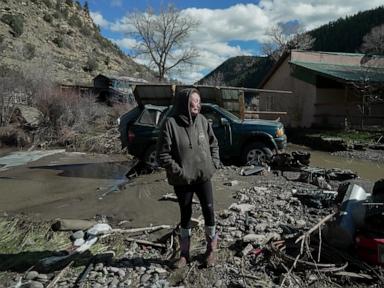
When catastrophic flooding hits an uninsured homeowner in Colorado, the immediate physical devastation masks a secondary, slower-moving financial collapse: the complete absence of a capital recovery mechanism. A standard residential crisis operates on a predictable risk-transfer model where insurance carriers absorb tail-end losses in exchange for predictable premiums. Remove the policy from that equation, and the homeowner becomes a sole-proprietor risk bearer facing an asymmetrical loss curve where liabilities instantly exceed liquid net worth.
To understand why recovery stalls indefinitely for uninsured residents in high-risk flood zones, one must look past the emotional narrative of ruined drywall and examine the structural mechanics of disaster finance. The gap between survival and a return to baseline normalcy is governed by three systemic bottlenecks: the bifurcation of standard homeowners insurance, the strict rationing of federal disaster assistance, and the compounding physical liabilities of water-damaged structures.
The Structural Bifurcation of Property Risk
The primary driver of uninsured flood loss in states like Colorado is a foundational misunderstanding of residential risk transfer. Standard homeowners insurance policies—specifically the ISO HO-3 form used across the majority of the American market—operate on an "all-risk" basis for the dwelling, meaning all perils are covered unless explicitly excluded. Surface water flooding is universally excluded.
This exclusion creates an artificial bifurcation of risk:
- Internal Water Perils: Burst pipes, appliance malfunctions, and roof leaks caused by wind-driven rain fall under standard coverage. The insurer prices this risk based on localized plumbing failure rates and roof age.
- External Surface Water: Rising rivers, flash flood runoff, and mudflows resulting from saturated terrain are classified as catastrophic, correlated risks. Private insurers historically refused to underwrite this peril because flood losses are geographically concentrated; an entire valley floods simultaneously, violating the law of large numbers that keeps insurance pools solvent.
Because flood coverage requires a separate contract—traditionally through the National Flood Insurance Program (NFIP) or a nascent private flood market—homeowners without federally backed mortgages often drop or bypass the policy. Once a mortgage is paid off, the lender's mandate for coverage disappears. In regions like Colorado, where arid climates and dramatic elevation changes create a deceptive sense of security, homeowners frequently miscalculate the probability of low-frequency, high-severity hydrological events. Post-wildfire burn scars further alter soil hydrology, turning routine summer convective storms into high-velocity debris flows in areas well outside traditional 100-year FEMA floodplains.
The Mechanics of Water Intrusion and Asset Decay
When an uninsured structure takes on water, the timeline of physical degradation dictates the financial trajectory. Unlike fire, which destroys assets immediately and creates a static loss profile, water initiates an ongoing biological and structural decay curve. Every 24-hour delay in remediation multiplies the final capital expenditure required to restore habitability.
The destruction occurs across three distinct phases:
- Hydrostatic and Hydrodynamic Load: Moving water exerts lateral pressure against foundation walls. If the water level outside a basement or crawlspace rises significantly higher than the interior air space, hydrostatic pressure can bow or fracture concrete block and poured foundations. Once structural integrity is compromised, the cost of repair shifts from cosmetic restoration to civil engineering.
- Capillary Action and Wicking: Porous building materials—drywall, fiberglass insulation, oriented strand board (OSB), and framing lumber—absorb water upward against gravity. Even two inches of standing water on a concrete slab will wick 12 to 24 inches up standard gypsum board within hours.
- Microbial Colonization: Within 48 to 72 hours in ambient temperatures, trapped moisture triggers mold amplification. At this threshold, materials that could have been dried in place must be demolished, bagged, and disposed of as hazardous waste, increasing labor and material costs exponentially.
For an insured homeowner, an adjuster authorizes an immediate mitigation crew to deploy industrial dehumidifiers, air movers, and antimicrobial treatments, halting the decay curve. An uninsured homeowner faces a capital allocation paralysis. Lacking immediate liquidity to hire commercial mitigation teams, they rely on manual labor and consumer-grade equipment. While they bucket out water, moisture remains trapped behind baseboards and inside wall cavities, guaranteeing structural rot and toxic air quality months later.
The Illusion of the Federal Safety Net
A persistent behavioral bias among uninsured property owners is the assumption that federal disaster declarations trigger comprehensive government bailouts. In reality, the federal disaster apparatus is designed to prevent total destitution, not to make property owners whole.
When a flood event reaches a threshold that overwhelms local and state capacities, the Governor may request a Presidential Disaster Declaration. If granted, this unlocks the Federal Emergency Management Agency (FEMA) Individual Assistance (IA) program. However, the mechanics of FEMA IA are fundamentally misunderstood:
- Habitablity vs. Restoration: FEMA grants are strictly capped—adjusted annually for inflation, hovering around the low $40,000 range for housing repair—and are legally restricted to making a home "safe, sanitary, and functional." The agency will fund the repair of a furnace, a water heater, or a single functional bathroom. It will not fund the replacement of ruined hardwood floors, cabinetry, finished basements, or lost personal equity.
- The Average Payout Reality: Historically, the average FEMA Individual Assistance payout after a major flood event falls between $5,000 and $10,000. Against a $150,000 structural gut-rehab, a $7,000 grant is statistically negligible.
- The SBA Debt Trap: The primary engine of federal disaster recovery is not a grant, but a low-interest disaster loan administered by the Small Business Administration (SBA). Despite the name, the SBA is the largest source of federal recovery funds for private homeowners. However, an SBA loan is debt, not indemnification. Applicants must pass credit checks and demonstrate repayment ability. For a retiree on a fixed income or a household already carrying high debt-to-income ratios, taking on a $100,000 30-year note to rebuild an asset they previously owned free and clear is financially unviable.
The Equity Trap and Distressed Asset Liquidation
When insurance is absent and federal aid covers less than ten percent of the loss, the uninsured homeowner enters an equity trap. The physical structure transitions overnight from an appreciating residential asset into a distressed liability carrying negative utility.
Attempting to exit the situation via the real estate market reveals the harsh pricing efficiency of distressed property buyers. Conventional mortgage lenders will not underwrite a loan on a home with active water damage, missing drywall, or compromised mechanical systems because the collateral fails minimum habitability standards. This locks out 80% to 90% of traditional retail homebuyers.
The remaining buyer pool consists entirely of cash investors and distressed-asset speculators. These buyers price the property using a rigid distressed valuation formula:
- After-Repair Value (ARV): The estimated market value of the home once fully restored to neighborhood standards.
- Minus Hard Remediation Costs: The contractor rates for demolition, mold remediation, electrical rewiring, HVAC replacement, and interior finishing.
- Minus Holding and Transaction Costs: Property taxes, utilities, insurance during construction, and closing fees.
- Minus Risk Margin: Typically 20% to 30% of the ARV to compensate the investor for unknown structural defects hidden behind the walls and the illiquidity of the asset.
In a moderate-value market, subtracting these variables frequently drives the cash offer down to land value minus demolition costs. Selling locks in a catastrophic loss of generational wealth. Staying means living in a semi-condemned shell, executing piecemeal repairs whenever disposable cash becomes available—a process that routinely stretches from five to ten years.
The Psychological and Operational Toll of Piecemeal Recovery
The phrase "returning to normal" assumes a binary transition: the disaster ends, and life resumes. For the uninsured, recovery is a chronic operational burden that degrades both financial stability and cognitive bandwidth.
Managing a major residential rebuild without a general contractor—a necessity when cash is scarce—forces a layperson to act as a construction project manager, procurement officer, and compliance inspector. They must navigate municipal building codes that often trigger "substantial damage" rules. Under NFIP and local floodplain management ordinances, if the cost to repair a damaged structure equals or exceeds 50% of its pre-damage market value, the entire structure must be brought into compliance with current flood elevation standards.
For an uninsured homeowner, triggering the 50% rule is a death sentence for the structure. Elevating an existing slab-on-grade or basement home above the Base Flood Elevation (BFE) requires hydraulic jacking, new foundation pilings, and disconnected utilities—an engineering feat that routinely costs $80,000 to $150,000 before a single sheet of interior drywall is hung. Without Increased Cost of Compliance (ICC) coverage—a rider included in standard NFIP policies that provides up to $30,000 specifically for elevation or demolition—the homeowner is legally barred from rebuilding the home as it stood.
Limitations of Community and Non-Profit Interventions
In the absence of institutional capital, local communities often attempt to bridge the gap through crowdfunding platforms, faith-based volunteer organizations, and municipal relief funds. While these mechanisms provide critical short-term stabilization, they suffer from severe scalability limitations.
Crowdfunding follows a power-law distribution driven by social network reach and media virality rather than actual financial need. A single compelling narrative featured on regional television might raise $50,000, while an identical loss three streets away raises $1,200. Non-profit groups, such as Voluntary Organizations Active in Disaster (VOAD), excel at "muck-and-gut" operations—removing wet debris and sanitizing framing—which saves the homeowner $10,000 to $20,000 in initial demolition labor. However, volunteer organizations rarely possess the licensed tradespeople, liability insurance, or capital reserves required to install new electrical panels, HVAC ductwork, or structural roofing. They clear the canvas, leaving the homeowner staring at bare studs with empty pockets.
Strategic Risk Mitigation for Uninsured Property Owners
When analyzing the failure modes of uninsured flood losses, the tactical conclusion is unambiguous: post-disaster liquidity cannot be improvised. Homeowners operating without flood insurance—whether due to lapsed policies, perceived low risk, or cost sensitivity—must execute a proactive risk-management protocol before meteorological events occur.
- Re-evaluate Hydrological Exposure Beyond FEMA Maps: Do not rely on 100-year floodplain designations as a binary indicator of safety. Analyze localized topography, proximity to dry washes, urban drainage bottlenecks, and uphill wildfire burn scars. If water can pool against the foundation during a 5-inch-per-hour rainfall event, the structure is exposed.
- Deploy Parametric or Private Flood Alternatives: If standard NFIP rates are prohibitive, solicit quotes from the private surplus-lines flood market, which uses granular catastrophe modeling rather than broad zone mapping, often yielding lower premiums for properties outside primary river channels. Alternatively, explore parametric flood policies that pay a fixed lump sum immediately upon a specific water-height sensor trigger or localized rainfall threshold, bypassing the slow, contentious claims-adjustment process.
- Implement Physical Dry-Floodproofing and Drainage Engineering: Where insurance is entirely unavailable or uneconomical, redirect capital into physical mitigation. Grade soil away from the foundation at a minimum slope of six inches over the first ten feet. Install commercial-grade sump pumps with marine-battery backups and water-powered secondary pumps that operate off municipal water pressure during grid failures. Apply elastomeric waterproofing membranes to exterior foundation walls and install backflow preventers on main sewer lines to stop municipal wastewater from backing up into lower levels.
- Ring-Fence Emergency Liquidity: Self-insuring a residential asset requires dedicated, liquid reserves. Maintain a dedicated high-yield cash reserve or an active, undrawn Home Equity Line of Credit (HELOC) established before a disaster strikes. Banks immediately freeze open lines of credit in zip codes hit by major disasters once collateral values are compromised; securing liquidity must precede the event.