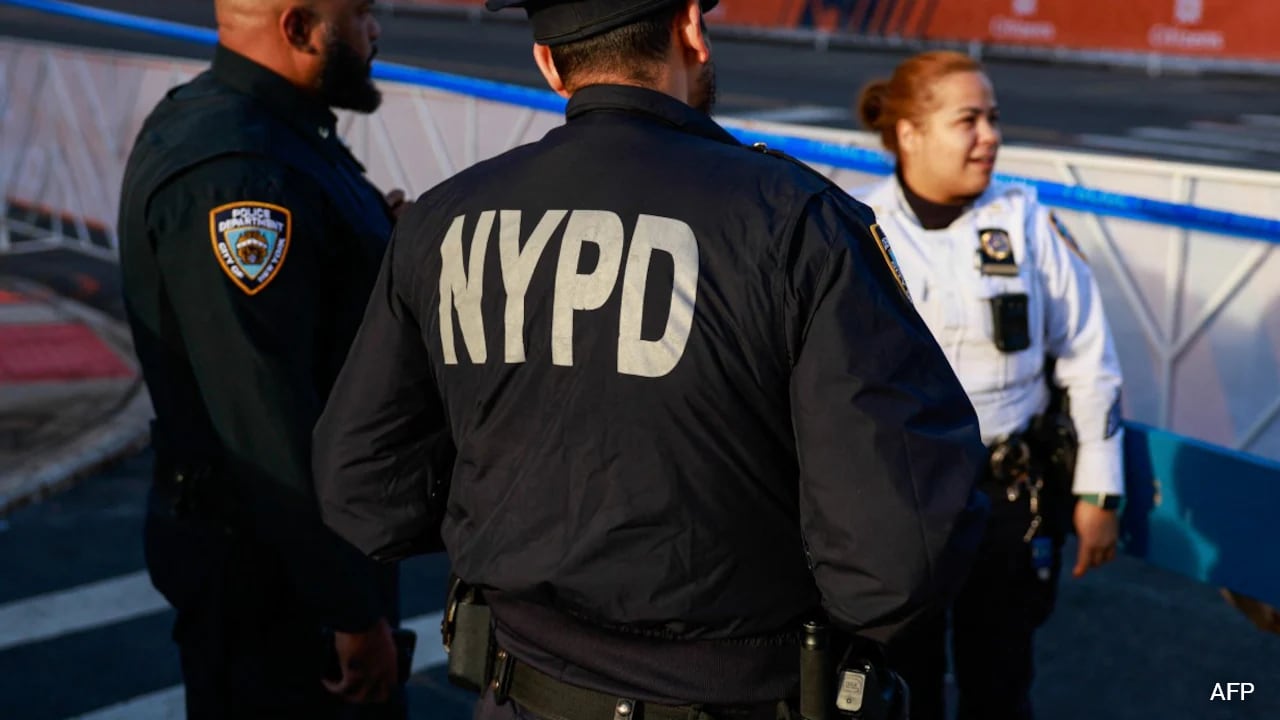
Standard media coverage of armed confrontations involving public safety personnel reduces complex, multi-variable tactical events into linear chronologies of gunfire and casualties. When an engagement ends with two public safety officers wounded and a suspect deceased in New York City, the underlying operational reality is governed by spatial geometry, jurisdictional friction, force-continuum escalation, and emergency medical logistics. Analyzing this class of incident requires stripping away episodic reporting to examine the systemic mechanics that dictate survival and containment in high-density urban environments.
The Structural Architecture of High-Density Urban Engagements
New York City presents a distinct operational environment characterized by vertical density, compressed sightlines, high civilian saturation, and layered security jurisdictions. Unlike suburban or rural environments where containment relies on distance and vehicular perimeters, urban engagements occur within tight spatial envelopes—often under fifteen yards—where reaction time collapses to fractions of a second.
Jurisdictional Layering and "Public Safety" Classification
The terminology "Public Safety Officer" in New York City carries specific operational weight that distinguishes these personnel from standard municipal patrol officers. Within the city's security apparatus, the title frequently applies to specialized units operating under distinct statutory authorities:
- Institutional and Campus Security Forces: Peace officers employed by major hospital networks (such as NYC Health + Hospitals), universities, or private medical centers. Under New York Criminal Procedure Law Section 2.10, peace officers possess specific arrest and use-of-force powers within their designated geographic boundaries, though their equipment profiles—specifically regarding ballistic protection and firearm issuance—vary significantly from the New York Police Department (NYPD).
- Municipal Auxiliary and Specialized Units: Personnel operating within public housing, transit nodes, or municipal facilities who act as the primary sensory and deterrence layer before standard patrol units arrive.
This distinction is not semantic; it defines the baseline readiness of the first responders on scene. Peace officers and institutional safety personnel often operate without the heavy tactical backup, encrypted multi-channel radio integration, or standardized Level IIIA ballistic armor issued to full-duty municipal police. When a lethal threat emerges within their sector, these officers absorb the initial kinetic shock of the engagement while operating at an equipment and manpower deficit.
The OODA Loop Compression in Close Quarters
Tactical decision-making during an active shooting follows Colonel John Boyd’s OODA loop—Observe, Orient, Decide, Act. In an open environment, an officer can widen the physical distance to buy time for the Observation and Orientation phases. Inside a New York City corridor, lobby, or crowded sidewalk, physical distance is fixed.
- Observation Deficit: High ambient noise, visual clutter, and dense pedestrian traffic mask pre-attack indicators such as blading of the body, concealed weapon printing, or erratic behavioral shifts.
- Orientation Bottleneck: Officers must simultaneously process the threat vector and the civilian backstop. Firing a weapon in Manhattan or the outer boroughs carries a severe risk of over-penetration or missed rounds striking bystanders behind the target. This cognitive load slows the orientation phase by critical milliseconds.
- Action Asymmetry: The perpetrator holds the initiative, having already completed their decision cycle prior to drawing a weapon. The responding officers must execute all four phases of the OODA loop defensively after the first round is fired or the weapon is presented.
Force Escalation Mechanics and Ballistic Outcomes
When two officers sustain gunshot wounds and the assailant is killed, the engagement reflects a rapid transition across the force continuum, culminating in close-range ballistic exchange. Understanding how these outcomes materialize requires examining the physics of urban gunfights and the physiological realities of terminal ballistics.
The Action-Reaction Gap and Multiple Officer Casualties
Data from law enforcement survival studies consistently demonstrates that a single determined shooter can wound multiple officers before the officers' rounds take physiological effect. This occurs due to two primary mechanisms:
First, the action-reaction lag dictates that a suspect initiating gunfire can fire two to three rounds before an officer registers the muzzle flash, draws from a retention holster, and acquires a sight picture. If two officers are operating in close proximity—a standard patrol or post configuration—both fall within the shooter's immediate field of fire during that initial 1.5-second window.
Second, handgun terminal ballistics rarely produce instantaneous incapacitation. Unless a projectile disrupts the central nervous system (brain or upper spinal cord), a suspect can continue operating a firearm for ten to fifteen seconds even after sustaining fatal thoracic wounds. During this window of remaining biological function, the shooter continues firing, frequently resulting in the wounding of secondary responders before hypovolemic shock or central nervous system failure terminates the threat.
The Containment vs. Neutralization Paradox
In standard NYPD and municipal tactical doctrine, containment precedes neutralization. Officers are trained to isolate the threat, evacuate civilians, and wait for specialized Emergency Service Unit (ESU) teams equipped with long guns and heavy armor.
However, when the suspect immediately engages public safety personnel, the containment phase is bypassed entirely. The officers on scene have no option to disengage without exposing the immediate civilian population to uncontested gunfire. Neutralization becomes the sole viable tactic, forcing personnel with standard sidearms and light duty gear to execute a high-risk close-quarters counter-ambush.
Command, Control, and Medical Triage Logistics
The immediate aftermath of a shooting involving public safety personnel triggers a massive, standardized mobilization across New York City's emergency infrastructure. The survival rate of wounded officers in NYC is statistically higher than the national average, driven not by luck, but by specific logistical protocols.
The "Scoop and Run" Trauma Protocol
New York City operates a dense network of Level 1 Trauma Centers (such as Bellevue, Lincoln, Kings County, and NewYork-Presbyterian). When an officer is shot, municipal protocol frequently bypasses traditional ambulance wait times in favor of immediate vehicular transport via patrol car—a practice colloquially known as "scoop and run."
- Time-to-Surgery Compression: In penetrating trauma involving major vasculature, every minute of delay increases mortality exponentially. By placing a wounded officer directly into the rear of a police cruiser and clearing intersections via rolling roadblocks, transport times from the scene to a trauma bay are routinely compressed to under seven minutes.
- Self-Aid and Buddy-Aid: Modern NYC public safety and police personnel carry individual first aid kits (IFAKs) equipped with Combat Application Tourniquets (CAT) and hemostatic gauze. Immediate application of a tourniquet to an extremity wound within sixty seconds of impact prevents exsanguination prior to hospital arrival.
Multi-Agency Investigative Friction
Once the scene is stabilized and the suspect is pronounced deceased, operational control shifts from tactical command to investigative audit. Because the incident involves a fatal use of force by public safety personnel, multiple overlapping oversight entities assume jurisdiction simultaneously:
- The NYPD Force Investigation Division (FID): Conducts the primary criminal and administrative reconstruction of the shooting, mapping shell casings, trajectory angles, and body-worn camera footage.
- The New York State Attorney General’s Office of Special Investigation (OSI): Under New York Executive Law Section 70-b, the OSI is mandated to investigate any incident in which a police officer or peace officer causes the death of a person, regardless of whether the deceased was armed.
- The Local District Attorney’s Office: Reviews the evidentiary record to determine whether the use of lethal force met the statutory threshold of justification under New York Penal Law Article 35.
This multi-layered audit creates an immediate operational freeze at the incident site. Transit lines are suspended, street grids are locked down for ballistic laser-scanning, and the involved officers are separated to preserve independent witness recall before formal statements are recorded.
Systemic Vulnerabilities in Current Urban Security Models
Relying on reactive tactical neutralization and rapid trauma transport masks deeper structural vulnerabilities in how New York City secures public and semi-public spaces.
The Equipment and Training Gap for Non-NYPD Safety Personnel
When institutional public safety officers—rather than NYPD patrol officers—are the first point of contact in a lethal encounter, an asymmetry in capability emerges. Many public safety divisions operate under strict budget constraints that limit range time to annual or semi-annual qualification shoots. Static paper-target qualification does not prepare personnel for dynamic, multi-target engagements under acute sympathetic nervous system arousal (heart rates exceeding 175 beats per minute, auditory exclusion, and loss of fine motor skills).
Furthermore, disparate radio frequencies prevent seamless real-time communication between private/institutional safety teams and municipal 911 dispatchers. Delays in relaying suspect descriptions, exact floor or corridor locations, and casualty counts create friction during the critical first three minutes of an NYPD response.
Limitations of Deterrence in High-Density Zones
Visible uniformed presence is designed to deter opportunistic crime, not suicidal or ideologically driven actors. For an assailant indifferent to survival—evidenced by engaging armed personnel directly—a uniformed officer does not act as a deterrent; the officer becomes the primary target. Static posts, such as a guard stationed at a fixed lobby desk or a predictable perimeter patrol, surrender the element of surprise entirely. An attacker can observe the officers' patterns, select the angle of approach, and initiate violence from behind or within a blind spot.
Strategic Doctrine Modifications for Municipal and Institutional Forces
To reduce officer casualties and compress threat-neutralization timelines in future urban engagements, security directors and municipal planners must move beyond standard patrol metrics and implement structural operational changes.
1. Mandate Dynamic Force-on-Force Simulation Training
Static firearm qualification must be replaced with quarterly scenario-based training utilizing non-lethal marking cartridges (Simunition) in realistic architectural environments. Training must specifically drill:
- Shooting from compromised positions (seated, supine, or while moving backward to clear a doorway).
- Target discrimination in crowded corridors to minimize bystander risk while maintaining rapid engagement speeds.
- Immediate transition to self-aid, requiring officers to apply a tourniquet to their own dominant or non-dominant arm under simulated stress before re-engaging.
2. Standardize Interoperable Communications and Ballistic Protection
Municipal authorities must require all peace officer agencies operating within city limits to maintain direct, encrypted tactical radio patches with the local NYPD precinct desk. Eliminating the 911 call-center relay lag saves between 45 and 90 seconds of response time during an active shooter event. Simultaneously, minimum body armor standards for all armed public safety personnel must be elevated to include rifle-rated trauma plates (Level III or IV) in addition to standard handgun protection, addressing the increasing prevalence of high-velocity firearms in urban crime.
3. Eliminate Predictable Static Postings
Fixed-post deployments in lobbies, transit hubs, and hospital entrances must be restructured into randomized, overlapping roving patrols. By breaking predictable sightlines and varying officer positioning at irregular intervals, security teams force potential attackers into an extended observation phase, increasing the likelihood that behavioral detection units or surveillance operators identify pre-attack indicators before the suspect can initiate gunfire.


