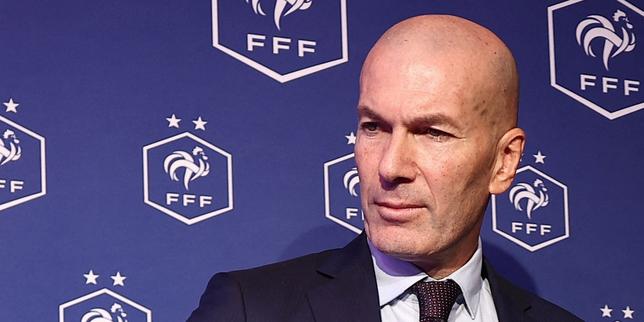
The cultural footprint of Zinedine Zidane within the French national team structure, commonly referenced as Les Bleus, transcends simple athletic performance. Most media narratives reduce this relationship to sentimental romanticism, framing it as an eternal national love affair. This superficial diagnosis ignores the structural mechanics of sporting identity, generational leadership transfer, and institutional continuity. Understanding the actual dynamic requires stripping away the emotional veneer and analyzing how a single player profile became the architectural blueprint for modern French football.
The partnership between Zidane and the French federation functions through three distinct operational vectors: tactical centralization, cultural mediation, and the export of a winning institutional ethos. Evaluating these elements reveals why the association endures as a benchmark for national team management rather than a mere historical anecdote. In related developments, we also covered: The Myth of the Missing Crown.
The Tactical Nucleus and Structural Centralization
During his active tenure, Zidane did not merely play within the French tactical system; he constituted the system itself. Under managers Aime Jacquet and Roger Lemerre, the national team configuration shifted from a rigid 4-4-2 flat block toward a flexible operational triangle that funneled positional decisions through a single playmaker.
This centralization creates an elite dependency model. When a team builds its offensive output around an orchestrator who operates between the opponent's midfield and defensive lines, the team's entire spatial geometry changes. Teammates must understand how to clear channels, absorb defensive pressure, and maintain defensive transition discipline to compensate for a playmaker's lower defensive output. Sky Sports has analyzed this fascinating issue in great detail.
The mechanism relies on tempo modulation. Zidane controlled the speed of the match by dictating whether the ball moved laterally to stretch the opponent or vertically to exploit defensive seams. In modern analytics terms, he maximized expected possession value by minimizing low-percentage long balls and increasing progressive carries into the final third.
When analyzing why subsequent iterations of Les Bleus struggled immediately after his retirement in 2006, analysts often point to a vacuum of technical skill. The true deficit was structural. France lacked a player capable of absorbing high-intensity opponent pressing while retaining a pass completion rate above eighty-five percent under duress. Subsequent managers, notably Raymond Domenech, attempted to replicate this output through committee play, which fragmented the tactical identity and resulted in systemic instability, culminating in the 2010 internal collapse.
Cultural Mediation and Sociological Integration
Beyond the white lines, Zidane functioned as a vital sociological bridge for French society. Born in Marseille to Algerian immigrant parents, his emergence coincided with an era when the French socio-political landscape wrestled intensely with national identity, integration, and post-colonial demographics.
The 1998 World Cup victory popularized the slogan "Black, Blanc, Beur," symbolizing a multicultural France united under a single athletic banner. While sociologists often critique this phrase as an oversimplification of complex racial dynamics, the functional reality on the pitch was undeniable. A multi-ethnic squad achieved the highest possible national honor, mediated by a quiet, non-confrontational leader whose primary medium of communication was athletic excellence.
Zidane maintained strict boundaries regarding political engagement, choosing instead to let performance arbitrate social acceptance. This stance created an accessible archetype for second-generation immigrants across Europe. The operational lesson for sports governance is that high-performing multicultural squads require internal role models who normalize diversity at the highest tiers of leadership without requiring explicit ideological articulation.
Subsequent generations of French players, from Karim Benzema to Kylian Mbappe, operate within a national team ecosystem where multiculturalism is the default baseline rather than a novel experiment. This shift traces its lineage directly back to the precedent established during the turn of the century.
Institutional Continuity and the Coaching Transition
The narrative surrounding Zidane and Les Bleus frequently turns toward the future, specifically regarding his eventual ascension to the managerial role currently held by Didier Deschamps. To evaluate this prospect objectively, one must examine the divergence in their leadership methodologies.
Deschamps prioritizes pragmatism, defensive block integrity, tournament management, and squad cohesion over aesthetic dominance. His tenure relies on risk mitigation, counter-attacking efficiency, and psychological resilience. Conversely, Zidane's managerial record at Real Madrid demonstrates a preference for man-management of elite egos, tactical fluidity during transitions, and an emphasis on psychological freedom in the final third.
Transitioning from an elite player to an elite manager of the same national team introduces significant organizational friction. The historical success rate of legendary players returning to manage their home countries is mixed. The primary variable is authority erosion. When a former teammate or an idol who shares a dressing-room history assumes managerial control, player compliance can shift from professional obligation to personal deference, which introduces vulnerability during tactical crises.
However, Zidane mitigates this risk through his extensive trophy cabinet as a coach, including three consecutive UEFA Champions League titles. Players do not view him merely as a former colleague from the 1998 or 2006 squads; they view him as a proven tactical architect capable of navigating the psychological demands of high-stakes knockout competition.
The structural fit between Zidane and the French Football Federation depends on timing and institutional alignment. The federation requires a successor who can maintain the talent pipeline flowing from the Clairefontaine academy while modernizing the offensive structure to match the dynamic output of contemporary wingers and central midfielders.
The Economic and Brand Capital Mechanics
The association between an iconic figure and a national team generates measurable economic value. Football federations operate as complex sports-business enterprises where brand equity directly influences sponsorship acquisition, television rights valuations, and merchandising revenue.
When Zidane's name is linked to the French national team, the commercial valuation of the brand increases across international markets, particularly in North Africa, the Middle East, and Madrid-centric European demographics. This intangible asset protects the federation against revenue dips during periods of early tournament elimination.
The modern football economy rewards stability and historical prestige. Nations that rely solely on current tactical output face volatility when a golden generation ages out. France avoids this trap by anchoring its brand identity to a continuous lineage of generational talents, starting with Michel Platini, moving through Zinedine Zidane, and extending into the current era with Kylian Mbappe. Each figure acts as a generational bridge, transferring institutional memory and competitive expectations to the next cohort.
The enduring relationship between Zinedine Zidane and Les Bleus is neither a sentimental romance nor a random stroke of athletic fortune. It is a case study in systemic integration, where elite technical centralization, sociological representation, and managerial continuity converged to redefine the ceiling of a national football program. The future trajectory of French football will be determined by how effectively the federation integrates these historical lessons into its next administrative and technical appointments.