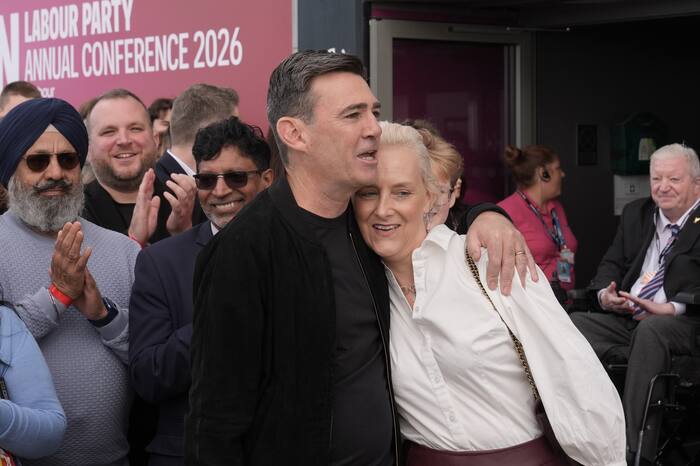
Prime Minister Andy Burnham walked into the Labour Party annual conference in Liverpool wrapped in the warm glow of a honeymoon period, but the arithmetic awaiting his government in Whitehall is entirely unforgiving. Within weeks of taking office, Burnham mastered the political theatre of a conference speech, using emotional personal anecdotes and grand promises of a national care service and public utility reform to soothe a restless movement. Yet, the transition from rhetorical optimism to structural governance exposes a chasm that conference applause cannot bridge. British politics has entered a dangerous phase where buoyant conference vibes are being traded for hard policy choices, and voters are beginning to ask how empty slogans will pay mounting energy bills.
The core tension of Burnham’s early premiership lies in the discrepancy between his ambitious public declarations and the frozen fiscal levers at his disposal. When he announced populist measures like a temporary zero-rate VAT adjustment on domestic electricity bills or laid out plans for a publicly owned grid, the hall erupted. But a closer inspection of these policy announcements reveals deep cracks. For instance, the electricity VAT cut did not apply uniformly across the entire United Kingdom due to post-Brexit regulatory frameworks governing Northern Ireland, forcing Downing Street to rely on awkward financial workarounds. When rhetoric hits regional regulatory walls, the illusion of effortless competence begins to shatter. For an alternative perspective, consider: this related article.
For decades, modern British political strategy has relied on the manufacturing of mood over mechanics. Leaders arrive at seaside arenas to project stability, unity, and visionary intent, masking the structural decay of public services beneath cascading rounds of standing ovations. Burnham is exceptionally skilled at this performance. Having spent years cultivating a populist regional profile as a northern mayor, he understands how to speak the language of working-class exhaustion. He can stand at a podium, choke up over personal loss, and pivot seamlessly into a systemic critique of broken infrastructure. It is a potent political cocktail.
However, the state of the British economy underwrites every single promise with a stark warning. With public debt interest payments suffocating departmental budgets and global market volatility threatening energy markets, the Treasury has virtually zero fiscal headroom. Promising a new National Care Service funded partly by future adjustments to the pensions triple lock sounds progressive on paper, but it alienates the very demographic blocks Labour fought so hard to capture or retain. Every major reform proposal creates an immediate, vocal constituency of losers. Politics is no longer about distributing a growing surplus; it is about managing a managed decline while convincing the public that the medicine is working. Related coverage on this trend has been published by BBC News.
Consider the structural trap surrounding energy and utilities. Burnham has pledged greater public control over water and energy transmission, aiming to reverse decades of privatization fatigue. Yet, the physical infrastructure of the nation is crumbling, and private capital remains wary of aggressive regulatory interventions without clear guarantees of return. If the government forces utility companies into corners without compensating for massive capital expenditure requirements, investment dries up, grid modernization stalls, and brownouts or water shortages loom as terrifyingly real possibilities. The gap between wanting to punish corporate greed and needing private capital to build green energy grids is where political idealism goes to die.
Furthermore, the external pressures facing Downing Street extend far beyond domestic utility bills. The administration is forced to navigate complex international alignments, foreign conflicts impacting global supply chains, and delicate diplomatic resets with European neighbors who remain deeply skeptical of British post-Brexit manoeuvring. Every international commitment—whether it involves military support abroad or trade negotiations across the Channel—consumes political capital that cannot be spent on domestic hospitals or crumbling schools.
The danger for Burnham is that the political grace period granted to a new prime minister expires rapidly when household costs remain stubbornly high. Voters do not care about conference standing ovations when their council tax rises or local dental practices close their waiting lists. The narrative of hope is a perishable commodity. If the upcoming fiscal statements and budget allocations fail to deliver tangible relief, the current wave of goodwill will harden into profound cynicism.
Political survival requires more than sounding like the adult in the room. It requires confronting the public with the unvarnished truth about the choices ahead—choices that cannot be smoothed over with theatrical delivery or rhetorical flourishes. The real test of this administration will not be how well it manages the mood in a conference hall, but how it survives the cold dawn of reality when the applause finally fades.
A brief video breakdown exploring the realities behind recent political conferences and economic policy can be found in this analysis of the UK Labour conference under economic pressure. This video provides useful context on how observers analyze the friction between political rhetoric and fiscal constraints.