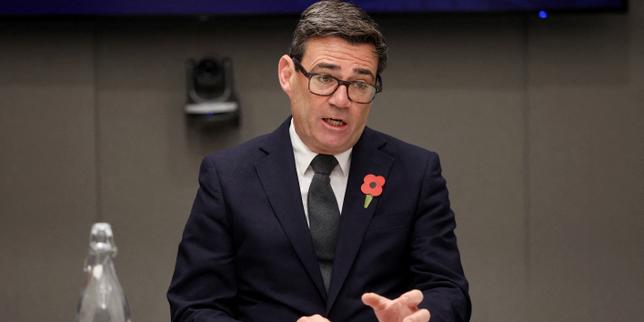
Political debates surrounding the transatlantic slave trade frequently stall at a familiar crossroads: symbolic remorse versus financial restitution. According to reporting on remarks made by Greater Manchester Mayor Andy Burnham, the British politician expressed openness to the United Kingdom issuing an official apology for its historical role in slavery, while firmly ruling out financial compensation.
This middle-ground posture—offering words while withholding funds—is often treated in mainstream commentary as a pragmatic compromise. In reality, separating moral acknowledgment from material accountability satisfies almost no one involved in the international debate, and it overlooks the legal, economic, and diplomatic mechanics driving the modern reparations movement. You might also find this related story interesting: Why Iran’s Threat of Borderless Retaliation Is Actually a Confession of Weakness.
To understand why Burnham’s position is so contested, it helps to examine the competing arguments from historians, legal scholars, Caribbean governments, and British policymakers.
The Logic Behind the "Apology Only" Position
Politicians like Burnham, along with several senior figures across the UK political spectrum, operate within strict domestic electoral and fiscal constraints. From their perspective, an official apology represents a low-cost, high-visibility gesture of moral recognition. As discussed in detailed articles by BBC News, the results are significant.
Supporters of this approach generally rely on three core arguments:
- Intergenerational Responsibility: Critics of financial reparations argue that living taxpayers—many of whose families arrived in Britain long after the abolition of slavery in 1833—should not be held financially liable for crimes committed by the state and private merchants centuries ago.
- Fiscal Feasibility: Advocates of fiscal restraint point out that estimates for historical reparations often run into the trillions of pounds, a sum that exceeds the annual economic output of the United Kingdom and is politically impossible to pass through Parliament.
- Forward-Looking Aid: Rather than direct restitution, many British officials favor traditional development aid, climate finance, and trade partnerships as practical ways to support former colonies without establishing legal liability.
Why Reparations Advocates Reject Symbolic Apologies
For the Caribbean Community (CARICOM) Reparations Commission, legal scholars, and descendants of enslaved people, an apology stripped of material repair is viewed not as a compromise, but as an evasion.
In international law and transitional justice frameworks, a formal apology without restitution fails to meet the basic criteria of reparatory justice. According to the United Nations Basic Principles and Guidelines on the Right to a Remedy and Reparation, full reparation encompasses five distinct elements: restitution, compensation, rehabilitation, satisfaction (which includes official apologies), and guarantees of non-repetition.
When political leaders isolate "satisfaction" (the apology) and discard "compensation" and "restitution," critics argue they are rewriting the definition of justice to suit domestic convenience.
The 1833 Precedent
A central point of contention in the UK debate is historical precedent. When Britain passed the Slavery Abolition Act of 1833, the government did not compensate the newly freed population. Instead, it borrowed £20 million—roughly 40% of the Treasury's annual budget at the time—to compensate approximately 46,000 British slave owners for the loss of their "property."
Historians at University College London (UCL), through the Legacies of British Slave-ownership project, documented how those payouts funded the expansion of British banking, railways, insurance firms, and stately homes. Furthermore, British taxpayers continued paying off the interest on the government debt incurred to finance that bailout until 2015.
For advocates of material reparations, this historical timeline undermines the argument that financial restitution is impossible or anachronistic. They contend that the British state already established the principle of financial compensation for slavery—it simply paid the enslavers rather than the enslaved.
The CARICOM Ten-Point Plan: What Reparations Actually Mean
A major misconception in public commentary—often reinforced by flat rejections of "financial compensation"—is that reparations mean writing individual checks to millions of people.
In practice, the most prominent diplomatic framework on the table is the CARICOM Ten-Point Plan for Reparatory Justice, drafted by Caribbean heads of government and chaired by historian Sir Hilary Beckles. Rather than personal payouts, the plan focuses on structural and institutional investment designed to address the long-term developmental deficits left by colonial extraction:
- Full Formal Apology: Not merely a statement of regret, which avoids legal liability, but a formal apology acknowledging the crimes committed.
- Repatriation: Support for descendants who wish to resettle in African nations, along with cultural and diplomatic ties.
- Indigenous Peoples Development Program: Addressing the near-extermination of Indigenous Caribbean populations.
- Cultural Institutions: Building museums and research centers in the Caribbean, as major historical artifacts and archives remain concentrated in European institutions.
- Public Health Crisis: Funding to combat chronic health disparities, such as high rates of hypertension and type 2 diabetes, which researchers link to generational nutritional trauma and poverty.
- Illiteracy Eradication: Investment in educational infrastructure left underfunded at the time of colonial independence.
- African Knowledge Program: Cultural and educational exchanges to rebuild severed historical links.
- Psychological Rehabilitation: Addressing the enduring social and psychological impacts of centuries of racialized enslavement.
- Technology Transfer: Sharing modern industrial and scientific capabilities to allow former colonies to diversify their economies beyond raw commodity exports.
- Debt Cancellation: Restructuring or canceling sovereign debts owed by Caribbean nations to international financial institutions and former colonial powers.
By framing the issue strictly around "financial compensation," politicians often argue against a caricature of the demand while ignoring structural mechanisms like debt relief, climate finance, and technology transfer.
The Legal Fear Behind the Refusal
Why are British politicians—across both the Labour and Conservative parties—so hesitant to offer even a formal apology, let alone discuss material terms?
Legal analysts point to the distinction between an "expression of deep sorrow" (such as Tony Blair’s 2006 statement on the bicentenary of the abolition of the slave trade) and a formal legal apology. In international diplomacy, a formal apology can be interpreted as an admission of an internationally wrongful act.
Once a state formally admits culpability for a crime against humanity, it opens the door to claims under international law. Even if domestic courts bar historical claims through statutes of limitations, an official apology strengthens the diplomatic and moral leverage of claimant nations in forums such as the United Nations or the International Court of Justice.
Therefore, Burnham’s willingness to consider an official apology while ruling out financial consequences attempts to separate two concepts that international legal frameworks treat as interconnected.
Addressing the Core Questions in the Debate
Public discussion around British reparations tends to circle around several recurring questions, each carrying complex legal and historical nuances.
Didn't Britain end the slave trade?
Britain abolished the transatlantic slave trade in 1807 and slavery across most of its empire in 1833, later deploying the Royal Navy’s West Africa Squadron to intercept slave ships. Defenders of Britain's record frequently cite this as evidence of moral leadership. However, historians note that Britain was also one of the foremost beneficiaries of the trade for over two centuries, transporting more than three million Africans across the Atlantic, and that abolition occurred alongside massive financial payouts to slave owners and mandatory unpaid "apprenticeships" for formerly enslaved people until 1838.
How can modern governments calculate the cost of historical injustice?
Economists and legal scholars use several methodologies to estimate damages, including the value of unpaid labor, the wealth extracted from colonial plantations, and the comparative economic gap between former colonizers and colonized nations. Because these models produce vastly different figures—ranging from hundreds of billions to tens of trillions of dollars—most policy experts argue that negotiated institutional investments, such as debt cancellation and climate resilience funds, are far more practical than attempting to calculate a precise ledger balance.
What are the risks of reopening historical claims?
Skeptics of reparations warn of a "slippery slope" in global geopolitics. If Britain pays restitution for the transatlantic slave trade, critics ask whether other nations—including former European empires, Middle Eastern states involved in the trans-Saharan and Indian Ocean slave trades, or African kingdoms that participated in capturing and selling captives—would face similar demands. Proponents counter that the transatlantic system was uniquely racialized, industrialized, and codified into modern international corporate and financial structures that persist today.
The Diplomatic Reality Moving Forward
The debate over Britain's colonial legacy is no longer confined to academic seminars or domestic political interviews. At the 2024 Commonwealth Heads of Government Meeting (CHOGM) in Samoa, member states agreed to include discussions on reparatory justice in their official communiqué despite initial resistance from Downing Street.
Meanwhile, private institutions—including the Church of England, major British universities, and banking conglomerates with historical ties to slavery—have begun establishing dedicated funds for research, community investment, and educational grants.
Andy Burnham’s remarks reflect a transitional moment in British politics: an acknowledgment that total silence is no longer tenable, paired with a reluctance to confront the material and legal implications of historical accountability. Whether the United Kingdom ultimately pursues symbolic gestures, targeted development finance, or formal reparatory negotiations, the issue will continue to shape Britain's diplomatic relationships across the Commonwealth and the Global South for decades to come.