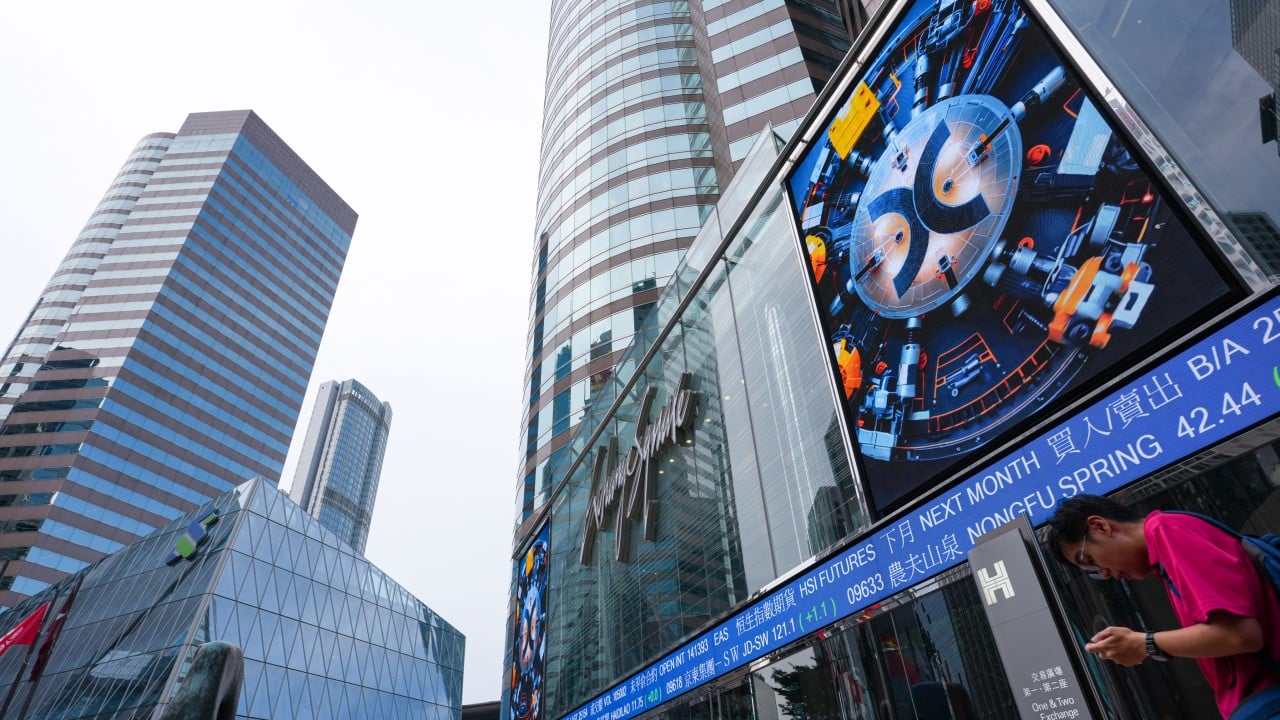
Wall Street had a rough day, and even the biggest artificial intelligence listing of the year couldn't stop the bleeding. When trading wrapped up, major U.S. indexes had tumbled sharply lower, proving that investor appetite for expensive tech bets has hit a serious wall.
You've probably seen this movie before. For the past couple of years, any company with "AI" stamped on its investor deck could practically print money on the public markets. Those days are over. Even with Anthropic finally making its public debut, institutional buyers refused to blindly bid up the broader tech sector. Instead, money managers used the hype as an exit ramp, locking in gains and rotating out of bloated mega-cap tech stocks.
What Actually Happened When Anthropic Hit the Public Markets
Let's be honest about what Wall Street was expecting. Going into the session, plenty of retail traders and optimistic analysts hoped Anthropic’s debut would act like a shot of adrenaline for the entire Nasdaq. The logic seemed simple enough on paper. Anthropic has spent years positioning itself as the premier enterprise-focused rival to OpenAI, backed by billions from Amazon and Google, and armed with its Claude family of models. If anything could reignite the fading AI rally, a marquee IPO from one of the foundational labs should have done it.
It didn't happen.
While Anthropic's shares saw plenty of initial volume and predictable opening-bell volatility, the broader market never caught the spark. Within hours of the opening bell, the S&P 500 and the Nasdaq Composite rolled over, sliding deeper into the red as the afternoon wore on. Semiconductor names, cloud infrastructure providers, and legacy software companies that had ridden the AI wave for quarters all took heavy hits.
Why did the magic suddenly stop working? Because public market investors are done paying for potential. They want to see cold, hard cash flow, and right now, the math across the AI sector looks uncomfortable.
The Valuation Hangover Has Officially Arrived
If you look closely at how institutional desks are trading tech right now, you'll notice a massive shift in psychology. Over the last few years, Wall Street treated capital expenditures on AI data centers like pure upside. Every time a hyperscaler announced another $50 billion in server spending, its stock jumped.
Now, that exact same spending is being treated as a liability.
Here is the core problem nobody on Wall Street wants to admit out loud:
- Infrastructure costs are astronomical. Training and running frontier models requires staggering amounts of compute, specialized chips, and electrical grid capacity.
- Enterprise adoption is slower than projected. Companies are testing AI tools, sure, but moving from a neat pilot program to paying millions of dollars for seat licenses takes years, not months.
- Margins are getting squeezed. When multiple foundation model builders offer nearly identical capabilities, pricing power evaporates fast.
Anthropic’s public debut didn't fail because the company lacks impressive technology. It failed to lift the market because going public forces a company to open its books to ruthless scrutiny. Once Wall Street gets a clear, quarterly look at the burn rates required to stay competitive at the top of the AI food chain, the romanticism vanishes. Investors start asking awkward questions about when those massive compute bills will actually turn into sustainable net income.
Why Institutional Investors Are Rotating Out of Tech
I've watched market rotations play out across multiple tech cycles, and the pattern is always the same. When a single theme becomes too crowded, it stops needing bad news to fall. It just needs a lack of new good news.
Right now, portfolio managers are staring at concentration risk that hasn't been seen in decades. A tiny handful of mega-cap technology stocks have carried the weight of the entire U.S. equity market. When every mutual fund, pension plan, and hedge fund already owns the exact same AI winners, who is left to buy?
Nobody.
Instead of chasing Anthropic's debut, big funds used the liquidity event to rebalance. Money flowed out of high-multiple software and chip stocks and moved straight into sectors that have been ignored for years. Utilities, industrials, healthcare, and traditional value plays suddenly look a lot more attractive when tech stocks are trading at nosebleed multiples of future earnings.
The Macroeconomic Pressure Cooker
You also can't ignore the macro backdrop sitting right behind this sell-off. Stock valuations don't exist in a vacuum. When Treasury yields stay stubbornly elevated and interest rate expectations remain murky, long-duration assets—which is Wall Street code for high-growth tech stocks whose profits are years away—get punished first.
If you're a fund manager, why take massive downside risk on an unprofitable AI play when you can park cash in government bonds or dividend-paying industrials and sleep soundly at night? That calculation is happening across thousands of trading desks every single morning. Anthropic’s listing happened right in the middle of this macro squeeze, and no single IPO is strong enough to override the bond market.
What Most Retail Traders Get Wrong About High-Profile IPOs
There's a common misconception among everyday investors that a blockbuster IPO automatically lifts all boats in its sector. In reality, the exact opposite often happens.
Think about how a portfolio manager operates under a strict budget. Suppose a tech fund has $10 billion allocated to artificial intelligence exposure. Before Anthropic goes public, that $10 billion is spread across Nvidia, Microsoft, Amazon, Alphabet, and a few semiconductor equipment makers.
When a massive new pure-play AI company enters the public market, that fund manager doesn't suddenly get an extra $1 billion from thin air to buy it. To make room for the new stock, they have to sell something else they already own.
In market terms, big IPOs act like liquidity vacuums. They suck capital out of existing sector leaders rather than bringing fresh money into the market. When you combine that mechanical selling pressure with a market that was already nervous about AI overvaluation, a sharp sell-off isn't just possible—it's predictable.
The Difference Between Great Technology and a Great Stock
This is the hardest lesson for tech enthusiasts to swallow, especially when watching companies like Anthropic push the boundaries of what software can do. Building a brilliant large language model doesn't automatically make a business a good investment at any price.
Look at the history of the internet or the telecom boom in the late 1990s. The technology worked. Fiber optic cables and e-commerce really did change the world just like the visionaries promised. Yet investors who bought into the hype at peak valuations still lost 70% to 80% of their money and waited over a decade just to break even.
We're seeing a milder, faster version of that reality check play out right now. Foundation models are rapidly becoming commodities. When open-weight alternatives and competing labs can match frontier performance within a few months of every major release, building a durable economic moat becomes extraordinarily difficult. Wall Street knows this, even if Silicon Valley refuses to accept it.
How to Position Your Portfolio After an AI Sell-Off
If your portfolio took a beating during the downturn, panicking and dumping everything at the bottom is the worst move you can make. At the same time, pretending that the AI trade will magically bounce back to effortless double-digit monthly gains is pure wishful thinking.
You need to treat the AI sector like a mature, capital-intensive industry rather than a magic money machine. Start by auditing what you actually own and separating the hype from the fundamentals:
- Check your overlap. If you hold an S&P 500 index fund, a Nasdaq ETF, and individual shares of the major tech giants, you're likely way more exposed to an AI downturn than you realize. Trim redundant positions so one bad tech session doesn't wreck your net worth.
- Focus on free cash flow, not revenue growth. Stop rewarding companies that grow top-line revenue by burning twice as much cash on compute. Look for businesses that are already generating positive free cash flow and using AI to cut real operating expenses.
- Wait for post-IPO price discovery. Never buy a major tech IPO in its first few weeks of public trading. Lock-up expirations, analyst downgrades, and early insider selling almost always create much better entry points three to six months down the road.
- Look at the physical bottlenecks. Software margins might get compressed, but the physical infrastructure required to run modern data centers—power generation, grid equipment, cooling systems, and specialized networking—still faces real supply constraints.
Wall Street’s sharp drop following Anthropic’s debut wasn't a fluke, and it wasn't just a bad day of trading. It was the market finally drawing a line in the sand, demanding proof that the billions poured into artificial intelligence will actually pay off before sending tech stocks any higher.