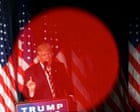
Republicans have spent seventy years defining themselves as the ultimate bulwark against communism, yet their overwhelming loyalty to Donald Trump rests on a shared political operating system. To millions of conservative voters, anti-communism was never an academic commitment to free-market orthodoxy or strict constitutional limits. It was a cultural posture rooted in nationalism, fierce resistance to cosmopolitan elites, and a demand for a strongman who would protect the homeland from perceived subversion. Donald Trump tapped directly into that instinct, substituting state-controlled economics with economic nationalism while adopting the exact strongman aesthetics, grievance politics, and loyalty demands that historically defined populist authoritarian movements.
Understanding this apparent contradiction requires stripping away decades of think-tank white papers and looking at how conservative voters actually experience politics. For much of the Cold War, the Republican coalition was held together by a three-legged stool of social conservatives, defense hawks, and free-market capitalists. The glue binding them was a common enemy in Moscow and Beijing. When the Berlin Wall fell, that glue began to dry out. By the time Trump descended the golden escalator in 2015, the average Republican voter cared far less about Friedrich Hayek’s theories on spontaneous order than they did about hollowed-out factory towns, shifting cultural norms, and an establishment they believed had sold them out. Expanding on this idea, you can also read: Inside the Brazil Polarization Trap That Outlived Lula and Bolsonaro.
The Evolution of the Communist Label
In American political vernacular, communism rarely functions as a precise economic descriptor. Outside of university economics departments, the word has served since the 1950s as a catch-all indictment of anything deemed un-American, godless, or overly centralized in Washington. When Joe McCarthy hunted for subversives in the State Department, he was not debating the labor theory of value. He was tapping into a visceral fear that a shadowy cabal of educated insiders was plotting to dismantle traditional American life from within.
Trump weaponized this exact linguistic history. Throughout his rallies and public statements, he routinely labels mainstream Democrats, federal bureaucrats, and corporate media outlets as communists, Marxists, and radical left thugs. By stretching the definition of communism to cover diversity initiatives, environmental regulations, and federal prosecutors, Trump gave his supporters a familiar villain to fight. Observers at NBC News have provided expertise on this matter.
In doing so, he absolved himself of any need to adhere to traditional conservative principles. If the enemy is an existential Marxist threat seeking to destroy the country, then normal institutional guardrails become an unaffordable luxury. Voters who grew up terrified of Soviet collectivization found themselves cheering for a leader who promised to use the full weight of the federal government to crush their domestic political rivals. The target changed from a foreign superpower to internal institutions, but the psychological comfort of the crusade remained identical.
Populist Authoritarianism Meets Right-Wing Grievance
Political scientists have long observed that the traditional left-right spectrum bends into a circle at its extremes, a phenomenon often referred to as horseshoe theory. While Trump’s economic policies—centered on sweeping deregulation and corporate tax cuts—are the polar opposite of Marxist state ownership, his political style mirrors the populist strongman playbook used by twentieth-century leaders across the ideological spectrum.
Consider the mechanics of how Trump exercises power and commands loyalty within the Republican Party.
- The Cult of Personality: Traditional American conservatism emphasized institutions, norms, and the rule of law over any single individual. Trump inverted this dynamic, making personal fealty to him the sole litmus test for conservative authenticity. Critics within his own party, regardless of how conservative their voting records might be, are instantly excommunicated as traitors.
- State Intervention for Political Ends: While railing against socialist overreach, Trump has consistently advocated for using state power to reward allies and punish enemies. From threatening broadcast licenses of critical television networks to proposing sweeping tariffs that effectively allow the executive branch to pick winners and losers in the corporate sector, his approach relies heavily on centralized executive muscle.
- Attacking the Independent Press and Judiciary: A hallmark of authoritarian governance is the systematic erosion of public trust in independent arbiters of truth. By branding journalists as the enemy of the people and attacking judges who rule against him, Trump adopted a rhetorical strategy indistinguishable from the one used by autocrats in Caracas, Budapest, or Moscow.
For a base conditioned to view politics as an existential war, these traits do not register as dangerous overreach. They look like strength. When a voter believes the administrative state is a corrupt machine rigged against them, they do not want a polite constitutional scholar to reform it gradually. They want a wrecking ball.
The Death of Free-Market Orthodoxy
To understand why Republicans abandoned their historic devotion to laissez-faire capitalism, you have to look at the economic fallout of the early twenty-first century. For decades, the GOP establishment preached that free trade, open capital markets, and minimal government interference would lift all boats. In theory, it was the ultimate rebuttal to central planning. In practice, it coincided with the offshoring of millions of manufacturing jobs and the opioid crisis tearing through the industrial Midwest.
"The Republican Party used to worship at the altar of the free market, right up until the free market decided that American factory workers were too expensive."
Trump recognized this vulnerability before almost anyone else in Washington. When he attacked free-trade agreements like NAFTA and promised to slap massive tariffs on foreign imports, he was openly rejecting the core economic gospel of Ronald Reagan and George W. Bush. Traditional conservatives howled that tariffs were simply a tax on American consumers and a form of central planning that distorted market efficiency.
The voters did not care. To a laid-off steelworker in Ohio or a machinist in Pennsylvania, global free trade looked suspiciously like a system designed by coastal elites to enrich multinational corporations at the expense of American sovereignty. Trump’s economic nationalism offered a tangible alternative. By promising to use federal power to force companies to keep factories in the United States, he positioned himself as a protector of the working class. It was a distinctly populist pitch, heavy on state intervention and light on free-market purity, yet it resonated deeply with voters who still proudly called themselves anti-communist.
The Enemy of My Enemy
Another critical factor in this alignment is Trump’s public posture toward actual foreign autocrats, including communist leaders like China’s Xi Jinping and North Korea’s Kim Jong Un. Throughout his presidency and subsequent campaigns, Trump repeatedly praised the intelligence, strength, and iron-fisted control of foreign dictators. He remarked admiringly on Xi’s ability to rule over 1.4 billion people with an iron fist and boasted about falling in love with Kim Jong Un through an exchange of letters.
On the surface, this praise should have triggered an immediate revolt among Cold War-era Republicans. Instead, it was absorbed seamlessly into the MAGA worldview. There are two distinct reasons why this happened.
First, Trump framed his rapport with dictators as a superior form of transactional diplomacy. In his telling, weak American politicians allowed foreign strongmen to take advantage of the United States, whereas only a tough leader like himself could command their respect and negotiate from a position of strength. Supporters viewed his flattery of autocrats not as ideological sympathy, but as a savvy negotiating tactic designed to prevent wars and secure better trade deals.
Second, and perhaps more importantly, many social conservatives began to view Western liberal democracies as a greater threat to their values than foreign autocracies. As American corporations, universities, and cultural institutions embraced progressive stances on gender, race, and religion, a segment of the American right grew deeply alienated from their own country's cultural trajectory. In that context, strongmen abroad who suppressed progressive activism and championed traditional, nationalist identities started to look less like ideological enemies and more like potential models for how to arrest cultural decline at home.
The Psychology of Grievance and Protection
At its core, the bond between Trump and anti-communist Republicans is emotional rather than ideological. Political analysts often make the mistake of treating voters like consistent philosophers who cross-reference every policy proposal against a rigid ideological checklist. Human beings rarely operate that way. Most voters align with a political movement based on identity, threat perception, and trust.
During the twentieth century, the primary threat to the American conservative identity was external. It wore a Soviet uniform and threatened nuclear annihilation. Today, the perceived threat is entirely internal. It is seen in shifting demographics, secularization, corporate wokeness, and a federal bureaucracy perceived as hostile to conservative values.
When the nature of the threat changes, the qualities voters demand in a leader change with it. A constitutional conservative who preaches restraint, limited government, and procedural fairness seems hopelessly outgunned when voters believe their opponents are playing by no rules at all. Trump’s appeal lies entirely in his willingness to fight dirty on behalf of his tribe.
He does not offer a coherent economic theory or a strict constitutional philosophy. He offers retribution. He promises to be the shield standing between his supporters and a modern world they feel is leaving them behind. If achieving that protection requires centralizing executive power, bullying private corporations into compliance, demanding absolute personal loyalty, and dismantling democratic norms, his supporters are more than willing to make that trade.
The irony is thick, yet entirely logical within the framework of modern grievance politics. Republicans still despise the word communism because it remains their ultimate shorthand for tyranny and cultural erasure. They embrace Donald Trump because they have convinced themselves that only a strongman can save them from it.


