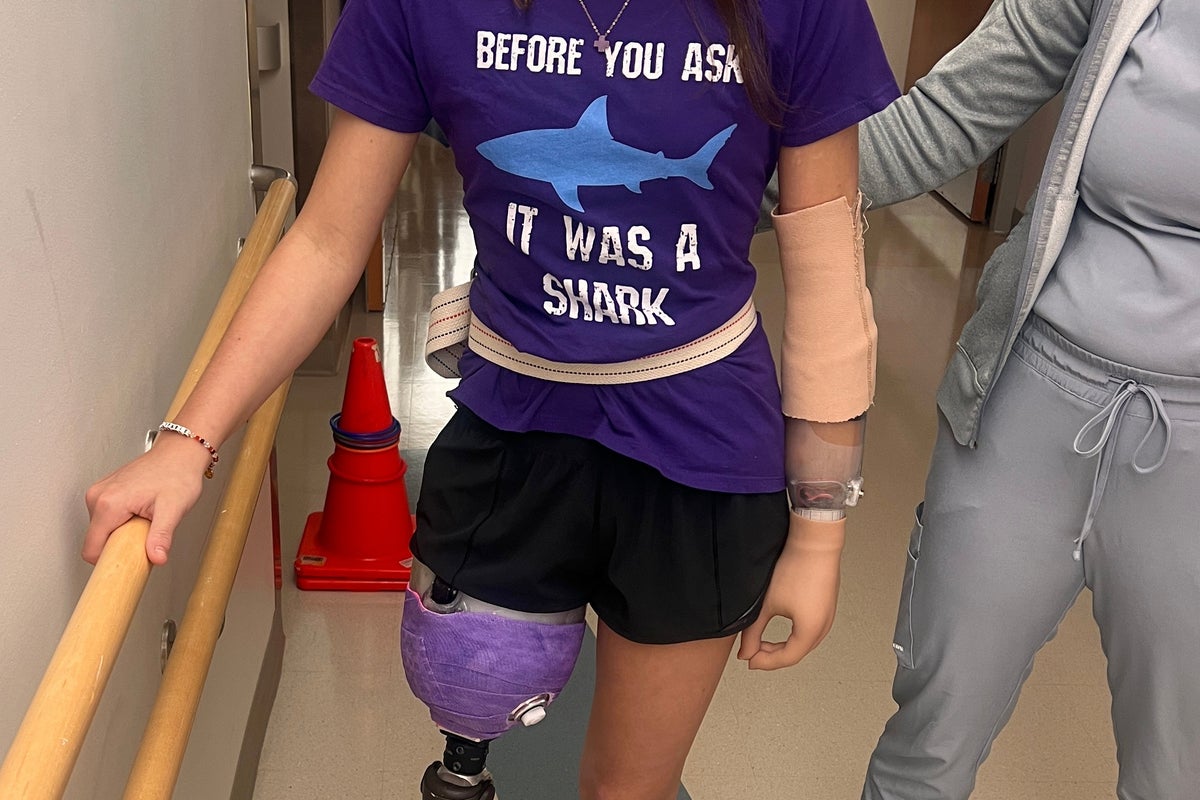
The mitigation of localized environmental hazards requires rapid sensory transmission to alter human behavior before exposure occurs. When federal legislation alters emergency communication architecture, it modifies the public risk-mitigation framework. The enactment of Lulu’s Law—signed into federal statute following an overwhelming 401–6 bipartisan vote in the House of Representatives and a unanimous Senate clearance—directly addresses a failure in localized data distribution.
The statutory mechanics of the law mandate that the Federal Communications Commission (FCC) issue an order within 180 days to codify shark attacks and imminent marine hazards as eligible events for the national Wireless Emergency Alerts (WEA) infrastructure. The legislative catalyst was a sequence of events on June 7, 2024, off the Florida Panhandle. A shark attacked a beachgoer at one location; ninety minutes later and three miles away, a second attack severely injured fifteen-year-old Lulu Gribbin. The temporal and spatial gap between these two incidents exposes a structural bottleneck: the absence of a standardized, low-latency mechanism to broadcast apex predator hazards to localized mobile devices. For a more detailed analysis into this area, we recommend: this related article.
The Emergency Broadcast Architecture
To evaluate how Lulu's Law shifts the coastal risk frontier, one must analyze the infrastructure of the Integrated Public Alert and Warning System (IPAWS). Managed by the Federal Electronic Management Agency (FEMA), IPAWS utilizes a hub-and-spoke delivery model where authorized alerting authorities validate a hazard, format a standardized Common Alerting Protocol (CAP) message, and push it through the FCC-regulated commercial mobile networks via Cell Broadcast technology.
[Local/State Authority: Hazard Verification]
                    │
                    ▼
[IPAWS Aggregator: CAP Validation]
                    │
                    ▼
[Cellular Broadcast Towers: Targeted Geofencing]
                    │
                    ▼
[End-User Mobile Devices within Threat Radius]
Cell Broadcast circumvents network congestion by transmitting messages to every handset connected to specific cell towers simultaneously, rather than routing data to individual IP addresses. Lulu’s Law expands the legal taxonomy of this infrastructure. Prior to its passage, WEA triggers were restricted to narrow categories: Presidential Alerts, Amber Alerts, Extreme Weather, and Imminent Threats to Life and Property (typically interpreted as macro-scale events like tornadoes, active shooters, or hazardous material spills). By explicitly including micro-scale wildlife hazards under federal authority, the statute standardizes the technical protocols required for local municipal networks to interface with federal infrastructure during marine incidents. For further context on this topic, in-depth coverage is available at TIME.
Operational Vulnerabilities and the Interventions Bottleneck
While the federal mandate updates the technological capabilities of the FCC and FEMA, actual deployment relies on localized operational execution. The framework contains three distinct points of friction that limit its efficacy as a silver bullet for beach safety.
- The Verification Latency Curve: The interval between a marine apex predator interaction and the issuance of a broadcast alert is highly variable. Unlike meteorological anomalies tracked via Doppler radar or seismic activity registered by automated telemetry, a shark encounter relies on human reporting. Local authorities must receive the report, deploy maritime or airborne reconnaissance to verify the presence of an active threat, and authenticate the report before drafting a CAP message. If this verification curve exceeds 30 to 45 minutes, the temporal utility of the alert decreases drastically in high-density tourist zones.
- The Jurisdictional Opt-In Gaps: Federal authorization does not equal local mandate. Lulu’s Law empowers state and municipal authorities to utilize the WEA network for marine hazards, but it does not compel them to do so. Jurisdictions must explicitly integrate these triggers into their emergency management protocols. Coastal municipalities reliant on tourism revenue face competing incentives; some local administrators may hesitate to issue frequent, highly intrusive mobile alerts that could induce economic flight from beachfront zones, creating regional disparities in safety infrastructure.
- The Geo-Targeting Granularity Problem: WEA alerts utilize tower-level geofencing. In coastal environments, a cell tower's propagation radius often extends several miles inland. An alert broadcasted to warn individuals physically immersed in the surf zone will simultaneously hit individuals in inland commercial zones, hotels, and residential blocks. Frequent false-positive exposure for populations outside the immediate risk zone risks generating "alert fatigue," a psychological condition where users desensitize themselves to critical notifications or disable emergency alerts at the device level entirely.
Market Realities and Behavioral Adaptations
The economic and psychological cost functions of this legislative shift depend heavily on public behavioral adaptation. The core premise of the law is that a binary notification will cause individuals to immediately exit the water.
The baseline risk matrix changes when data asymmetry is removed. When beachgoers lack information regarding a proximate attack, their perceived risk remains fixed near zero, while their actual risk escalates sharply following an initial strike. The delivery of a localized, high-vibrational handset alert instantly aligns perceived risk with actual risk, forcing an immediate behavioral calculation.
The economic cost of clearing a beach for two hours is minor compared to the medical, legal, and reputational liabilities incurred by a municipality when multiple consecutive attacks take place within its borders. However, the operational success of Lulu's Law hinges on developing precise, tier-structured alerts. Local emergency management agencies must differentiate between a confirmed attack (Level 1: Immediate Water Evacuation Required) and a routine biological sighting via drone telemetry (Level 2: Heightened Situational Awareness).
Without this granular stratification, the system will degrade into a high-noise, low-utility apparatus. The ultimate efficacy of the statute will not be measured by its successful passage through Congress, but by the technical rigor with which local coastal authorities program their geofenced parameters and manage the operational latency of their reporting pipelines during peak summer seasons.