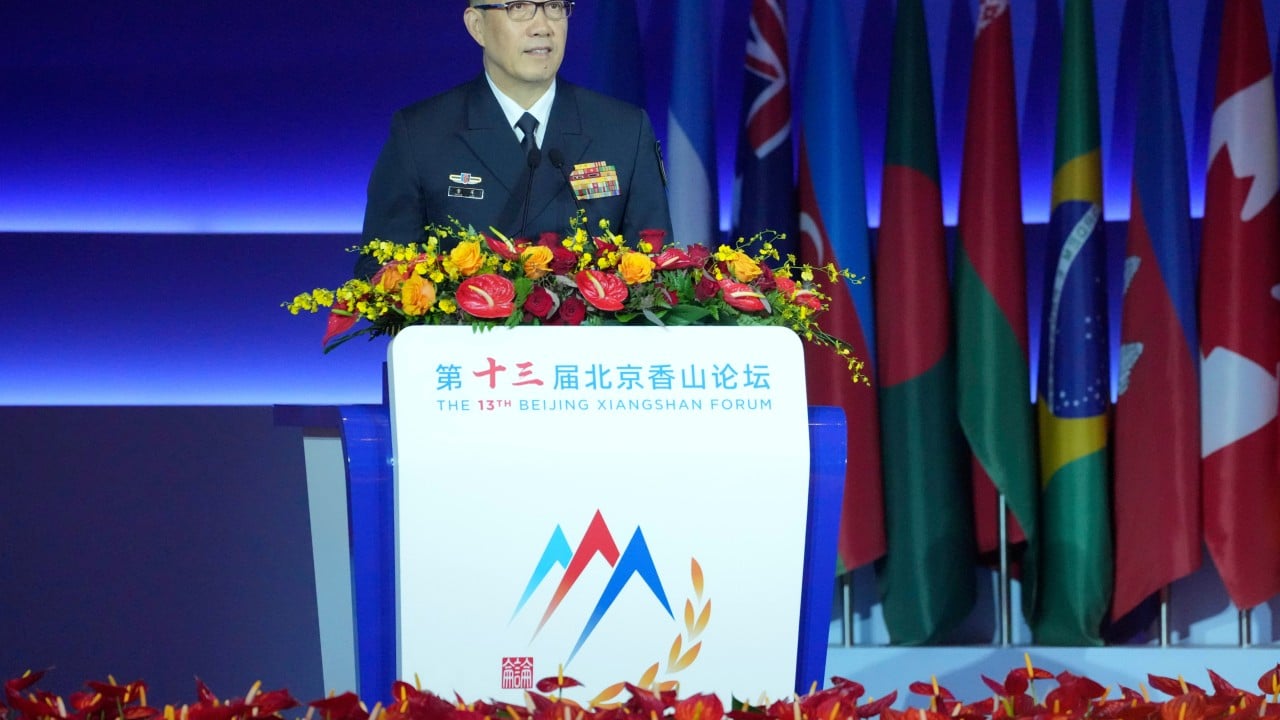
Global security architecture is undergoing a structural realignment characterized by the transition from unipolar stability models to fragmented, polycentric security networks. Major multilateral convenings, such as the Beijing Xiangshan Forum, function less as venues for immediate diplomatic compromise and more as signaling platforms where alternative institutional frameworks are articulated and pressure-tested against traditional Western-led security architectures. Analyzing the mechanics of these forums requires moving past diplomatic rhetoric to deconstruct the underlying economic, technological, and geopolitical incentives driving state behavior.
The Mechanics of Parallel Security Frameworks
Traditional security paradigms have relied heavily on hub-and-spoke alliance systems, predominantly anchored by bilateral treaties and Western multilateral institutions. Alternative architectures challenge this distribution of authority by introducing multilateral frameworks that prioritize state sovereignty, non-interference, and consensus-based governance.
The operational logic of this alternative model rests on three distinct structural pillars:
- Inclusion over Alignment: Inviting participation across a broad spectrum of developing and developed economies without requiring formal alliance commitments reduces transaction costs for non-aligned states.
- Functional Compartmentalization: Decoupling traditional territorial security disputes from emerging operational domains—such as artificial intelligence governance, outer space sustainability, and maritime supply chain protection—allows states to cooperate on technical standards even while experiencing strategic friction elsewhere.
- Consensus Mechanics: Replacing majoritarian voting structures with consensus-based declarations shifts the institutional output from binding legal obligations to generalized norms, lowering the barrier to entry for regional actors.
This division creates structural competition. States operating within traditional frameworks emphasize deterrence and treaty-based alliances, while proponents of alternative security architectures promote collaborative governance models designed to dilute the enforcement power of unipolar sanctions and export controls.
The Cost Function of Multilateral Divergence
As security architectures bifurcate, the cost function for multinational entities and mid-tier states shifts significantly. In a unified regulatory and security environment, transaction costs associated with compliance, intelligence sharing, and defense procurement remain relatively standardized. Under a fragmented regime, these costs scale non-linearly.
Dual-standard compliance in emerging technologies illustrates this friction. When major powers establish divergent regulatory regimes for artificial intelligence applications in defense, autonomous systems, and space asset management, multinational organizations face severe compliance friction. The absence of a unified international standard forces firms to construct redundant supply chains and software architectures to satisfy mutually exclusive regulatory frameworks.
The second limitation involves crisis management efficiency. Traditional hotlines and bilateral crisis communication channels were designed for state-on-state conventional conflict. In an environment populated by multi-domain friction points—including cyber espionage, commercial satellite interference, and algorithmic misinformation campaigns—the velocity of escalation often outpaces existing diplomatic infrastructure. Alternative forums attempt to address this by proposing widened institutional safety nets, yet the absence of binding enforcement mechanisms limits their efficacy during acute geopolitical crises.
Domain-Specific Realignment
Strategic competition is migrating from conventional land and maritime domains into structural chokepoints defined by technology and resource distribution.
Outer Space Governance
The militarization and commercialization of low Earth orbit have transformed space assets into critical national security infrastructure. Traditional security frameworks treat space through the lens of arms control treaties drafted during the mid-20th century. Modern realities—characterized by proliferated constellations, dual-use commercial capabilities, and debris accumulation—render these legacy agreements obsolete. Alternative security dialogues emphasize norms of responsible behavior and transparency measures to prevent orbital collisions and miscalculated escalations, though verification remains an unsolved technical challenge.
Algorithmic Warfare and Artificial Intelligence
The integration of machine learning into command-and-control loops alters the latency of military decision-making. Because algorithmic systems operate at machine speed, human oversight mechanisms risk becoming bottlenecks unless institutional guardrails are established. Strategic forums increasingly focus on algorithmic safety governance, seeking to codify limits on autonomous weapon deployment. However, the asymmetry in domestic AI development capabilities between dominant technological powers and developing states ensures that any consensus remains fragile, as nations fear relative power loss from self-imposed restrictions.
Strategic Execution and Systemic Forecast
The proliferation of competing security forums accelerates the erosion of universal international law, replacing it with overlapping spheres of normative influence. States that successfully navigate this environment do not rely on a single institutional framework; instead, they hedge across multiple systems, aligning with Western defense pacts for hard security guarantees while engaging alternative multilateral platforms for economic and technological diplomacy.
The strategic trajectory points toward a permanent multipolar security market. Institutional survival will favor entities capable of operating under asynchronous rule sets, neutralizing regulatory arbitrage, and maintaining operational agility amidst structural divergence.
This video provides footage and primary context of the keynote address delivered by China's defense leadership during the security forum proceedings.