The Silence Behind the Microphones
Diplomacy has a sound. It isn't the boom of heavy artillery or the sharp crack of rifle fire across frozen mud. It is the dry shuffle of papers on mahogany tables, the squeak of leather chairs in climate-controlled rooms, and the deliberate, measured breathing of politicians attempting to alter the course of history with a handful of words.
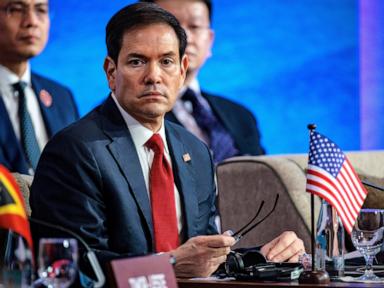
When Marco Rubio stepped up to speak about the conflict grinding through Eastern Europe, the world listened not for military strategy, but for a signal. The message was clear enough: the United States stands ready to help bring an end to a war described simply, starkly, as senseless.
Behind those words lies a reality far heavier than political rhetoric.
Consider a small kitchen in Kyiv. The wallpaper is peeling slightly near the window. On the counter sits a mug of tea, half-full, left behind by someone who had to pack a single bag in under ten minutes. Multiply that quiet, abandoned mug by millions. That is the human balance sheet of conflict. When leaders talk about peace frameworks and territorial negotiations, they are fundamentally talking about whether that tea ever gets made again in peace.
The Weight of Words in High-Stakes Diplomacy
Political declarations often feel abstract to those watching from thousands of miles away. Words like alignment, leverage, and diplomatic resolution drift through news feeds like smoke, easy to glance at and easier to forget.
Yet every phrase uttered by top diplomats carries tangible weight.
Saying a nation is ready to facilitate peace is a shift in posture. It implies that the phase of pure attrition must eventually give way to the agonizingly complex work of statecraft.
Peace is rarely a single moment. It is not a sudden, dramatic drop of a curtain.
Instead, it is a slow, grueling sequence of concessions, guarantees, and delicate balance acts. Think of it like repairing a shattered glass vase. You can press the pieces back together, but every seam remains visible, and the structure demands steady hands just to stay upright.
To understand why this diplomatic signal matters right now, consider the friction points involved:
- The immediate need for verifiable security guarantees that prevent future escalation.
- The overwhelming economic cost of rebuilding shattered infrastructure across entire provinces.
- The delicate political alignment required among global allies who hold differing domestic priorities.
None of these challenges can be solved on a battlefield alone.
Ground Truths and Abstract Strategies
It is easy to analyze geopolitical maneuvers from comfortable offices in Washington or European capitals. We draw lines on maps. We project economic costs over decade-long horizons. We speak in the sterile language of international relations.
Reality is far less tidy.
Hypothetically, picture an engineer named Viktor working to keep a municipal power grid running in the dead of winter. Every repair he makes is a gamble against time and incoming fire. For Viktor, diplomatic statements aren't theoretical discussions about international order. They are a question of whether the lights stay on tomorrow, whether his children sleep through the night without sirens, and whether his hometown has a functional future.
When American officials express readiness to help end the crisis, they are acknowledging a fundamental truth: prolonged conflicts create ripples that no border can contain. Energy markets fluctuate, global food supply chains strain, and the international security framework grows increasingly brittle.
The willingness to broker or support a resolution isn't merely an act of goodwill. It is a recognition of shared vulnerability.
The Long Road from Readiness to Resolution
Signaling a desire to end a conflict is only the first step on a long, precarious path.
The hardest part of any diplomatic process is turning broad intentions into enforceable agreements. History shows us that reaching a consensus requires all involved parties to accept terms that are rarely ideal for anyone at the table. It demands a willingness to step away from maximalist positions in favor of long-term stability.
Will a statement of readiness automatically stop the fighting? No.
Does it mark a crucial inflection point in how the narrative is framed on the global stage? Absolutely.
The true test of international leadership lies in what happens after the speeches end. It requires turning public declarations into quiet, persistent, behind-the-scenes negotiation. It demands finding common ground where none currently appears to exist.
As Washington signals its position, the world watches to see how those words translate into action. The ultimate measure of success won't be found in press releases or diplomatic briefings, but in the quiet that eventually settles over the fields and cities of Ukraine—a quiet where families can finally begin the long, slow work of rebuilding their lives.