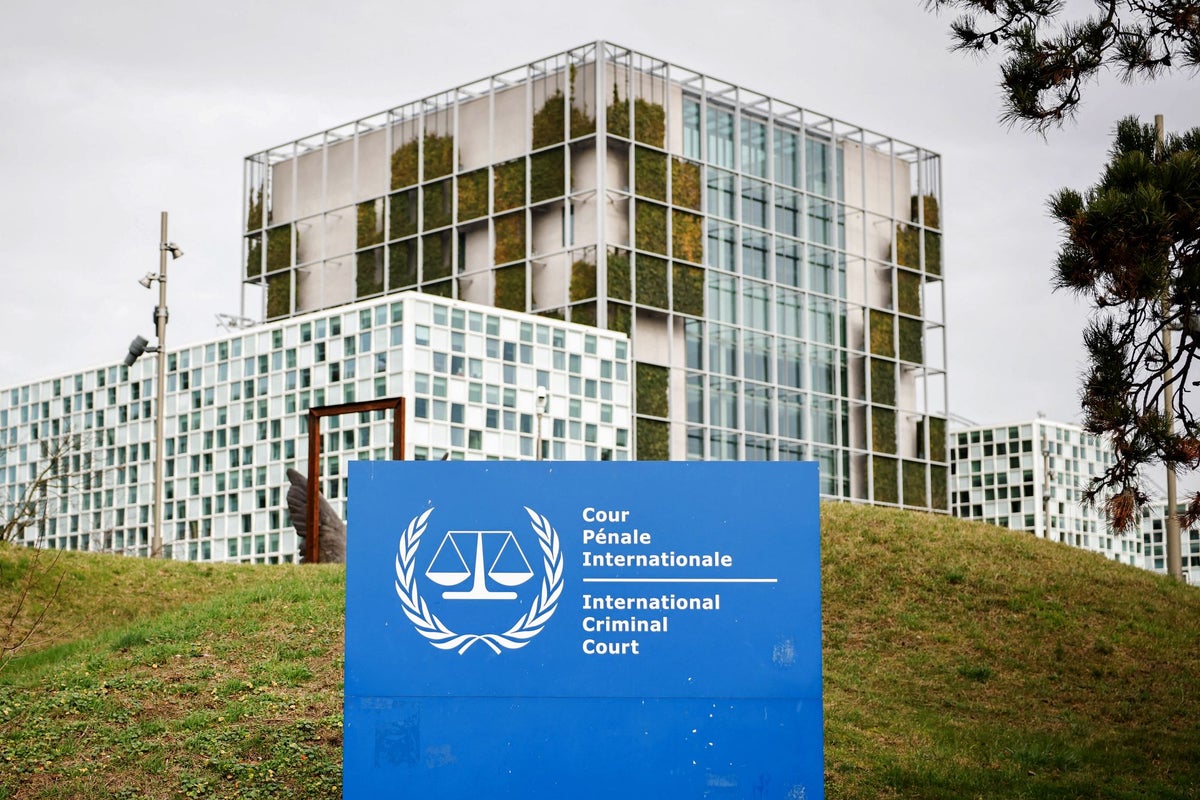
National sovereignty operates as an optimization calculus where the perceived utility of international treaties must exceed their domestic compliance costs. When state survival becomes contingent on unconventional internal security measures and shifts in external patron-client architecture, international legal frameworks are frequently the first variables eliminated from the equation. The formal submission of Niger’s instrument of withdrawal from the Rome Statute of the International Criminal Court (ICC) offers an empirical case study in this structural realignment.
The transition from a signatory state to a withdrawing party follows a highly structured regulatory protocol under Article 127 of the Rome Statute. Niger submitted its formal written notification to the United Nations on June 18, 2026. This action initiates a non-negotiable 12-month cooling-off period, meaning the exit will not take effect until June 18, 2027. This legal temporal buffer dictates that Niger remains fully bound by all statutory obligations, including cooperation with ongoing investigations, for crimes committed up to the precise date of formal termination.
The Strategic Triad Driving Institutional Attrition
The decision by Niamey to become only the third country in history to complete a formal exit from the court—following Burundi in 2017 and the Philippines in 2019—cannot be understood as an isolated act of diplomatic friction. Instead, it is the logical outcome of a regional realignment strategy executed by the Alliance of Sahel States (Alliance des États du Sahel, or AES), a mutual defense and economic bloc formed by Niger, Mali, and Burkina Faso.
The structural drivers of this institutional breakdown categorize cleanly into three operational dimensions:
1. The Cost Function of Domestic Counter-Insurgency Operations
The primary internal variable is the escalating threat of non-state armed actors across the Sahel region. Militant groups linked to Al-Qaeda and Islamic State affiliates have systematically targeted urban infrastructure, illustrated by the June 2026 assault on the Diori Hamani International Airport in Niamey—a critical military asset housing the state's command center, drone fleet, and joint AES operations.
In response, the ruling military junta, led by General Abdourahamane Tiani, has transitioned to high-intensity, unrestricted kinetic operations. The structural bottleneck of remaining within the ICC framework is the legal exposure of state military personnel to war crimes investigations. By executing an exit strategy, the state aims to remove the long-term threat of external prosecution for domestic military operations, altering its strategic operational risk profile.
2. External Patron Realignment and Geopolitical Arbitrage
The 2023 coup d'état that restructured Niger’s domestic governance triggered a systematic dismantling of traditional Western security architectures, notably involving the expulsion of French and American counter-terrorism contingents. The resulting security vacuum necessitated a rapid pivot toward alternative security providers, specifically the Russian Federation and its state-aligned expeditionary security frameworks.
This creates a distinct geopolitical friction point. Russian President Vladimir Putin is currently subject to an active ICC arrest warrant issued in 2023. For a sovereign state deeply integrated into the Rome Statute, hosting or conducting high-level statecraft with individuals under an active ICC warrant creates an unsustainable compliance contradiction. Exiting the treaty removes this legal barrier, lowering the transactional friction of military and political cooperation with Moscow.
3. The Selective Justice Critique and Legal Legitimacy Decay
The formal justification provided in Niger's notification letter centers on the systemic bias or "selective justice" of the tribunal. This argument aligns with long-standing structural critiques from African Union members regarding the disproportionate focus of the court's prosecutorial docket on the African continent.
From an analytical standpoint, the institutional legitimacy of any supranational court depends on the voluntary alignment of its member states. When a regime perceives that the court functions as an asymmetric instrument of geopolitical pressure rather than an impartial arbiter, the perceived compliance value drops to zero.
The Legal and Kinetic Consequences of Institutional Severance
The structural mechanics of an ICC withdrawal alter the legal landscape, but they do not provide immediate retroaction. This lag creates a dual-track security environment over the next 12 months.
[June 18, 2026: Letter Submitted] ──> [12-Month Transition: Full ICC Jurisdiction] ──> [June 18, 2027: Exit Finalized]
The first track is defined by strict statutory continuity. Under international law, any alleged atrocities committed within Niger's borders or by its nationals prior to June 18, 2027, remain within the investigative purview of the Office of the Prosecutor at The Hague. The state cannot retroactively erase jurisdiction. The second track is the near-total collapse of operational data sharing and investigative cooperation between local judiciaries and international investigators, effectively neutralizing the court’s practical capacity to collect evidence on the ground.
This legal decoupling mirrors a broader regional trend toward institutional insulation. The AES states had already initiated their departure from the Economic Community of West African States (ECOWAS) in early 2024, citing similar grievances over sovereignty and external interference. The exit from the ICC completes the secondary phase of this insulation strategy, creating an integrated, legally distinct enclave in the Sahel that operates entirely outside Western-aligned multilateral frameworks.
The Strategic Projection
The departure of Niger confirms a fundamental fragmentation within the global rules-based order. Supranational judicial frameworks are losing their deterrence capabilities in regions experiencing active existential security crises. Over the 2026–2030 horizon, the Sahel will increasingly rely on localized, bilateral security pacts backed by non-Western powers, prioritizing immediate state survival over long-term compliance with international human rights law.
The international community should anticipate that Mali and Burkina Faso will rapidly formalize their own pending instruments of withdrawal to maintain structural symmetry within the AES bloc. For international businesses, NGOs, and logistics operations within West Africa, this shifts the risk assessment paradigm. Legal recourse via international tribunals will cease to exist as an effective compliance mechanism within the region. Risk mitigation strategies must transition toward localized arbitration, private security architectures, and direct political risk insurance calibrated for an environment where local sovereign authority is absolute and unmonitored by global courts.


