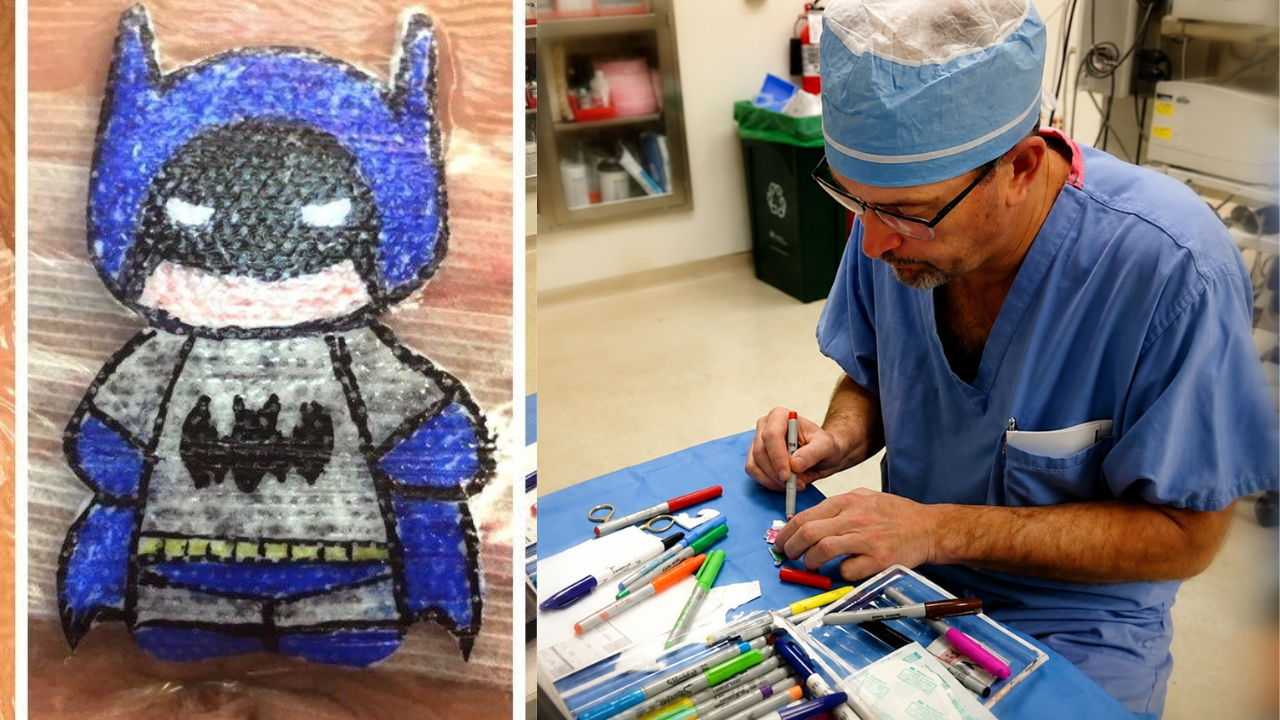
Medical environments generate acute cognitive load for pediatric patients. The transition from general anesthesia to consciousness is routinely compounded by sensory overload, sterile surroundings, and the immediate visual reminder of bodily trauma via surgical dressings. Clinical workflows traditionally treat this postoperative vulnerability as an inevitable psychological cost to be managed pharmacologically or mitigated through generalized distraction methods.
Systemic observation of pediatric surgical outcomes reveals a persistent failure mode: the primary permanent memory of a necessary clinical intervention often centers on the physical scar and the clinical anxiety surrounding the procedure. Addressing this experiential deficit requires an operational intervention that alters the patient's cognitive appraisal of the postoperative phase. Dr. Robert Parry, a pediatric surgeon at Akron Children's Hospital, has executed an operational routine over a career spanning thousands of cases that re-engineers this critical transition point through customized bandage artistry. Deconstructing this practice exposes a repeatable framework for reducing patient distress and altering clinical touchpoints through low-cost, high-impact design choices.
The Cognitive Mechanics of Postoperative Anxiety
When a child emerges from anesthesia, the brain attempts to synthesize unfamiliar internal sensations with external environmental cues. Pain receptors fire from the surgical site, while visual confirmation of clinical hardware reinforces a state of perceived threat. Psychological research into pediatric medical trauma demonstrates that early sensory anchors significantly dictate long-term medical compliance and anxiety levels. If the initial post-surgical anchor is clinical sterility and pain, subsequent healthcare avoidance behaviors increase.
A personalized surgical dressing acts as a cognitive interceptor. By transforming a standard white Telfa pad into a representation of a preferred cartoon character, superhero, or personal interest item, the practitioner alters the immediate semiotics of the wound.
- Sign Substitution: The visual dominant shifts from clinical trauma (the wound and sterile white gauze) to positive pop-culture icons or personal affinities.
- Locus of Control Shift: Pre-surgical consultations involve asking the patient what design they prefer, granting a minor vector of autonomy within an otherwise completely disempowering clinical environment.
- Dopaminergic Association: Recognition of a favored design triggers familiar, positive neural pathways precisely when stress hormones like cortisol peak.
This mechanism explains why children routinely search for their custom dressing immediately upon awakening. The dressing ceases to be a badge of injury and functions instead as a personalized artifact.
Operational Constraints and Resource Economics in Clinical Settings
Critics of bedside personalization often point to time constraints, sterile field protocols, and physician bandwidth as prohibitive barriers. High-volume surgical environments operate on strict margin efficiencies, where turnover times directly dictate institutional throughput. A structural analysis of the five-minute artistic intervention reveals how these constraints are successfully navigated without disrupting hospital economics.
The execution phase occurs exclusively post-procedure. Once the primary surgical steps conclude, the sterile closure is secured, and standard dressings are applied. The artistic modification happens on the outermost layer of the dressing or on a secondary layer where sterile integrity is maintained without compromising the wound boundary.
Furthermore, the resource inputs are trivial. A standard multi-color marker set requires negligible capital expenditure compared to pharmaceutical anxiety management interventions. The labor cost is limited to approximately three to five minutes of post-operative physician time. From an operational perspective, this represents an exceptionally high return on investment in patient satisfaction metrics, family trust, and institutional brand loyalty.
The Downstream Impact on Caregiver Dynamics
Pediatric surgery imposes severe psychological strain on parents and guardians. The anxiety of the caregiver directly feeds into the emotional state of the child, creating a feedback loop of distress. Standard medical updates delivered via clinical jargon often fail to alleviate this foundational parental anxiety.
When a surgeon delivers a custom-drawn dressing featuring a specific request—such as an exotic car, a sports team logo, or a specific animal—it signals a level of individualized attention that transcends baseline clinical duty. This tactile token functions as a physical receipt of empathy.
Data from family retention patterns show that these dressings frequently escape the standard hospital waste stream. Parents routinely preserve the artwork in scrapbooks or advocate against early removal during follow-up appointments because the artifact recontextualizes a traumatic milestone into an emblem of resilience. This shift alters the institutional relationship between the family and the healthcare provider, transforming a transactional medical procedure into a memorable human partnership.
Scaling Human-Centric Design in Rigid Hierarchies
The primary limitation of individual artistic interventions is dependency on practitioner capability. Not every surgeon possesses the inclination, patience, or visual dexterity to execute custom illustrations on demand. Consequently, scaling this model requires institutionalizing the principle rather than the specific medium.
Hospitals seeking to replicate these psychological outcomes cannot mandate artistic training for surgical staff. Instead, they can build standardized protocols for pediatric engagement:
- Pre-Operative Preference Capture: Standardize intake forms to log non-clinical patient preferences alongside medical histories.
- Decoupled Creative Roles: Utilize child life specialists or recovery room nurses equipped with pre-printed, medically safe adhesive appliqués or stamps if surgical staff cannot manually draw.
- Environmental Audits: Evaluate recovery bays to ensure visual stimuli actively counter clinical sterility during the immediate post-anesthesia phase.
Institutions that treat the psychological interface of surgery as secondary to the technical execution will continue to produce high clinical success paired with high patient friction. True operational excellence in pediatric medicine requires optimizing both the structural closure of the wound and the cognitive framing of the recovery.
Implement a mandatory preference-logging field in the pre-surgical electronic health record to track patient interests, allowing any member of the perioperative care team to deliver a customized visual anchor upon awakening, decoupling the intervention from a single practitioner's artistic schedule.
Pediatric Surgeon Makes Kids Smile With Custom Cartoon Bandages to Cover Their Scars - This video demonstrates how custom bandage designs are applied in a clinical setting to reduce anxiety for young patients waking up from surgery.