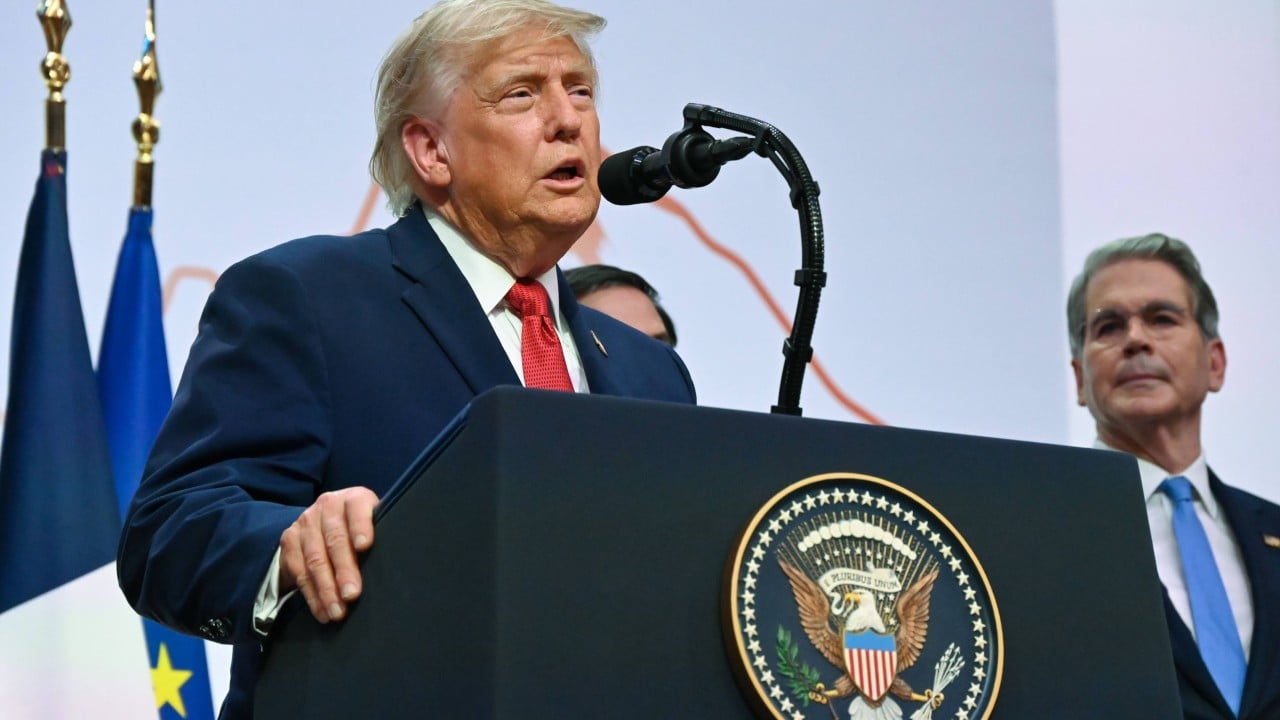
The ink on an international accord is rarely just ink. Long before a pen touches paper in a brightly lit briefing room, the reality of global diplomacy operates in a starkly different environment—one defined by windowless rooms, quiet handshakes, and carefully guarded secrets. When a leader presents a still-unseen diplomatic agreement as a definitive framework for lasting peace, they are not just selling a policy. They are asking the public to buy a commodity that cannot yet be inspected: trust.
Diplomacy has always danced along this wire. On one side lies the necessity of absolute confidentiality during sensitive negotiations; on the other lies the democratic demand for transparency. When these two forces collide, the language of statecraft shifts from legal precision to grand narrative.
The mechanics of the unseen
To understand why a state leader might market a secret agreement with absolute certainty, one must look at the structural nature of high-stakes negotiations. Imagine a closed-door session where negotiators from competing nations sit across from one another. In these spaces, ambiguity is a currency. A concession made in private can easily be denied in public if the broader framework falls apart. This absolute privacy creates a safe harbor where adversaries can test boundaries without the immediate pressure of domestic political backlash.
But this privacy creates a distinct paradox when transitioning to the public stage. A leader cannot easily build momentum for a deal by saying, "We have agreed on technical technicalities that we cannot disclose." Instead, the rhetoric must scale upward. The language shifts to sweeping historical constants: stability, generational shifts, and permanent resolutions.
Consider how agreements have historically been introduced to the world. The public is rarely handed a line-by-line breakdown of enforcement mechanisms on day one. Instead, they are given an overarching promise. The challenge arises when the gap between the promise and the eventual disclosure remains open for too long. In that vacuum, skepticism naturally grows.
The human cost of geographic calculus
Behind every abstract geopolitical strategy lies a tangible human reality. When analysts talk about regional containment, enrichment percentages, or sanctions frameworks, they are fundamentally talking about lines that intersect with daily life.
For an ordinary citizen living in a zone of geopolitical tension, a diplomatic deal is not a theoretical chess move. It dictates the cost of basic goods, the stability of the local currency, and the daily calculation of personal safety.
When an agreement is kept secret while being sold as a triumph, it leaves the people most affected by its outcomes in a state of suspended animation. Businesses cannot plan long-term investments without knowing the underlying rules of trade. Families separated by borders or travel restrictions cannot foresee whether pathways will open or close. The grander the promise of the unrevealed deal, the higher the psychological stakes for those waiting on the periphery.
This reality highlights the fundamental tension of modern statecraft. To achieve the breakthrough, negotiators require secrecy. But to sustain the breakthrough, they require public legitimacy. Legitimacy cannot be engineered through rhetoric alone; it requires verification.
The burden of verification
History suggests that the longevity of any peace agreement relies less on the enthusiasm of its announcement and more on the rigor of its verification protocols. A secret deal creates immediate diplomatic capital, but that capital depreciates rapidly if verification mechanisms are omitted or unworkable once the text comes to light.
Trust, in the international arena, is a structural asset built on predictable behavior. When an agreement remains hidden from scrutiny, observers are forced to rely entirely on behavioral cues. How are allied nations reacting? Are defense postures shifting? Is there a quiet realignment of regional intelligence sharing? These subtle movements often tell a more accurate story than any official press conference.
The true test of any diplomatic endeavor is not the initial applause it generates, but its capacity to withstand the friction of implementation. When the curtain is finally pulled back, the transition from a compelling promise to a functional reality requires a meticulous alignment of law, verification, and human buy-in. Without those elements, even the most artfully marketed peace remains nothing more than a temporary pause in a longer, unresolved narrative.