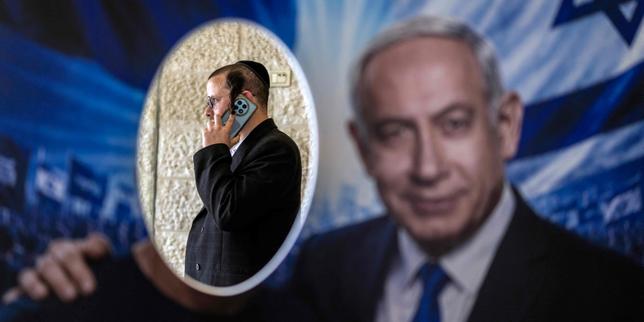
The coffee in the corner shop of Jerusalem’s Kiryat Menachem neighborhood has gone lukewarm in its paper cup. Outside, the midday Mediterranean sun beats down on the asphalt with a punishing glare, but inside, the air conditioning hums a low, desperate tune against the heat. A veteran party member—let us call him Avi, a man whose loyalty to the Likoud movement stretches back decades to the days of Menachem Begin—stare down at his smartphone. On the screen, a fresh wave of primary election results flickers in blue and white.
Avi does not smile. He does not curse. He simply lights another cigarette, exhales toward the ceiling tiles, and watches his party transform itself once more.
To understand modern Israeli politics from the outside is to look at a stained-glass window from the dark side of the street: you see only jagged shapes and opaque hues. Foreign analysts often speak of coalitions, mandates, and Knesset arithmetic as if politics were a spreadsheet. But anyone who has stood in a humid school gymnasium converted into a polling station knows better. Politics here is flesh and blood. It is kinship. It is an instinct for survival forged in a neighborhood where yesterday’s ally can quickly become tomorrow’s rival.
Right now, that survival instinct has a name: Benjamin Netanyahu.
The Anatomy of Control
Power in a democratic party does not usually belong to the man who holds it loudest. It belongs to the man who makes himself indispensable.
Consider how a primary functions under the surface. It is not merely an ideological referendum. It is an intricate web of personal debts, municipal favors, regional loyalties, and generational transitions. For months, political commentators in Tel Aviv debated whether Netanyahu’s grip on the Likoud party apparatus was finally loosening. They pointed to murmurs of discontent among younger faction members, to fatigue among traditional voters, to the endless churn of legal battles and parliamentary friction.
They misread the architecture entirely.
Netanyahu did not survive decades at the apex of Israeli statecraft by accident. He survived because he understands a fundamental truth about political parties: loyalty is engineered, not inherited. By shaping the primary rules, by cultivating networks of local activists—often referred to colloquially as the merkaz or central committee operatives—and by tying his personal political survival to the fate of every single candidate on the list, he created an invisible scaffolding.
When you pull on one beam of that scaffolding, the whole structure groans. No one wants to be the one who brings the roof down.
Inside the Machinery
Step closer to the ground level. Imagine a regional party coordinator in Petah Tikva. Let us call her Miriam. She has spent twenty years organizing neighborhood rallies, handing out flyers in searing heat, and calling hesitant voters until her throat went raw. To Miriam, Likoud is not a policy paper. It is an extended family that gave her a voice in a country that often feels too loud, too fast, and too unforgiving.
When primary season arrives, Miriam receives calls from various hopefuls promising the moon. They talk about economic reforms, security doctrines, and diplomatic breakthroughs. Miriam listens politely. But when she casts her vote, she looks for something else entirely. She looks for continuity. She looks for the anchor.
In the psychology of the Likoud primary voter, stability outweighs experimentation. Every time external pressures mount—whether from regional adversaries, international bodies, or domestic opposition—the instinct of the base is to hunker down. They circle the wagons. They rally around the figurehead who has come to personify their shield against an external world they deeply mistrust.
This is the invisible engine driving the primary results. It is not a blind endorsement of every policy decision; it is a calculated choice for collective security. The voters know that Netanyahu is the gravitational center. Remove him, and the planetary system flies apart in a dozen unpredictable directions.
The Cost of Absolute Alignment
Yet, this mastery comes with a quiet, corrosive cost.
When a party's entire identity fuses with a single individual, the space for internal debate narrows to a razor’s edge. Dissent becomes dangerous. Nuance is treated as betrayal. During the primary campaign, ambitious younger politicians found themselves walking a tightrope: they needed to signal enough independence to attract reform-minded voters, yet remain loyal enough to the leader's base to secure a safe spot on the electoral slate.
It is a delicate, exhausting dance. Watch a rising star on a debate stage. You can see the mental calculation behind every sentence. Say too much, and you alienate the kingmaker. Say too little, and you look like a photocopy rather than a leader.
This dynamic reshapes the very nature of governance. It turns internal party democracy into a loyalty test. The resulting electoral list reflects not necessarily the sharpest legislative minds or the most innovative policy thinkers, but the most disciplined soldiers.
And that is precisely the point.
The Horizon Beyond the Ballot
Night falls over Jerusalem. The streetlights flicker on along Jaffa Road, casting long, fractured shadows across the stone pavements. In the Likoud headquarters, the television screens glow with final tallies, talking heads parsing percentages, and analysts projecting parliamentary seats.
The primary is over. The strategy has held.
Avi stubbs out his cigarette in the Tel Aviv café, pockets his phone, and steps out into the cool evening breeze. He knows, just as Netanyahu knows, that winning the party primary is only the prologue to a much larger, more volatile national drama. The external storm has not abated. The economic anxieties of everyday citizens remain unresolved. The regional fault lines continue to tremble.
Nothing has been permanently settled. Power in this landscape is never owned; it is only rented, day by grueling day, through grit, timing, and an unyielding will to endure.