Handcuffs went on. Cameras flashed. A press release went out.
And everyone exhaled as if that solved anything. If you liked this article, you should read: this related article.
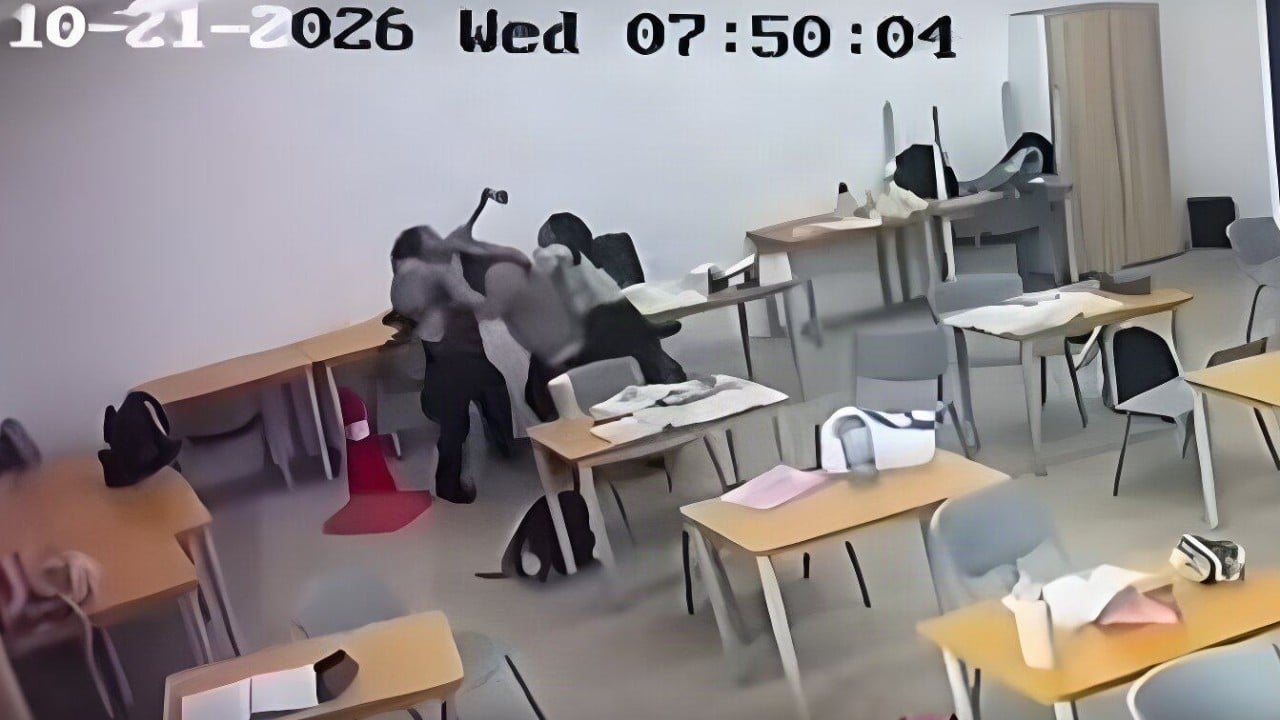
When a teenager broadcasts an axe attack on a teacher in a classroom, standard breaking-news coverage locks into a familiar rhythm. Police arrest the suspect. Commentators demand harsher penalties for youth offenders. Parents ask how a student brought a weapon onto school grounds. Tech critics scold social media companies for failing to stop a live broadcast fast enough.
That reaction is comforting. It is also lazy. For another perspective on this event, see the recent coverage from The Washington Post.
Arresting a teenager after an attack is a legal aftermath, not a safety diagnosis. When a classroom attack is live-streamed, the story is not just an isolated act of student violence or a single broken adolescent mind. It is a collision between physical school security, youth behavioral warning signs, and real-time digital distribution systems built to reward shock and speed.
If we treat a live-streamed classroom assault like a simple whodunit with a neat courtroom ending, we miss the mechanics that turned a private crisis into a public spectacle.
The Lazy Consensus Around Youth Crime and Platform Blame
Standard coverage usually splits into two predictable camps. One camp treats the event purely as a policing and discipline story: a violent teen snapped, carried out an attack, and was taken into custody. The other camp treats it purely as a content-moderation failure: a platform failed to detect violence in real time and shut the stream down before viewers saw it.
Both camps grab onto real pieces of the puzzle and then stop looking.
Focusing solely on arrest and punishment assumes deterrence works the same way on a dysregulated or radicalized teenager as it does on a calculated adult fraudster. Criminologists and developmental psychologists have spent decades showing that adolescent decision-making under acute stress, anger, or performative pressure is heavily skewed toward immediate status, peer reaction, and emotional release rather than long-term legal consequences. Handcuffs matter for accountability and immediate public safety. They do not explain why the threat escalated unnoticed inside a school building or why the act was framed for an audience.
Blaming live-streaming platforms alone makes the opposite mistake. It treats real-time video like a static photo sitting in a review queue. Real-time streaming operates under extreme latency constraints. Automated classifiers struggle with novel scenes, chaotic camera motion, ambiguous objects, and rapid context shifts inside a classroom where normal horseplay, drama skits, and genuine danger can look visually similar for the first few seconds. Even when human moderators or automated flags trigger, by the time a human reviews a frame or escalates to law enforcement, the most damaging moments have often already played out.
A live-streamed classroom attack is not one failure. It is a chain of failures across environments that rarely talk to one another until something breaks.
What People Actually Get Wrong About These Incidents
When people search for answers after a story like a Malaysian teen arrested over a live-streamed attack on a teacher, they usually ask the wrong questions first.
- "Why didn't security stop the weapon at the school gate?" Metal detectors and bag checks sound decisive, yet most secondary schools globally are not built like high-security courthouses. Tools like axes, hatchets, or utility blades are often concealed easily, brought in during transitions, or left in bags before classes start. Treating perimeter screening as a silver bullet ignores how classroom incidents actually unfold.
- "Why didn't the platform immediately cut the stream?" Real-time detection systems operate on probabilities and milliseconds, not omniscience. Demanding instant perfection from automated moderation hides a harder truth: live video designed for shock value exploits the exact gap between capture, transmission, and intervention.
- "Was this just about viral fame?" Audience incentives matter, especially when teens chase notoriety or peer reactions online. Still, reducing every broadcast attack to "clout" flattens complex grievances, classroom conflicts, mental health deterioration, and online echo chambers into a single cartoon motive.
Battle Scars From High-Risk Safety and Trust Systems
I have spent years working around high-stakes trust, safety, and incident-response operations where people assume better policies or tougher rules fix human behavior overnight. I have watched organizations pour millions into surface-level optics—more cameras, louder warnings, thicker compliance binders—while ignoring the quiet operational gaps where real risk lives.
In crisis response, two terms get thrown around loosely: prevention and mitigation.
- Prevention means stopping the harmful event or broadcast from happening in the first place.
- Mitigation means shrinking the harm, speeding up containment, and limiting secondary spread once an incident starts.
People constantly confuse the two. A school policy banning weapons or a platform rule banning violent streams is a baseline standard, not a working control. A control only exists when someone notices early warning signs, acts before escalation peaks, and coordinates response cleanly when seconds count.
Work by behavioral threat assessment researchers such as Marisa Randazzo and colleagues at the U.S. Secret Service National Threat Assessment Center has consistently highlighted a pattern across targeted school and institutional violence: attackers rarely appear out of thin air without prior leakage—comments, behavioral shifts, fixation, or distress noticed by peers or adults beforehand. Meanwhile, media and communication scholars like Alice Marwick and danah boyd have long documented how networked publics amplify sensationalized or shocking behavior across platforms far faster than institutions can contextualize it.
Put those two realities together and the picture sharpens. Offline warning signs and online performance feed each other. If adults treat school safety purely as physical lockdown and digital safety purely as post-hoc takedowns, the gap right in the middle stays wide open.
Imagine a scenario where a student shows weeks of escalating anger, isolates from classmates, and posts cryptic, aggressive clips online that peers brush off as dark humor. On a typical Tuesday, nothing looks extraordinary until a camera goes live in homeroom. By the time a notification reaches an administrator or a moderator, the crisis is already underway. Nothing in that chain failed by accident; the system simply had no fast bridge between early behavioral signals, classroom intervention, and rapid emergency escalation.
The Honest Trade-Offs of Fixing the Real Gaps
If you push for deeper early intervention, faster emergency routing, and tighter coordination between schools, families, and platforms, you cannot pretend there are no costs. Every real safeguard carries friction.
Aggressive monitoring of student messages or social feeds raises serious privacy concerns, chills normal teenage expression, and creates a high risk of false positives that unfairly stigmatize kids who are struggling rather than planning violence. Over-broad automated stream cuts can silence legitimate distress calls, protest footage, or false alarms during school emergencies when students are trying to document what is happening. Even stricter physical controls can turn learning spaces into tense environments that erode trust between teachers and students—the very relationship that often surfaces early warning signs.
Anyone selling a frictionless fix for classroom violence or live-streamed harm is selling an illusion. Real safety work is a constant negotiation between speed, privacy, accuracy, and human trust.
What Actually Needs to Change in Schools, Homes, and Feeds
Moving past headline shock requires practical changes that fit how teenagers actually live and how incidents actually escalate.
- Build low-friction reporting paths for peers. Teens often spot warning signs before adults do, whether in group chats, hallway talk, or online posts. Anonymous, fast, non-punitive reporting channels—paired with clear follow-through so students see reports matter—beat waiting for a teacher to guess something is wrong.
- Train for de-escalation and rapid room containment, not just lockdown drills. When a sudden weapon threat happens inside a classroom, immediate physical separation, clear evacuation or sheltering actions, and direct emergency dispatch matter more than generic checklists.
- Treat livestreaming as a real-time emergency signal, not just a terms-of-service violation. Platforms need clear, high-priority escalation paths with local emergency services for verified imminent violence, alongside faster human review queues for high-risk live broadcasts.
- Separate accountability from performance. Courts and schools must hold perpetrators accountable under the law while denying the spectacle the oxygen it craves—avoiding gratuitous replay of violent footage that fuels copycat ideation or trauma.
Arresting the teenager closes the initial police blotter. Fixing the blind spots between warning signs, classrooms, and live feeds is the work that actually protects the next room.