Handcuffs make great headlines. They do almost nothing to change incentives on the ground.
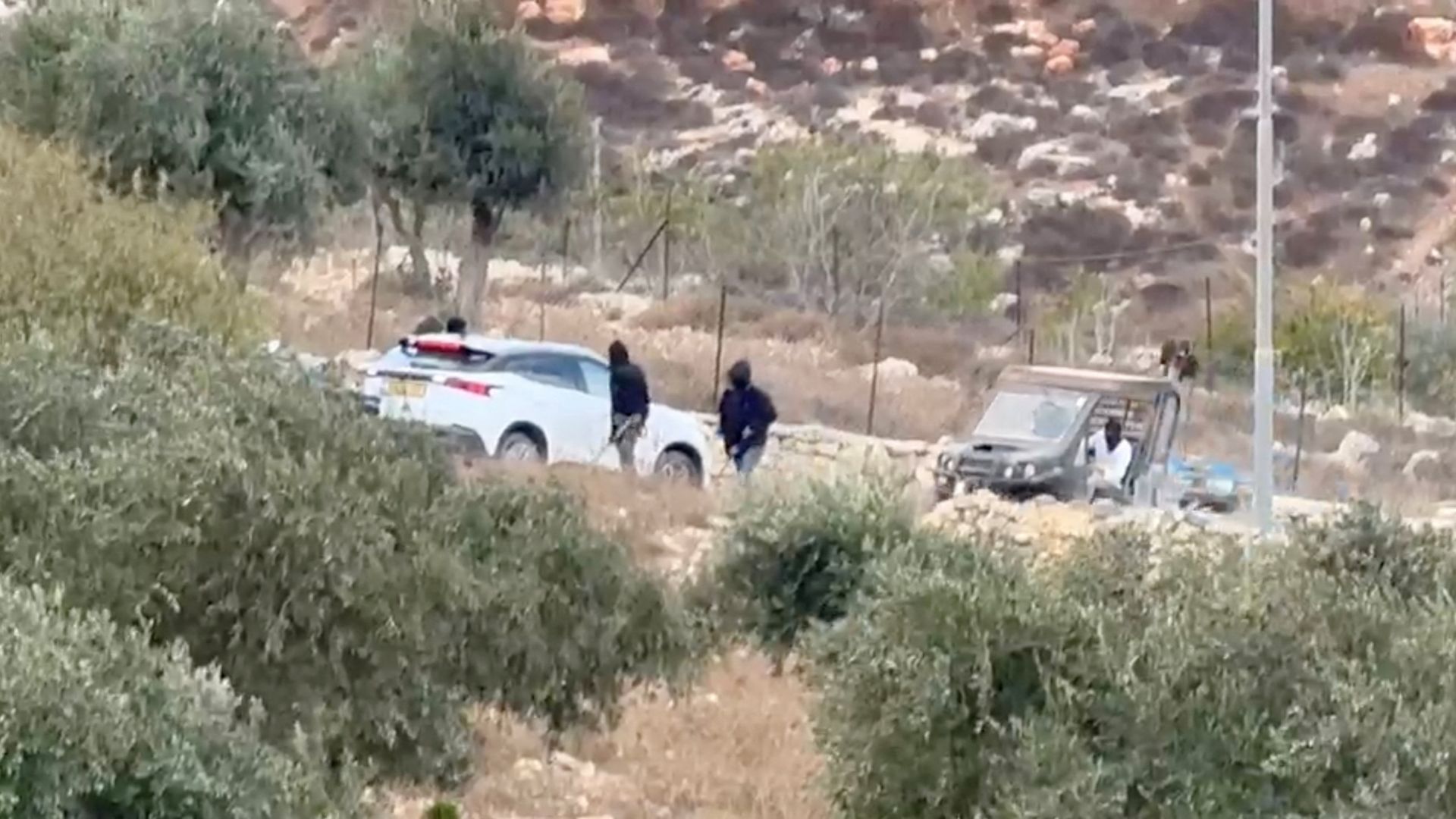
Every time violence flares in the West Bank—especially when a camera strapped to a US photojournalist gets smashed or a European diplomat's convoy gets cornered—the standard wire story follows the same tired script. Arrests happen. Statements fly. Editors file the story under accountability restored, and the next flashpoint arrives on schedule.
That lazy consensus misses the actual mechanics of enforcement, diplomacy, and field safety. Arresting suspects after a high-profile assault does not equal rule of law. Often, it is crisis management dressed up as justice.
I have spent years covering conflict zones and watching how security bureaucracies react when foreign nationals get caught in the crossfire. I have seen newsrooms blow six-figure security budgets on armored vests while ignoring basic operational blind spots. I have watched diplomats treat formal demarches like armor plating. Neither works the way people assume.
The Arrest Myth And Why Headlines Mislead
When a wire report leads with arrests following attacks on a US photojournalist or European diplomats in the West Bank, the immediate takeaway for casual readers is simple: the system caught the culprits.
Stop right there. In contested jurisdictions with overlapping legal authorities, fragmented policing, and intense political pressure, an arrest is an administrative event, not a conviction or a deterrent.
Let us define the terms precisely before going further. Policing is the day-to-day maintenance of order and detention of suspects. Prosecution is the formal charging and legal testing of evidence in court. Deterrence happens only when offenders expect swift, consistent, and costly consequences regardless of who is watching.
Conflating those three terms is where most coverage goes off the rails. A suspect can be detained for questioning, released on bail or administrative terms within days, and never face a felony trial. Even when charges are filed, case attrition in politically sensitive environments is notoriously high.
Consider how incentive structures work for a local commander facing international outrage over a foreign press incident. An arrest lowers diplomatic temperature fast. A quiet release weeks later rarely gets the same front-page placement. If the political cost of arresting someone spikes only when foreign envoys complain, then domestic enforcement stays selective by design.
Are Arrests Actually Stopping West Bank Violence?
Ask any search engine what people want to know after one of these incidents, and the same questions pop up: Do arrests stop settler attacks? Why do foreign journalists and diplomats get targeted? What happens to people arrested in the West Bank?
Each of those questions starts from a flawed premise.
First, asking whether arrests stop violence treats complex, ideologically and territorially driven friction like a routine street crime problem. Crime deterrence relies on predictability. When enforcement fluctuates between crackdown and leniency depending on diplomatic heat, perpetrators read the signal as temporary noise rather than permanent risk.
Second, asking why photojournalists and diplomats get targeted assumes they are always singled out in a vacuum. Sometimes they are harassed precisely because cameras record what actors want hidden, or because diplomatic plates signal high-profile outsiders meddling in contested space. Other times, teams operating near active friction zones simply become targets of opportunity when tensions spike. Either way, a press badge or consular flag is a visibility multiplier, not a force field.
Third, asking what happens after an arrest misses the real bottleneck: follow-through. Detention statistics tell you who was picked up. They tell you very little about evidentiary standards, witness protection, jurisdictional friction between civilian and military authorities, or long-term sentencing rates.
Thought experiment: Imagine a scenario where every single assault against foreign media or diplomatic personnel in a contested territory triggers an automatic, transparent public docket—tracking arrest date, charge sheet, court hearing dates, and final disposition within 90 days. Watch how quickly rhetoric changes when the paper trail stays open after the cameras leave.
What Foreign Diplomats And Photojournalists Get Wrong In The Field
Foreign envoys and photojournalists operate under completely different mandates, yet both frequently misread their own leverage in high-friction areas.
Diplomats lean heavily on status, protocol, and bilateral relationships. In routine capitals, those tools carry real weight. In volatile field environments where local actors distrust foreign institutions or view outside monitors as hostile, diplomatic status can turn a routine movement into a standoff. A stern communiqué from Brussels or Washington carries long-term political gravity, sure. On a dusty road in real time, a communiqué cannot move a blocked vehicle.
Photojournalists face the opposite trap: over-relying on gear and instinct while under-investing in situational analysis. Carrying pro-level telephoto lenses, dual bodies, and ballistic plates signals professionalism, yet gear creates its own liabilities. Heavy cameras slow movement. Bright press markings draw eyes in chaotic crowds. Worse, lone freelancers or poorly coordinated crews often push into volatile pockets without reliable local contacts or clear extraction routes.
I have seen seasoned reporters walk straight into predictable bottlenecks because they trusted adrenaline over pattern recognition. When crowds gather, vehicles stage on ridges, or tension rises at checkpoints, the warning signs are rarely subtle. Ignoring them in pursuit of a dramatic frame is a choice, not bad luck.
The Security And Accountability Gap
To understand why these incidents keep repeating, look at the gap between tactical reaction and structural enforcement.
| Dimension | Headline Narrative | Field Reality | Practical Consequence |
|---|---|---|---|
| Arrests | Proof that law enforcement is cracking down | Often a short-term de-escalation move | Limited long-term deterrence without convictions |
| Diplomatic Protection | Consular status deters escalation | Status can attract scrutiny in hostile pockets | Convoys still face roadblocks and harassment |
| Press Credentials | Clear markings protect journalists | High visibility can make crews prime targets | Cameras draw direct confrontation during flashpoints |
| Accountability | Statements signal lasting reform | Follow-through fades once media attention drops | Repeat incidents occur without systemic change |
International legal observers, press-freedom monitors such as the Committee to Protect Journalists, and conflict analysts have pointed out for years that ad-hoc responses fail to build durable norms. When accountability depends on viral outrage or ambassadorial phone calls, protection becomes a privilege of proximity rather than a consistent standard.
At the same time, fairness requires acknowledging the operational complexity faced by security forces tasked with patrolling volatile terrain. Crowd control, rapid-response deployments, and mixed civilian-security environments create real friction and split-second dilemmas. Pretending enforcement is effortless is just as lazy as pretending arrests solve everything.
Where This Contrarian View Can Go Wrong
Pushing back against the "arrests equal progress" narrative carries its own risks if taken too far.
First, dismissing arrests outright can slide into cynicism. Detaining suspects who commit violence is still a necessary step in any functioning legal system. If you wave away every arrest as mere optics, you risk discounting genuine investigative work or real accountability when it actually occurs.
Second, focusing heavily on operational mistakes by journalists or diplomats can sound like blaming the people on the receiving end of unlawful behavior. Let us be crystal clear: violence against reporters and diplomats is unacceptable regardless of how a crew positioned itself or how a route was planned. Analyzing tactical risk is about survival and precision, never excusing unlawful acts.
Third, over-indexing on institutional mechanics can make human stakes feel clinical. Behind every diplomatic protest or broken camera is a real person dealing with fear, physical threat, and lasting stress.
Actionable Steps That Actually Work
If you care about real safety in the field and genuine accountability rather than recycled press releases, stop cheering arrests in isolation and focus on what moves the needle.
- Track outcomes past day three. When reading coverage of West Bank attacks on photojournalists or diplomats, bookmark the story and check back in a month. Look for formal indictments, court dates, and verdicts—not just initial custody announcements.
- Audit field movement before rolling. Photojournalists and security planners should treat route planning like a pre-flight check: map two independent exits, verify real-time local conditions with trusted sources on the ground, and set hard turn-around triggers before entering flashpoint zones.
- Separate diplomatic signaling from tactical protection. Governments should stop treating a formal protest note as a substitute for clear rules of engagement, consistent law enforcement follow-through, and tangible consequences for repeat offenders.
- Demand verifiable transparency over talking points. Journalists, editors, and citizens should press officials for concrete metrics—indictment rates, prosecutions completed, and protective measures enforced—rather than accepting vague assurances that "the matter is under investigation."
Arrests end a news cycle. Convictions and consistent enforcement change behavior.