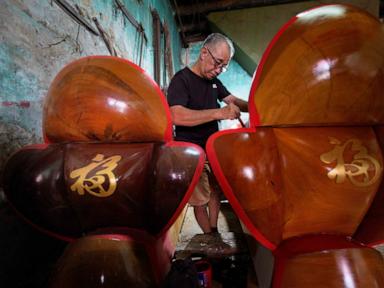
Every few years, a well-meaning feature writer wanders into a dimly lit workshop in Klang or Penang, watches an elderly craftsman carve tropical hardwood, and publishes a tear-jerking obituary for a dying trade. The headline is always some variation of the same tired lament: modernization is killing the ancient art of Chinese coffin-making, and soon, this precious heritage will vanish into the sterile maw of industrial cremation and particle-board boxes.
It is a deeply comforting narrative for cultural tourists. It is also entirely wrong.
The traditional Chinese coffin industry in Malaysia is not dying. It is undergoing a brutal, highly lucrative stratification. While low-end mass production has captured the commoditized funeral market, the high-end artisan sector is thriving as a clandestine luxury goods market. These workshops do not survive on charity or cultural subsidies; they survive because they operate at the intersection of raw timber scarcity, ancestral status anxiety, and ultra-high-net-worth estate planning.
If you think a traditional shoumu—a longevity coffin—is merely a burial box, you misunderstand the mechanics of dynastic wealth and mortuary economics in Southeast Asia.
The Lazy Consensus of the Dying Craft
The prevailing media narrative relies on a lazy premise: young people do not want to sweat over hand planes and lacquer brushes, therefore the craft is collapsing. This ignores basic market economics. When a skill requires decades of mastery and deals with rare, protected materials, you should not expect it to scale like fast fashion.
In reality, the perceived shortage of apprentices is not a failure of youth culture. It is an intentional barrier to entry erected by master craftsmen protecting the valuation of their intellectual property. Woodworking schools do not teach the specific grain-matching required for tropical hardwoods exposed to extreme equatorial humidity. That knowledge stays locked within family lineages and tight-knit trade guilds for a reason: scarcity drives pricing power.
Let us look at the numbers that the sentimentalists ignore. While standard cremation rates have risen across urban centers, the demand for custom, solid-wood traditional caskets among ethnic Chinese business elites in Malaysia, Singapore, and Indonesia has scaled upward in tandem with regional wealth accumulation. When a patriarch of a multi-million-dollar palm oil or real estate empire passes away, his family does not bargain-shop on funeral arrangements. They buy social capital, filial piety theatre, and generational legacy. A mass-produced MDF box wrapped in wood-grain vinyl will not do. They require Chengal. They require camphor wood. They require craftsmanship that takes six months to cure and finish.
Timber Economics and the True Store of Value
To understand why this industry is booming, you must understand the asset class driving it: tropical old-growth timber.
Traditional Chinese coffins are defined by the wood. Historically, the gold standard was Phoebe zhennan (nanmu), but in maritime Southeast Asia, the crown belongs to Neobalanocarpus heimii, commonly known as Chengal. Chengal is virtually indestructible. It resists termites, fungus, and moisture so effectively that structures built from it centuries ago still stand in tropical rainforests.
Today, getting legal, high-grade Chengal of sufficient girth to hollow out a single-log traditional coffin is an exercise in complex logistics and escalating regulatory walls. Governments across Southeast Asia have tightened logging concessions and export bans on raw timber to combat deforestation.
Consequently, the raw material sitting inside these traditional workshops appreciates faster than standard commercial real estate. A master craftsman who purchased a stockpile of seasoned Chengal logs in the nineteen-nineties is sitting on a physical treasury. When a family commissions a custom coffin today, they are not just paying for labor; they are acquiring a scarce natural resource that has been legally exempted from modern commercial harvesting limits through grandfathered inventory or smuggled provenance.
The coffin is a vault. It is a tangible store of value, disguised as a ritual object.
Filial Piety as Corporate Public Relations
In modern Chinese diaspora culture across Malaysia and Singapore, death is the final corporate annual report. The funeral is the ultimate public relations event for a family's enduring influence.
Western observers often misinterpret elaborate Asian funeral rites as purely emotional or superstitious expressions of grief. In the upper echelons of Southeast Asian commerce, these rituals are strategic positioning. The quality of the funeral—and by extension, the vessel holding the body—signals the solvency, unity, and generational continuity of the surviving lineage.
A custom-built, hand-carved, multi-layered lacquer coffin tells business partners, competitors, and government regulators that the family's empire remains intact, liquid, and anchored in tradition. The cost of such a vessel frequently runs into five figures, sometimes touching six depending on the grade of timber and the complexity of the traditional joinery.
This is not preservation work for a museum grant. This is luxury bespoke manufacturing operating under the radar of tax auditors and lifestyle magazines. The craftsmen are not struggling paupers; they are elite artisans servicing a clientele that values exclusivity above all else.
Unpacking the Manufacturing Realities
Walk past the romanticized facade of the dusty workshop and examine the actual engineering. This is where the lazy consensus completely collapses.
Traditional Chinese coffin making is an exercise in extreme material science. Unlike Western caskets that rely on metal fasteners, pneumatic nailers, and chemical sealants, a true traditional shoumu is built using intricate mortise-and-tenon joinery without a single metal nail. Why? Because metal expands and contracts at different rates than wood under equatorial temperature swings, which would compromise the seal over decades.
The joinery must be airtight. Historically, the interior was often sealed with layers of natural tree lacquer, hemp fiber, and tung oil—a multi-week curing process that creates a hermetic environment capable of preserving the contents for decades in high-humidity soil.
The master builder must account for:
- Moisture content differentials between core wood and surface layers.
- The shrinkage coefficient of tropical hardwoods during the dry season versus the monsoon season.
- The precise weight distribution required for pallbearers navigating steep ancestral hillside plots.
This is not nostalgic folk art. This is advanced, pre-industrial aerospace engineering applied to timber. The artisans who command these techniques do not need saving by cultural preservation funds. They need recognition as masters of high-tolerance manufacturing.
The Contrarian Reality Check
If you want to support or invest in this space, stop looking at it through the lens of charity and heritage rescue. Look at it as a masterclass in supply chain moat building.
The workshops that survive and dominate the high-end market do not market themselves on Instagram or pitch venture capitalists. They rely on multi-generational networks of trust, unyielding quality standards, and an absolute monopoly on scarce raw materials. They understand that as the world becomes increasingly synthetic, digitized, and disposable, the premium for absolute permanence—manifested in four inches of solid, hand-planed tropical hardwood—will only skyrocket.
The trade is not fading. It is simply pricing out the tourists.