The chalk dust always settled first. Every morning in the eastern provinces of the Democratic Republic of Congo, long before the sun managed to pierce through the heavy, humid mist rolling off the hills, the classrooms filled with the quiet rustle of cheap notebooks and the rhythmic scratching of slate. For children living under the long, heavy shadow of rebel occupation, a classroom was not merely a room with four walls and a chalkboard. It was a fortress of normalcy. A defiant space where the brutal mathematics of civil conflict could be temporarily suspended by the simple act of learning how to read.
Then came the night when the smoke erased the chalk. Expanding on this theme, you can find more in: The Invisible Ledger of a Shadow War.
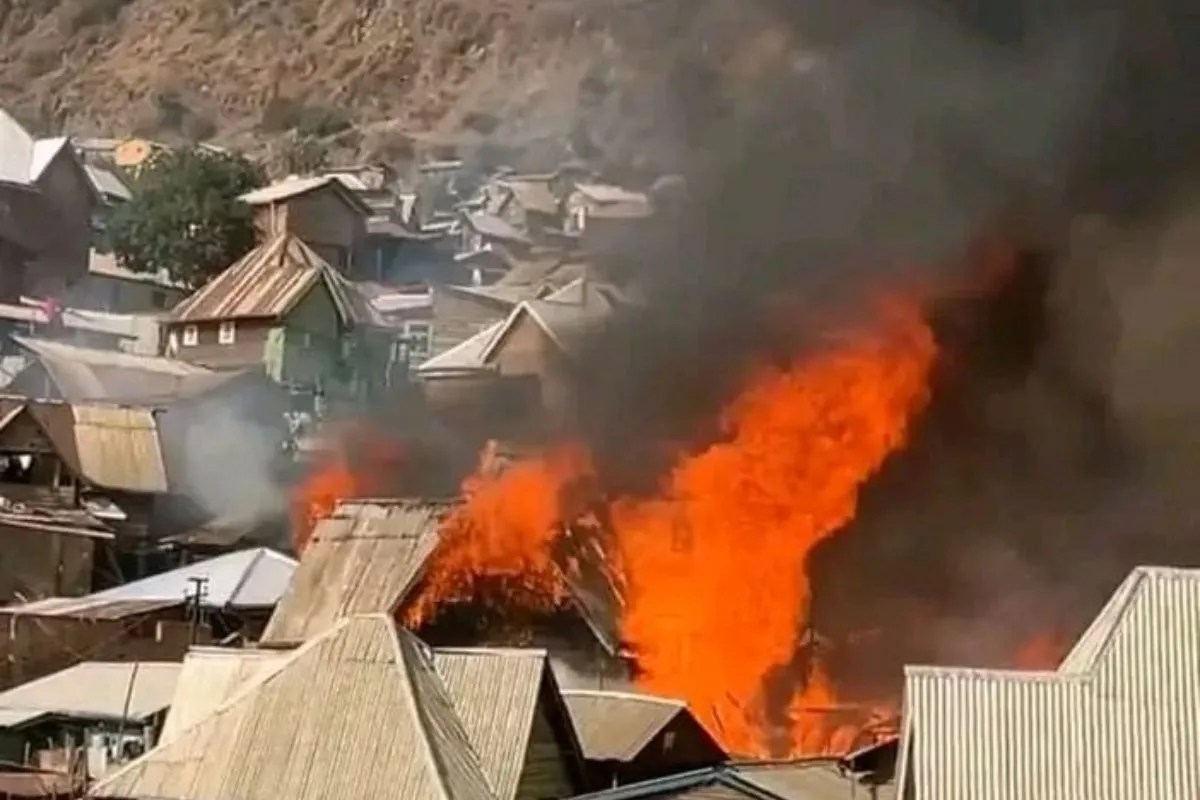
Seventeen children did not wake up to see the morning mist. Fifty more sustained burns and injuries so severe that the local clinics—already starved of gauze, clean water, and basic antibiotics—buckled under the sudden, agonizing influx of small bodies.
To read a dry news ticker about a school fire in a rebel-held territory is to skim past a tragedy wrapped in geopolitical static. Words like rebel-controlled zone and casualty toll act as emotional armor. They insulate us. They allow us to file the horror away under foreign affairs, as if human skin burns differently in Central Africa than it does anywhere else. But strip away the sterile nomenclature of international reporting, and you find a terrifying, intimate truth. Experts at USA Today have also weighed in on this matter.
This is what it feels like to live in a place where even safety has been seized.
Imagine the quiet of an ordinary evening in a village where governance is dictated not by laws or elected officials, but by the capricious whims of armed factions holding the territory hostage. The children had likely gathered late, or perhaps they slept within makeshift quarters attached to the school because their own homes had been uprooted weeks prior. Displacement has a way of turning schools into refugee hubs, and refugee hubs into tinderboxes.
Fire does not take sides. Fire does not care about factional loyalties, territorial disputes, or the invisible lines drawn on military maps by men thousands of miles away. It consumes indiscriminately.
And yet, the context of where this happened changes everything about how it happened.
In a functioning state, a school fire triggers a cascade of institutional responses. Sirens wail. Fire engines tear down paved roads. Burn units mobilize. Investigations are launched with forensic precision, accountability is demanded, and grief is met with systemic support.
None of those things exist when rebels hold the gates.
Consider the reality of medical triage in a zone choked off from the outside world. When fifty children are pulled from the roaring timber and thatch of a burning schoolhouse with flesh seared and airways blocked by toxic smoke, where do you take them? The nearest fully equipped hospital might be days away across impassable, conflict-ridden terrain. Ambulances are rare luxuries; fuel is a military asset; and roads are often mined or patrolled by men who view human life as currency.
The doctors and nurses who rushed to help that night did not have mechanical ventilators or intravenous morphine drips. They had rags, contaminated water, and prayer. Many of the injuries that ultimately proved fatal—or resulted in permanent, life-altering disfigurement—were likely not lethal in their own right, but became death sentences simply because the infrastructure of survival had been bombed, looted, or neglected for decades.
This is the hidden cost of protracted conflict. We measure war in body counts from direct combat, in territorial gains and losses, in the rhetoric of politicians and the rust of abandoned tanks. We rarely count the structural collapses. We rarely count the classrooms that become crematoriums because the ongoing chaos makes basic fire safety standards an impossible luxury. We rarely measure the future of a region by the number of children forced to grow up with physical and psychological scars that will never truly heal.
Seventeen lives extinguished in a single night. Fifty more marked forever.
Behind those numbers are mothers who spent hours sifting through ash, searching for a recognizable scrap of cloth, a favorite pencil, a small shoe. Behind those numbers are teachers who carry the guilt of survival, wondering if they could have broken through a jammed door a second faster.
The smoke has long since cleared from the hills. The charred timbers have cooled into gray, lifeless husks. But the fire continues to burn in the quiet panic of parents across the region every time they send their surviving children out the door toward whatever makeshift shelter is currently passing for a school.
In the end, the true tragedy of the Congo school fire is not just the suddenness of the flames, but the enduring vulnerability of a generation forced to seek education inside a war zone, where the simple act of wanting to learn remains one of the most dangerous things a child can do.