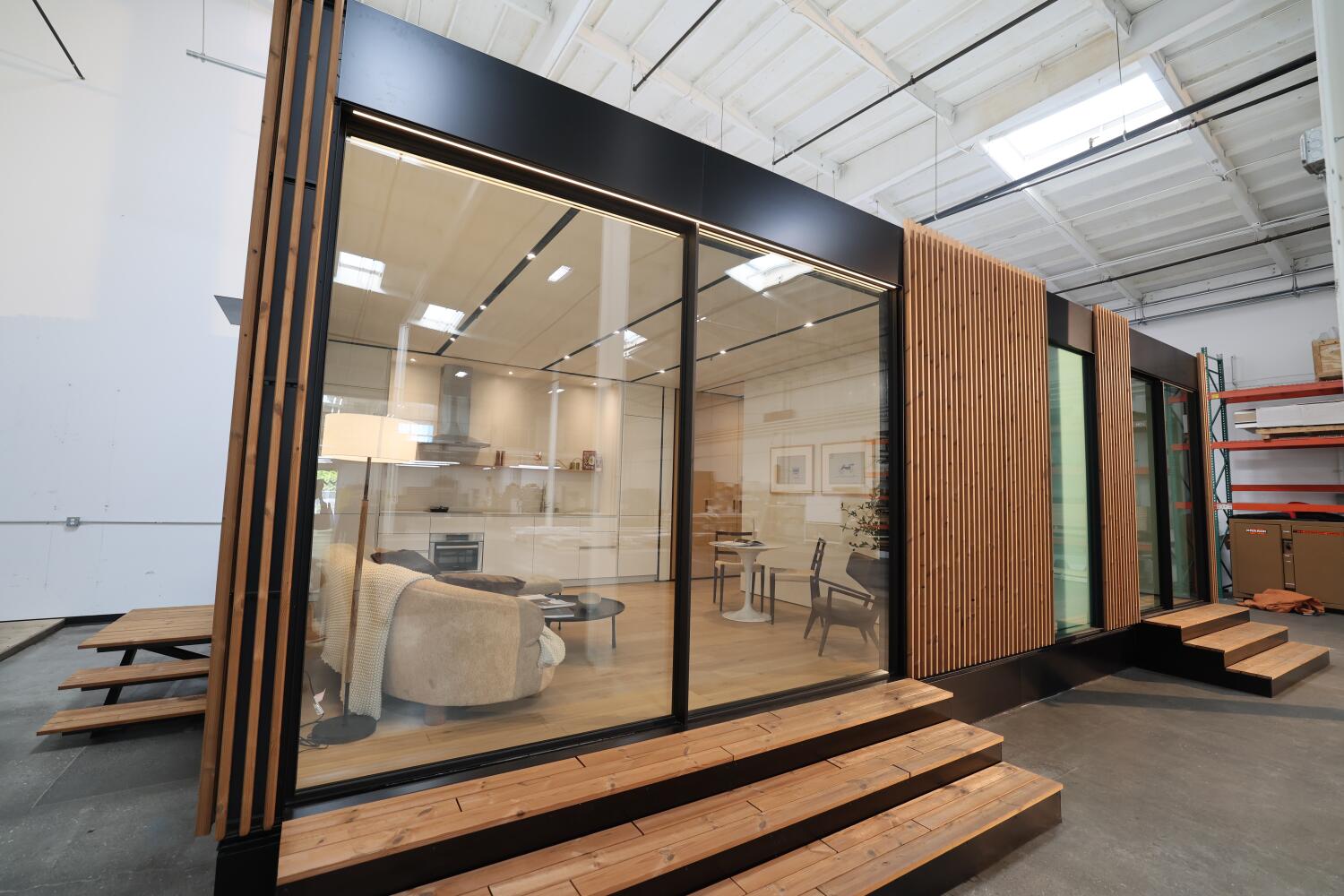
The sawdust doesn't smell like progress anymore. For decades, the scent of fresh-cut pine on a suburban lot was the smell of the American Dream taking root. Now, it smells like a bill no one can pay. In California, the skeletal frames of rising houses have become monuments to an era that is rapidly pricing itself out of existence. We are watching a slow-motion collision between a desperate need for roofs and a labor market that can no longer find enough hammers to swing.
Consider Sarah. She is a hypothetical schoolteacher in Oakland, but her bank account is a very real casualty of the status quo. She spends sixty percent of her paycheck on a studio apartment built in 1974. Every morning, she passes a vacant lot where a "Luxury Condos" sign has been bleaching in the sun for three years. The project is stalled. Interest rates climbed, the cost of copper spiked, and the local framing crew moved two states away because they couldn't afford to live in the city they were building.
The traditional way we build—stick by stick, open to the rain, dependent on a vanishing workforce—is broken. But a quiet shift is happening in the sterile, climate-controlled environments of massive warehouses. It is the rise of factory-built housing. It isn't a new idea, but California is currently weighing a legislative maneuver that could finally turn these indoor assembly lines into the state's primary engine for survival.
The Problem with the Old Guard
Construction is one of the few industries that has seen almost zero productivity growth since the 1940s. While car manufacturing moved from hand-cranked chassis to robotic precision, and while our phones evolved from wall-mounted bricks to pocket-sized supercomputers, the way we build a house has remained stubbornly stagnant. We still haul raw materials to a muddy patch of dirt and hope the weather holds.
This inefficiency isn't just an academic concern. It is the reason Sarah can't buy a home. When a developer builds a house on-site, they are fighting a war of attrition against delays. A week of heavy rain can cost tens of thousands of dollars in lost time. A missed delivery of windows can grind an entire crew to a halt. These costs don't just vanish; they are baked into the final price tag of the home.
Factory-built housing—modular units constructed in pieces and then shipped to a site—removes the chaos. In a factory, there is no rain. There are no missing tools. There is a steady, predictable rhythm. Yet, despite these advantages, modular housing has struggled to gain a foothold. The reason isn't the technology. It’s the red tape.
The Inspection Bottleneck
Under the current system, every city and county in California has its own set of rules. An inspector in Los Angeles might demand a different wiring configuration than an inspector in San Jose. For a factory trying to mass-produce homes, this is a nightmare. It’s like trying to build a Toyota Camry but having to change the engine design every time the car crosses a county line.
The "novel idea" currently circulating in Sacramento involves a radical simplification. The proposal aims to shift the burden of inspection from the local level to the state level for factory-built components. Imagine a world where a modular unit is inspected and certified at the factory gates. Once it’s stamped, it’s good to go anywhere in the state. Local officials would still oversee the foundation and the utility hookups, but the "box" itself would be pre-cleared.
This sounds like a minor bureaucratic tweak. It isn't. It is the difference between a niche industry and a housing revolution.
The Human Toll of the Status Quo
Critics of modular housing often point to a perceived lack of "soul" in factory-built structures. They conjure images of drab, repetitive boxes that sap the character from a neighborhood. But this aesthetic snobbery ignores the human toll of the alternative.
Is there "soul" in a tent city? Is there "character" in a family of four living in a two-bedroom apartment because the market hasn't added a new unit in their zip code for a decade? We have prioritized architectural variety over the basic human right to shelter.
The reality is that modern modular design is indistinguishable from traditional construction. Using advanced computer-aided design, factories can produce high-end, aesthetically pleasing homes that meet the same—or higher—energy efficiency standards as on-site builds. The "soul" of a home doesn't come from the fact that a human got a sunburn while installing the drywall. It comes from the stability it provides to the people living inside.
Why the Shift is Terrifying to Some
Whenever you disrupt a system this old, people get scared. Local building departments fear a loss of control. Labor unions worry that factory jobs, which are often easier to automate, will replace the skilled trades on the ground. These are valid anxieties, but they are based on a false choice.
The choice isn't between factory jobs and traditional construction jobs. The choice is between building enough housing or watching the state’s economy hollow out as the middle class flees for cheaper pastures. We are currently facing a deficit of millions of homes. Even if every factory in the state ran three shifts a day, we would still need every plumber, electrician, and carpenter we have for the next thirty years just to catch up.
The state-level certification is the key. By standardizing the "boring" parts of the house—the structural integrity, the insulation, the internal plumbing—we allow the on-site crews to focus on the complex integration. It changes the role of the contractor from a generalist fighting the elements to a specialist managing a high-tech assembly.
The Invisible Stakes
If California moves forward with this plan, the ripple effects will be felt far beyond the construction industry. It is a play for environmental survival. Factory-built homes generate significantly less waste than traditional sites. Materials are measured to the millimeter, and scraps are recycled on the spot rather than tossed into a dumpster.
There is also the matter of density. To solve the housing crisis, we have to build up, not just out. Modular construction is uniquely suited for "infill" projects—putting apartment buildings on small, awkward lots in the middle of existing cities. Because the units are built elsewhere, the disruption to the neighborhood is minimal. Instead of eighteen months of noise, dust, and blocked streets, a modular building can be "set" in a matter of days.
Think back to Sarah. In a modular future, that vacant lot near her apartment doesn't stay empty for three years. The developer can pull the trigger on a project because the costs are predictable. The units are built in a factory in the Central Valley, trucked in overnight, and stacked by a crane while the neighborhood sleeps. Suddenly, there are 40 new apartments on the market. Supply increases. The crushing pressure on Sarah’s rent begins to ease.
A New Architecture of Hope
We have spent too long treating housing as a luxury craft. We treat every home as if it were a bespoke piece of art, forgetting that for most people, a home is a functional necessity. It is a place to raise a child, to recover from a long shift, to feel safe.
The move toward state-certified factory housing is an admission that the old ways have failed us. It is a realization that we cannot build our way out of a 21st-century crisis using 19th-century methods. The "novel idea" isn't really about factories or inspections or building codes. It is about deciding that the people who live in California are more important than the processes we used to build it.
The sawdust on the ground is being replaced by the hum of the assembly line. It is a different sound, certainly. It is less romantic. It is more mechanical. But for the millions of people currently locked out of the dream of a stable home, it is the most beautiful sound in the world.
The crane lowers the final module into place. The seams are sealed. The lights flicker on. A door opens, and for the first time in years, the person walking through it doesn't have to wonder if they can afford to stay. The house was built in a factory, but the life that begins inside it is entirely, stubbornly, beautifully human.