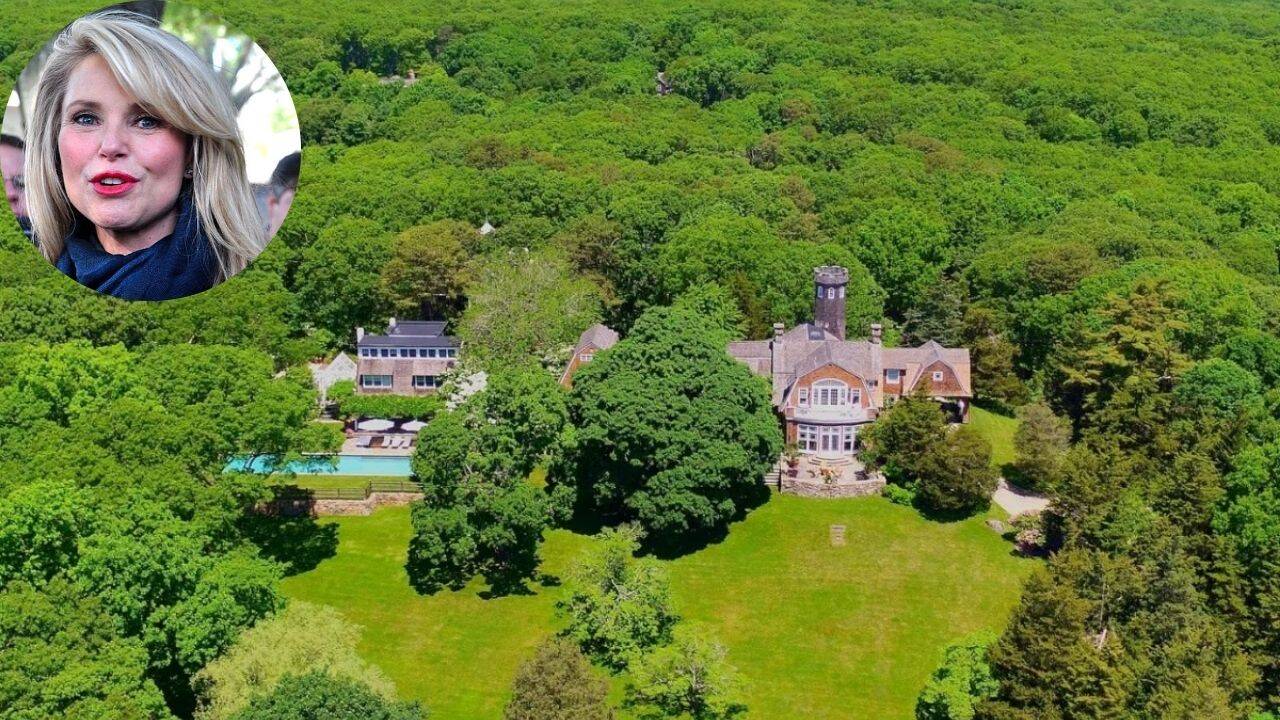
High net worth individuals managing ultra-prime residential real estate portfolios face a distinct set of capital allocation and asset optimization challenges. When a prominent asset like Christie Brinkley's twenty-acre Hamptons estate undergoes continuous structural and landscape modifications over decades, it ceases to be merely a residential holding. It transforms into a complex, illiquid enterprise requiring systematic management, capital preservation strategies, and customized operational efficiencies. Understanding how legacy estates transition from raw land acquisition into private fortified compounds requires dissecting the underlying economics of spatial expansion, maintenance cost functions, and long-term liquidity constraints.
Real estate positioning at the ultra-luxury tier operates on principles entirely decoupled from standard suburban housing markets. While standard residential assets derive value primarily from comparative market analysis and immediate neighborhood comps, ultra-prime estates function as idiosyncratic flagships. The initial acquisition of raw acreage represents a low-liquidity capital sink. To generate yield or perceived cultural capital, owners must deploy significant structural interventions. These interventions fall into three distinct operational vectors: spatial zoning and boundary fortification, ecological and landscape engineering, and architectural integration.
The spatial economics of a twenty-acre envelope in a high-demand coastal municipality like the Hamptons involve navigating strict municipal constraints, environmental setbacks, and historical zoning overlays. Expanding a private compound requires a deliberate sequence of parcel consolidation or strategic boundary management. Property owners often acquire adjacent lots not merely for square footage, but to establish a buffer against external depreciation caused by neighboring development. This defensive land aggregation acts as a risk-mitigation tool, insulating the primary asset from urban encroachment and preserving visual privacy.
Landscape architecture at this scale shifts from aesthetic ornamentation to infrastructure management. Transforming flat acreage or wooded tracts into a private estate involves heavy earthmoving, drainage engineering, and micro-climate creation. Mature tree transplanting, private water feature installation, and extensive perimeter hedging require continuous capital expenditure. The cost function of maintaining a twenty-acre landscape is non-linear; as the complexity of the gardens, orchards, and open spaces increases, the labor overhead scales exponentially. Specialized groundskeeping teams, automated irrigation systems, and seasonal remediation protocols dictate a permanent operational budget that far exceeds standard residential maintenance ratios.
Architectural modifications on historical or custom-built estates must balance structural integrity with aesthetic evolution. When an owner renovates barns, adds auxiliary guest structures, or converts historical outbuildings into functional living spaces, they incur a specific type of asset risk: over-capitalization relative to the micro-market ceiling. Unlike commercial real estate, where capital improvements are underwritten by projected net operating income, residential improvements rely entirely on subjective future buyer utility. Consequently, extensive customization often reduces the pool of potential liquidity events, trading market flexibility for personal lifestyle optimization.
The liquidity profile of a customized multi-million-dollar compound is inherently constrained. Because the asset is heavily tailored to the specific preferences of a long-term owner, prospective buyers face high friction costs if they wish to modify the layout or reverse specialized landscaping choices. This creates a liquidity discount upon exit. To offset this structural disadvantage, owners must rely on the intangible brand equity associated with the property. When an estate is tied to a recognizable cultural figure, the marketing narrative often attempts to capitalize on celebrity provenance to command a premium. However, sophisticated institutional buyers and high-net-worth family offices evaluate the asset based on replacement cost, structural efficiency, and ongoing carrying costs rather than provenance alone.
Carrying costs for an estate of this magnitude comprise property taxes, insurance premiums for high-value coastal zones, specialized security infrastructure, and full-time staff payroll. These fixed costs remain constant regardless of asset utilization. Therefore, the financial efficiency of the property depends on minimizing operational friction through optimized vendor management and energy-efficient building systems. Modernizing historical estates with smart-home automation, geothermal heating, and resilient coastal hardening materials helps mitigate the otherwise severe depreciation curve of older luxury structures.
The strategic trajectory for managing high-value legacy properties dictates a shift from reactive maintenance to rigorous asset lifecycle planning. Owners must treat each structural addition and landscape enhancement as a capital expenditure that requires a defined depreciation schedule and utility assessment. By treating a private estate as a controlled corporate asset rather than an emotional refuge, principals can better forecast holding costs, mitigate regulatory risks, and preserve capital value through changing macroeconomic cycles.