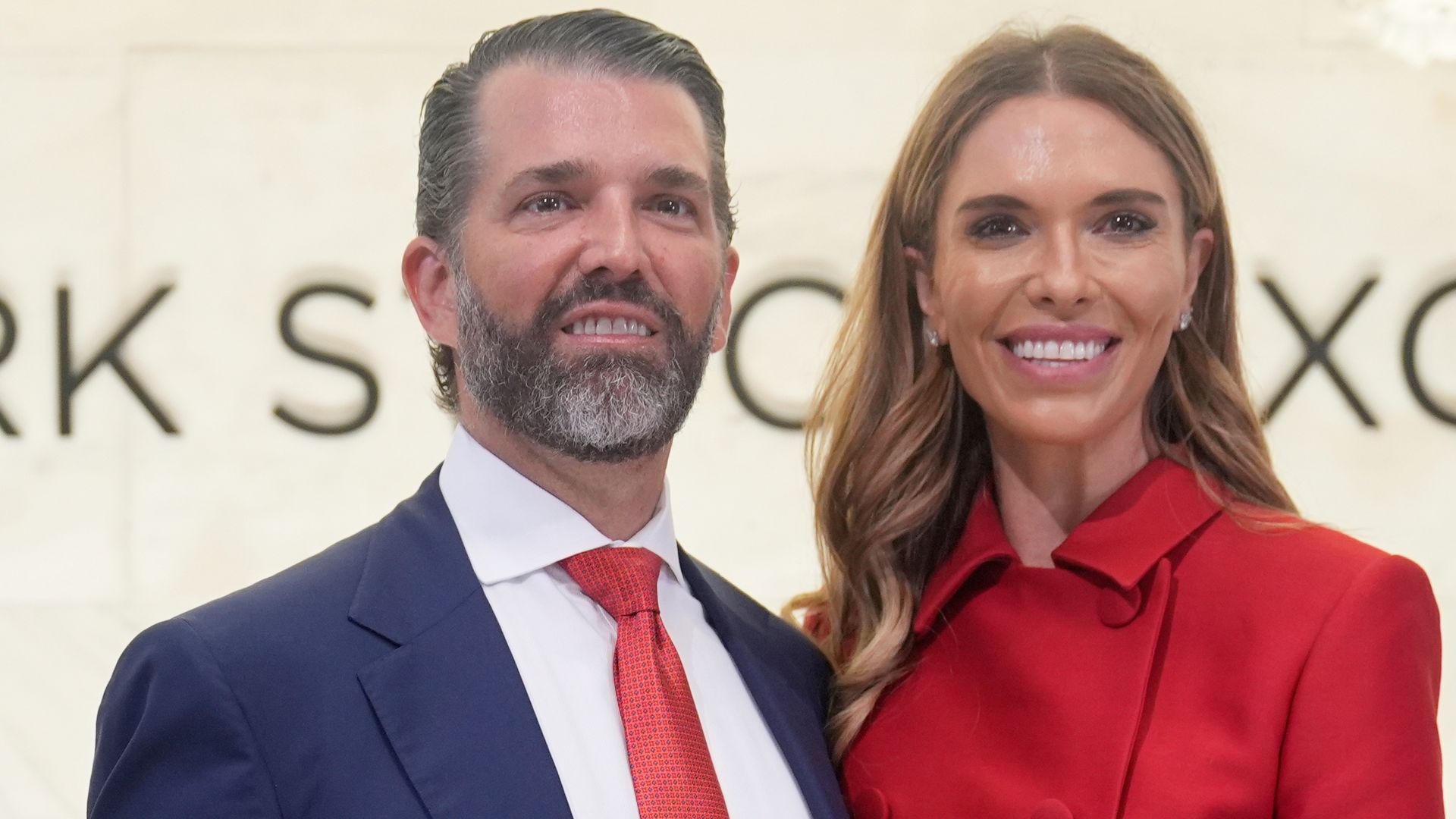
When Russian oligarch Umar Kremlev underwrote a multi-night wedding celebration in the Bahamas for Donald Trump Jr. and Bettina Anderson in May 2026, the transaction exposed a structural vulnerability in modern geopolitical influence: the conversion of informal social capital into strategic proximity. Standard media coverage frames this event through the binary lens of scandal versus benign friendship. Both framings fail to capture the operational mechanics at play. In high-level political ecosystems, financial underwriting of personal milestones by state-aligned foreign actors is rarely a simple transaction or a mere gift; it is an exercise in asymmetric influence acquisition that bypasses traditional regulatory friction.
To understand the mechanics of this event, one must separate the public narrative from the underlying structural incentives. The couple confirmed that Kremlev, president of the International Boxing Association (IBA) and a recipient of Russia's Order of Friendship from Vladimir Putin, funded two nights of festivities following their private May 22 ceremony. While the Trump family later asserted that the funds were repaid—a claim corroborated by Kremlev himself in October 2026—the initial underwriting and subsequent reversal illustrate the precise lifecycle of elite soft-power operations. For a different look, see: this related article.
The Three Pillars of Informal Influence Acquisition
Conventional political corruption relies on direct quid pro quo arrangements, campaign contributions, or corporate lobbying—all of which generate auditable paper trails and trigger statutory reporting requirements. Informal influence operations bypass these controls by operating entirely within the social domain.
- The Social-Gift Arbitrage: By classifying hundreds of thousands of dollars in event production, hospitality, and logistics as a personal wedding gift, the benefactor exploits a massive regulatory blind spot. While federal ethics laws strictly govern gifts to executive branch officials, immediate family members operating in the private sector face far fewer statutory barriers. The financial outlay functions identically to a lobbying expenditure in terms of access generation, yet it carries zero disclosure obligations.
- Proximity Engineering: High-net-worth social events act as closed-loop networking environments. Attending a 50-person gathering in an isolated jurisdiction like the Bahamas removes the institutional buffers—chiefs of staff, legal counsel, diplomatic note-takers—that normally mediate interactions between foreign nationals and presidential family members. Kremlev and his associates did not merely pay for fireworks and hospitality; they purchased unmediated physical proximity to key nodes in the American executive orbit, including Jared Kushner and Eric Trump.
- Reciprocity Indebtedness: Behavioral economics and social psychology demonstrate that unsolicited, high-value generosity creates an implicit psychological obligation. Even when the recipient possesses the independent liquidity to fund the event—Donald Trump Jr.’s estimated net worth stands near $300 million—accepting the underwriting shifts the interpersonal dynamic from transactional peers to benefactor and beneficiary. This debt is rarely called in immediately; instead, it is held as an illiquid asset to be redeemed during future regulatory, commercial, or diplomatic friction points.
Structural Asymmetry in State-Oligarch Relations
A primary analytical failure in mainstream reporting is treating Russian oligarchs as autonomous private-sector actors. Under the state-capitalist model consolidated in Moscow over the past two decades, billionaire status is contingent upon alignment with the Kremlin's strategic objectives. Further insight on this trend has been published by The Guardian.
Kremlev’s profile exemplifies this fusion of private wealth and state utility. Rising through the Russian boxing federation to lead the IBA, Kremlev has operated directly within Putin’s orbit, receiving state honors while facing personal sanctions from the Ukrainian government due to his ties to Russian security services. Simultaneously, his commercial interests have expanded into the U.S. market.
When an individual embedded in this system deploys capital toward the family of a sitting U.S. president—particularly during active wartime negotiations between Russia and Ukraine—the distinction between personal friendship and statecraft dissolves. Whether the Kremlin explicitly directed Kremlev to fund the Bahamas celebration is operationally irrelevant. In systems governed by implicit alignment, actors anticipate state desires and execute capital allocations that advance national interests without requiring formal directives. The oligarch absorbs the financial cost and reputational risk, while the state captures the strategic optionality of a warm backchannel.
The Cost Function of Reputational Containment
The timeline of events between May and October 2026 reveals a classic crisis-management pivot driven by shifting cost-benefit ratios. Initially, the arrangement operated under low visibility, allowing all parties to capture the social benefits without external scrutiny. Once investigative reporting exposed the financial underwriting in September 2026, the cost function altered dramatically.
- Political Liability: Congressional oversight committees immediately seized on the opacity of the transaction, framing it as an unvetted foreign entanglement.
- Diplomatic Friction: The optics of a Putin-linked financier subsidizing the presidential family undermined the administration's public posture regarding the conflict in Eastern Europe.
- Narrative Degradation: The defense that "a wedding gift is simply a wedding gift" failed to neutralize scrutiny because the scale of the expenditure violated standard social norms, even among ultra-high-net-worth cohorts.
To arrest this reputational bleed, the Trump orbit executed a retroactive monetization strategy: converting a gift into a reimbursed expense. By October, Kremlev confirmed that Trump Jr. had repaid the funds, while simultaneously expressing bewilderment at the necessity of the refund.
The Limitations of Retroactive Reimbursement
While repayment neutralizes the immediate financial entanglement on paper, it suffers from severe structural limitations as a governance remedy:
- Temporal Irreversibility: Reimbursement returns the capital, not the access. The unmonitored interactions, relationship building, and proximity achieved during the multi-day event in May cannot be undone by an October wire transfer.
- Valuation Opacity: In private hospitality arrangements involving private islands, chartered logistics, and bespoke entertainment, establishing a true market-rate baseline for reimbursement is notoriously difficult. Without audited invoices made public, external observers cannot verify whether the repayment covered the full economic cost or merely a symbolic fraction.
- Precedent Confirmation: The necessity of the repayment implicitly validates the critics' core premise—that the initial acceptance created an untenable conflict of interest, contradicting simultaneous claims that the arrangement was entirely benign.
Operationalizing Counter-Measures Against Informal Capture
For institutional risk managers, compliance officers, and policy architects, this episode demonstrates that traditional anti-corruption frameworks are miscalibrated for modern network warfare. Focusing solely on direct financial transfers to officeholders misses the primary vector of elite capture: peripheral social subsidization.
To close this vulnerability, governance frameworks must implement three structural adjustments:
- Expand Perimeter Disclosure: Ethics and disclosure mandates must extend beyond immediate officeholders to encompass financially independent adult family members whenever transactions involve foreign nationals tied to state-owned enterprises, sanctioned entities, or foreign sovereigns.
- Mandate Pre-Clearance for High-Value Hospitality: Establish strict monetary thresholds for non-commercial hospitality, travel, and event underwriting provided by foreign actors. Any underwriting exceeding standard social hospitality norms must trigger mandatory vetting prior to acceptance, rather than post-hoc damage control.
- Audit the Non-Monetary Ledger: Risk assessments must shift from tracking cash flows to mapping access. When foreign actors underwrite lifestyle or milestone events for politically exposed persons, compliance systems must treat the resulting proximity as a high-risk intelligence and policy vulnerability, regardless of whether the underlying invoice is eventually settled.
If you'd like to explore the specific legal boundaries around foreign gifts to presidential family members or the history of Kremlev's sports diplomacy, you can check out Russian Oligarch Spent $1,70000 on Trump Jr's Lavish Wedding Party for additional context on historical parallels in Trump family hospitality.