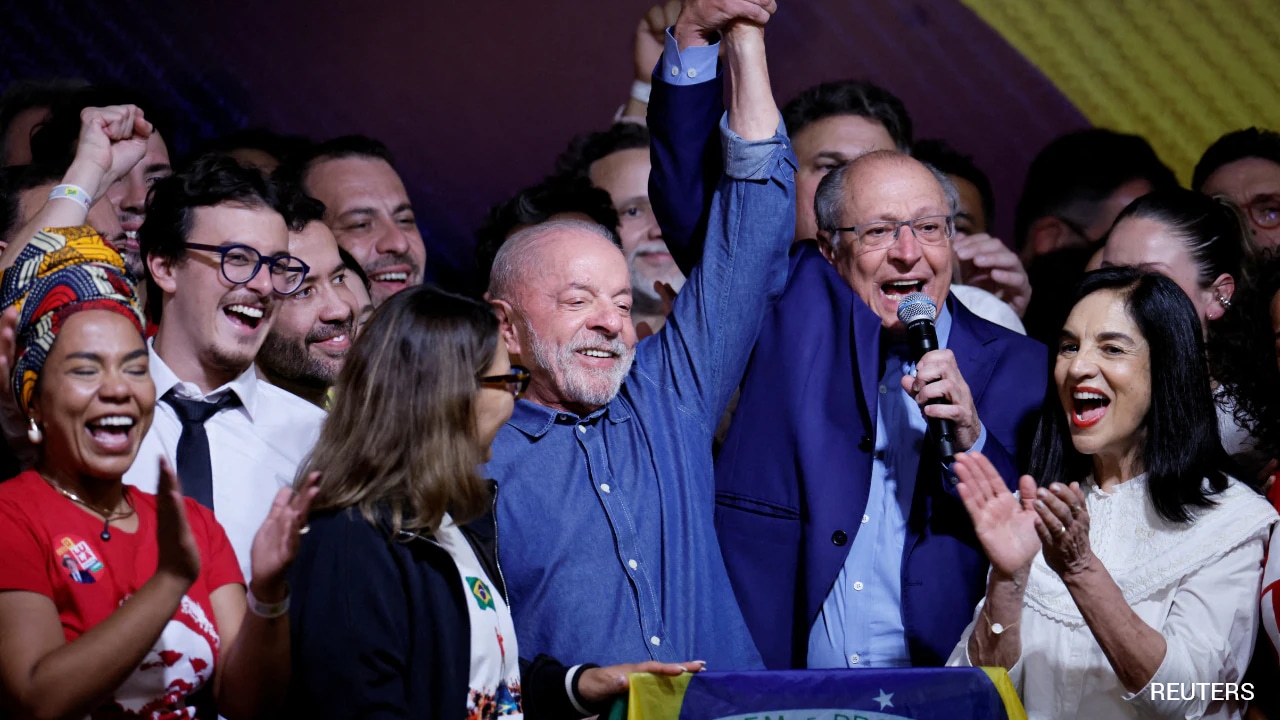
The 2022 Brazilian presidential election was decided by a razor-thin margin of 1.8 percentage points, yet the mechanics behind Luiz Inácio Lula da Silva’s victory rested on a fundamental architectural shift in digital campaigning. Rather than merely outspending the opposition on traditional media or relying on organic virality, the campaign engineered a closed-loop distribution engine built on WhatsApp channels, decentralized volunteer networks, and high-velocity content moderation. To understand how a left-wing coalition neutralized an incumbent apparatus that had dominated digital messaging since 2018, analysts must examine the structural mechanics of encrypted peer-to-peer networks, algorithmic amplification on open platforms, and institutional counter-disinformation protocols.
The Structural Shift From Broadcast to Dark Social
Political communication in Brazil operates within a unique infrastructural constraint: zero-rating mobile data plans. Major telecommunications carriers in Brazil historically offered unlimited access to WhatsApp and Facebook without deducting from a user’s monthly data cap, while browsing the open web incurred data charges. According to telecommunications market analyses and digital journalism studies by the Reuters Institute, this pricing structure turned WhatsApp into the primary internet interface for tens of millions of low-income voters.
In 2018, Jair Bolsonaro’s campaign exploited this environment through decentralized, semi-automated WhatsApp groups that operated outside the visibility of mainstream fact-checkers and electoral authorities. By 2022, Lula’s digital strategy team—led by communications operatives including André Janones and Sidônio Palmeira—recognized that competing on open platforms like Twitter or Instagram was insufficient. Open platforms function as echo chambers for politically engaged elites, whereas "dark social" platforms (private messaging apps where referral traffic is invisible to standard web analytics) govern the information diet of undecided, working-class voters.
The strategic objective shifted from maximizing impressions on open feeds to maximizing forwarding velocity inside closed messaging threads. Forwarding velocity measures the rate at which a discrete piece of media travels from a central node (campaign headquarters) through secondary nodes (regional coordinators) into tertiary nodes (family and neighborhood groups).
The Architecture of the Hub-and-Spoke Distribution Model
To achieve high forwarding velocity without triggering WhatsApp’s anti-spam rate limits, the campaign constructed a tiered hub-and-spoke distribution system:
- Centralized Creative Production (The Hub): A rapid-response war room monitored real-time search trends, opposition talking points, and regional news cycles. Instead of producing polished, high-budget television spots, this unit manufactured native-looking digital artifacts: vertical videos under 45 seconds, compressed audio clips, and low-resolution graphic cards designed to resemble organic user-generated content.
- Mid-Tier Influencer and Surrogate Amplification (The Spokes): Rather than relying exclusively on official party accounts—which suffer from institutional distrust—the campaign routed assets through high-reach digital surrogates. Federal deputy André Janones exemplified this mechanism, utilizing Facebook Live broadcasts and aggressive populist framing to capture attention economy metrics before porting clipped segments into messaging apps.
- Hyper-Local Volunteer Cells (The Edge Nodes): Thousands of localized WhatsApp and Telegram groups organized by municipality, profession, and religious affiliation received daily content packets. Group administrators were instructed to strip metadata, avoid bulk-forwarding flags by downloading and re-uploading files manually, and pair media assets with conversational prompts tailored to local economic grievances.
This structure solved a critical distribution bottleneck. Following the 2018 election, Meta imposed strict limits on WhatsApp message forwarding, restricting "frequently forwarded" messages (those forwarded more than five times) to a single chat at a time. By utilizing human edge nodes to re-upload native files rather than forwarding links, the campaign reset the platform's forwarding counter at every tier of the hierarchy.
Platform-Specific Optimization and Algorithmic Arbitrage
A common analytical error in political post-mortems is treating social media as a monolithic channel. In reality, the 2022 Brazilian campaign treated each platform as a distinct stage in a conversion funnel, exploiting the specific recommendation algorithms of TikTok, Kwai, YouTube, and Instagram to feed the WhatsApp ecosystem.
Short-Form Video as Top-of-Funnel Acquisition
Short-form video platforms—specifically TikTok and Kwai—experienced massive adoption across Brazil's North and Northeast regions, as well as among younger demographics in the Southeast, between 2020 and 2022. Unlike Facebook’s social graph, which prioritizes content from existing connections, TikTok and Kwai operate on an interest graph. Their recommendation engines evaluate completion rates, re-watches, and share-to-messaging-app ratios rather than follower counts.
Political analysts tracking the 2022 race noted that Lula’s digital team systematically optimized video content for the "Share to WhatsApp" button embedded within Kwai and TikTok interfaces. The content architecture followed a strict three-part formula:
- The Pattern Interrupt (Seconds 0–3): An immediate visual or auditory hook addressing a visceral economic reality, such as the price of cooking gas (gás de cozinha), beef (picanha), or minimum wage purchasing power.
- The Attribution Frame (Seconds 4–25): A direct causal link connecting past economic stability under previous Workers' Party (PT) administrations to current household budget deficits, avoiding abstract ideological terminology.
- The Social Proof Call-to-Action (Seconds 26–40): A prompt encouraging the viewer to send the video to a skeptical relative, explicitly framing the share as an act of familial care rather than partisan persuasion.
By engineering videos to maximize external shares, the campaign induced the short-form algorithms to classify the content as high-engagement, generating organic reach that would have been cost-prohibitive to purchase through paid advertising.
Search Engine Optimization and Narrative Pre-Bunking
While short-form video drove emotional engagement, Google Search and YouTube functioned as defensive battlegrounds. During high-visibility events—such as televised presidential debates on TV Globo and Band—voters routinely turned to search engines to verify claims made in real time.
The campaign executed a strategy of narrative pre-bunking and search engine saturation. When intelligence from social listening tools indicated that an opposition attack line was gaining traction in Telegram channels (for instance, rumors regarding religious freedom or social welfare cuts), the digital team published counter-narratives across high-authority domains, YouTube channels, and paid search placements before the claim peaked in mainstream search volume.
This approach relies on the psychological principle of inoculation theory: exposing an audience to a weakened form of a misleading argument alongside its refutation builds cognitive resistance before the audience encounters the full-strength claim in an unmoderated chat group.
The Institutional Counter-Offensive and Regulatory Friction
Digital campaigning does not occur in a vacuum; it operates within the legal boundaries enforced by electoral authorities. A decisive factor separating the 2022 election from 2018 was the aggressive intervention of Brazil’s Superior Electoral Court (TSE), led by Justice Alexandre de Moraes.
According to legal analyses and reporting from major news outlets including Folha de S.Paulo and Reuters, the TSE adopted an expanded interpretation of its police powers to combat coordinated disinformation. In October 2022, the court passed a resolution allowing it to order the immediate removal of identical false content across platforms without waiting for individual formal complaints, imposing steep hourly fines on tech companies for non-compliance.
Lula’s legal and digital teams integrated this regulatory environment directly into their operational workflow:
- Automated Monitoring Pipelines: Software tools scraped public Telegram channels, Facebook groups, and YouTube comments to detect coordinated spikes in specific keywords or visual templates.
- Rapid Legal Escalation: Instead of relying solely on public fact-checking organizations—whose corrections rarely reach the same audience as the original falsehood—the campaign’s legal arm filed targeted injunctions with the TSE to de-platform major opposition broadcasters and suspend monetization on hyper-partisan YouTube channels.
- Platform Enforcement Leverage: By documenting violations of platform terms of service regarding coordinated inauthentic behavior, the campaign pressured Meta, Google, and ByteDance to enforce existing policies on bulk messaging and synthetic media.
This created an asymmetric friction cost. While the incumbent campaign faced repeated account suspensions, demonetization, and legal injunctions that disrupted its primary distribution nodes, Lula’s decentralized WhatsApp network operated largely within platform guidelines by relying on human-operated groups and verifiable economic messaging.
Limitations and Structural Vulnerabilities of the Model
Treating the 2022 digital campaign as an infallible blueprint ignores severe operational limitations and diminishing returns inherent to encrypted messaging strategies. Practitioners attempting to replicate this framework encounter four distinct constraints:
- Audience Saturation and Message Fatigue: Closed messaging networks suffer from rapid burn-out. When edge nodes transmit political content multiple times daily, group members mute notifications or exit the chat entirely, collapsing the network's reach during the critical final weeks of a campaign.
- Loss of Message Fidelity: Decentralized distribution requires sacrificing editorial control. As local coordinators adapt talking points for regional audiences, core policy positions frequently become distorted, creating contradictions that opposition researchers can weaponize in national media.
- The Persuasion Ceiling of Dark Social: WhatsApp groups excel at base mobilization—ensuring committed supporters turn out to vote and arming them with talking points for offline conversations. However, empirical political science research consistently shows that partisan messaging inside closed groups rarely converts hardened opposition voters; it primarily influences low-information, cross-pressured voters who remain undecided until the final days of the race.
- Platform Architecture Dependency: A strategy built around algorithmic arbitrage and zero-rating loopholes remains entirely vulnerable to unilateral changes by private technology corporations. Adjustments to WhatsApp's group size limits, encryption protocols, or telecommunications zero-rating agreements can instantly invalidate months of network building.
Strategic Imperatives for Modern Digital Campaigns
The operational lessons from the 2022 Brazilian election dictate a permanent reallocation of campaign capital away from top-down broadcast vanity metrics toward decentralized, high-trust distribution infrastructure. Political strategists and communications directors operating in high-polarization environments must execute three concrete shifts:
First, decouple creative production from institutional branding. Central campaign headquarters should function as an unbranded media laboratory producing raw, platform-native assets optimized for peer-to-peer sharing, leaving distribution to authentic community micro-influencers who possess pre-existing social capital.
Second, measure campaign health through dark social velocity rather than public engagement rates. Track secondary indicators—such as direct message shares, link-shortener click-throughs from private apps, and regional search volume spikes following closed-group distribution—to evaluate whether narratives are penetrating beyond partisan echo chambers.
Third, integrate legal and platform-policy teams directly into the daily digital war room. In regulatory environments where electoral courts and tech platforms actively police information ecosystems, offensive narrative distribution and defensive legal takedowns are no longer separate functions; they are twin levers of the same information-control apparatus.