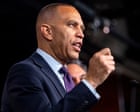
Rebranding single-payer universal healthcare as "TrumpCare" is not a rhetorical stunt; it is an asymmetric bargaining maneuver designed to decouple policy mechanics from partisan tribalism. By offering President Donald Trump full branding rights—complete with gold-embossed insurance cards and legacy attribution—Michigan Democratic Senator-elect Abdul El-Sayed is executing an incentive-alignment strategy that exploits the gap between ideological orthodoxy and executive ego.
Standard political coverage frames this development as viral social media theater or mere partisan trolling. That framing misses the structural mechanics at play. When a physician and former municipal health director enters the United States Senate and immediately secures both a Truth Social amplification from the sitting president and a scheduled meeting with Vice President JD Vance's team, the interaction shifts from campaign rhetoric to institutional negotiation. Understanding whether this maneuver can survive contact with legislative reality requires breaking down the bargaining architecture, the operational economics of single-payer transition, and the institutional veto points that govern federal healthcare law.
The Architecture of Asymmetric Branding
In conventional legislative negotiations, opposing factions bargain over policy substance—tax rates, eligibility thresholds, or regulatory mandates. This creates a zero-sum dynamic where every concession dilutes the core objective of the proposing coalition. El-Sayed's framework alters the currency of the transaction by separating utility ownership from branding ownership.
- The Policy Utility (Retained by the Proponent): The underlying legislative architecture remains intact. It consists of universal cradle-to-grave coverage, the elimination of private insurance intermediaries for core medical services, the abolition of medical debt, and the public manufacturing of essential pharmaceuticals such as insulin.
- The Symbolic Equity (Transferred to the Executive): The naming rights, visual iconography, and historical legacy attribution transfer entirely to Donald Trump. For an executive who has spent over a decade promising to replace the Affordable Care Act without producing comprehensive legislative text, acquiring a turnkey, fully drafted universal coverage framework solves a persistent political deficit.
- The Ideological Stress Test (Imposed on the Opposition): Naming a single-payer system after a Republican president forces conservative lawmakers into a binary choice. They must either vote against a flagship initiative bearing their own party leader's name or abandon decades of free-market healthcare orthodoxy.
This dynamic mirrors a classic principal-agent divergence. Republican congressional leadership acts as the agent for traditional corporate and ideological stakeholders, while the executive branch operates on personal brand equity and populist appeal. When Trump reposts the TrumpCare mock-up and characterizes El-Sayed as a "smart guy" with whom he could do "great things," he signals to his base that the brand asset holds value, regardless of its progressive policy origins.
The Cost Function of Partisan Gridlock vs. Executive Co-Optation
To evaluate why a progressive incoming senator would pursue this path immediately after the November 2026 midterm elections, one must examine the historical failure rate of conventional healthcare messaging. For over ten years, advocates of Medicare for All have relied on rational-actor persuasion—presenting actuarial projections that demonstrate lower aggregate national health expenditures through administrative consolidation.
That approach consistently fails because voters and lawmakers process healthcare reform through identity heuristics rather than actuarial tables. Under standard partisan conditions, the term "Medicare for All" triggers an immediate defensive reflex across conservative media ecosystems, cementing opposition before voters evaluate benefit structures.
El-Sayed's intervention changes the cost function of political communication. Instead of spending billions of dollars attempting to neutralize negative partisan framing, the proponent absorbs the opponent's primary brand identity. Look at how this alters the operational variables of a legislative campaign:
- Acquisition Cost of Attention: Earned media coverage across national outlets—from network television to conservative tabloids—multiplies without paid advertising expenditure. A progressive senator pitching single-payer healthcare is routine news; a progressive senator standing next to framed mock-ups of gold TrumpCare cards and calling the president "Habibi" breaks algorithmic distribution filters.
- Coalition Defection Risk: Within the Democratic caucus, pragmatic figures such as Michigan Senator Elissa Slotkin have already signaled conditional openness to the branding trade-off if it secures passage. This indicates that centrist lawmakers view the naming concession as a zero-cost variable compared to the political reward of delivering universal coverage.
- Base Alienation: While hardline commentators on the right have attacked the proposal and targeted El-Sayed's background, the executive's direct engagement fractures the unified opposition front. When populist voters see universal coverage framed as an entitlement comparable to public education—a direct analogy El-Sayed has deployed—ideological resistance weakens at the precinct level.
Operational Mechanics of the Underlying Healthcare Proposal
Stripping away the gold-card marketing reveals a rigorous structural overhaul of the American healthcare sector. Because El-Sayed's professional background includes serving as Detroit's health director and training as a physician and epidemiologist, his legislative blueprint targets specific financial bottlenecks in clinical delivery rather than abstract coverage metrics.
Administrative Consolidation and Monopsony Purchasing
The primary economic engine of single-payer systems is administrative simplification combined with monopsony purchasing power. In a fragmented multi-payer market, hospitals and physician practices maintain massive billing departments to negotiate thousands of distinct fee schedules, prior authorization rules, and denial appeals across private insurers. Consolidating payment into a single federal trust redirects capital from administrative overhead directly into clinical care delivery.
Elimination of Point-of-Service Friction and Medical Debt
Traditional insurance models rely on deductibles, copayments, and coinsurance to deter moral hazard—the theory that consumers overutilize healthcare when insulated from direct costs. In practice, high-deductible plans cause patients to delay preventive and primary care until conditions escalate into acute, high-cost emergency interventions. Eliminating out-of-pocket point-of-service charges removes this clinical bottleneck while halting the accumulation of consumer medical debt, which functions as a regressive drag on household liquidity.
Public Pharmaceutical Manufacturing
A distinct operational pillar of El-Sayed's platform is direct federal manufacturing of essential generic medications, specifically targeting high-margin, inelastic-demand drugs like insulin. When private pharmaceutical oligopolies control patent extensions and supply chains, price negotiation alone yields diminishing returns. Introducing a public manufacturing baseline establishes a hard price ceiling in the market, forcing private competitors to price near marginal production cost.
Institutional Veto Points and Structural Limitations
While the branding gambit successfully bypassed initial media gatekeepers and secured executive engagement, converting a viral pitch into enacted federal law requires navigating severe institutional constraints. No messaging framework eliminates the structural friction of the United States Congress.
First, Senate floor control and filibuster mechanics remain the primary bottleneck. Even if the White House endorses a TrumpCare single-payer framework, legislation cannot reach the president's desk without clearing Senate leadership and surviving a 60-vote cloture threshold—unless passed through budget reconciliation. Reconciliation rules strictly limit legislation to provisions with direct fiscal impacts, meaning structural regulatory mandates—such as banning private duplicative insurance or restructuring hospital governance—would be stripped out by the Senate parliamentarian.
Second, industry lobbying capital represents an existential counter-force. Private health insurers, pharmaceutical manufacturers, and for-profit hospital networks possess unmatched lobbying infrastructure. Their opposition is not ideological; it is existential. Single-payer consolidation eliminates the core revenue streams of private health carriers. These entities will deploy massive capital to pressure Senate Republicans and moderate Democrats to block any bill, regardless of whether the president's name is printed on the insurance card.
Third, executive attention volatility introduces high execution risk. Transactional leaders frequently amplify novel ideas to test public sentiment or gain short-term leverage over traditional allies without committing political capital to sustained legislative warfare. An initial meeting with Vice President Vance's office establishes a communication channel, not a policy commitment. If conservative media backlash intensifies or donor pressure mounts, the White House can pivot away from the concept as rapidly as it embraced it.
Fourth, transition logistics and fiscal offsets require granular statutory text that cannot be glossed over with branding. Replacing employer-sponsored insurance with a publicly financed system requires restructuring trillions of dollars in payroll taxes, corporate health expenditures, and state Medicaid matching funds. Without a transparent, deficit-neutral financing mechanism, fiscal hawks in both chambers will stall the legislation in committee.
The Strategic Play for Legislative Proponents
To prevent the TrumpCare initiative from stalling as a mere publicity cycle, proponents must immediately transition from viral branding to granular institutional execution. The upcoming engagement with the Vice President's office represents a narrow window to lock in tangible policy commitments before industry lobbyists mobilize a counter-offensive.
Proponents should execute a three-step operational sequence:
- Anchor the Negotiation on Incremental Monopsony Wins: Rather than demanding immediate passage of an all-or-nothing single-payer bill that will die in committee, use the TrumpCare brand to secure executive backing for high-visibility, standalone components. Prioritize public manufacturing of insulin and universal catastrophic coverage for children and seniors—policies with immediate voter appeal and clear fiscal offsets.
- Force Recorded Floor Votes on Specific Mechanisms: Follow the tactical model of demanding explicit Senate floor votes rather than vague rhetorical endorsements. Draft targeted legislation under the TrumpCare banner—such as eliminating medical debt collections or capping out-of-pocket prescription costs—and compel senators to establish a public voting record.
- Weaponize Executive Ego Against Congressional Obstruction: Position Senate leadership and corporate healthcare lobbyists as the primary obstacles preventing the president from securing a historic domestic achievement. By framing legislative resistance as an effort to deny the executive his signature legacy, proponents shift the burden of political persuasion onto the White House's own legislative affairs team.