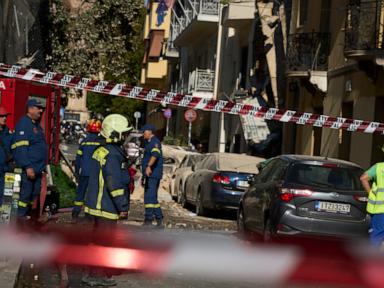
Standard reporting on attacks against military installations treats civilian deaths as tragic anomalies rather than predictable outcomes of spatial and tactical geometry. When an armed group strikes a Colombian military base and kills four non-combatants, including a two-month-old infant, the event is not a failure of luck; it is the direct result of a specific operational doctrine known as
To understand how an attack aimed at a hardened military target results in the immediate death of an infant, analysts must strip away emotional framing and examine the mechanics of stand-off weaponry, perimeter buffers, and insurgent targeting logic. Read more on a connected subject: this related article.
The Geometry of Co-Location and Buffer Failure
Military installations in rural and semi-urban Colombia rarely exist in sterile isolation. Over decades of internal conflict, forward operating bases, police stations, and garrison towns have developed symbiotic economic relationships with surrounding civilian populations. Small businesses, transit hubs, and residential housing cluster directly against the outer perimeter walls of military compounds.
This spatial arrangement creates a fatal structural vulnerability. When state forces establish a base inside or immediately adjacent to a populated zone, they inadvertently integrate non-combatants into the target's physical blast radius. Further analysis by USA Today delves into related views on the subject.
Three physical variables dictate casualty outcomes during an attack on these co-located bases:
- Perimeter Depth: The distance between the outer defensive barrier and internal military assets (barracks, command centers, motor pools). In many regional Colombian bases, this buffer measures less than fifty meters.
- Munition Circular Error Probable (CEP): The radius within which fifty percent of fired projectiles are expected to land. Improvised mortars, gas-cylinder bombs, and unguided rockets utilized by non-state armed groups possess high CEPs, often exceeding one hundred meters.
- Structural Hardening: Military personnel operate behind reinforced concrete, sandbags, and blast walls. Adjacent civilian housing typically consists of unreinforced masonry, sheet metal, or timber, offering zero ballistic or overpressure protection.
When an insurgent unit launches an indirect-fire munition with a 100-meter CEP at a target separated from civilian homes by a 30-meter wall, the mathematics of dispersion guarantee that the civilian sector absorbs the majority of the kinetic energy. The military target remains largely intact behind its fortifications, while the unhardened civilian perimeter suffers catastrophic structural failure and lethal fragmentation.
The Mechanics of Stand-Off Munitions
Non-state armed actors in Colombia—whether dissident factions of the FARC, the National Liberation Army (ELN), or neo-paramilitary cartels—rarely engage in direct infantry assaults against fortified bases. Direct assaults invert the attacker-to-defender casualty ratio against the insurgents, who lack air support, heavy armor, and medevac capabilities.
Instead, these groups rely on stand-off attack profiles. By launching improvised explosive devices (IEDs) via parabolic trajectories or deploying commercial drones retrofitted with drop mechanisms, attackers strike from concealed positions several kilometers away.
This operational choice introduces two compounding error mechanisms:
- Launch Instability: Improvised launch tubes fabricated from heavy steel pipes lack precision rifling, recoil stabilization, and calibrated sighting systems. Minor shifts in tube angle at the point of ignition translate into massive trajectory deviations downrange.
- Environmental Drift: Unguided projectiles traveling at high arcs are subject to crosswinds and atmospheric density variations. Without terminal guidance systems, the projectile cannot correct its flight path once launched.
The attackers are fully aware of this inaccuracy. From a strictly tactical perspective, precision is unnecessary to achieve their primary objective. The goal of an asymmetric stand-off strike is rarely the total physical destruction of the military garrison. The objective is psychological disruption and the demonstration of state vulnerability.
The Strategic Cost Function for Armed Actors
To evaluate why armed groups continue executing high-variance attacks near civilian populations, one must examine their internal cost-benefit calculation. In conventional warfare, civilian casualties represent a severe strategic liability due to international humanitarian law, diplomatic isolation, and loss of domestic legitimacy.
For decentralized insurgent and narco-trafficking networks, the cost function operates differently:
- Erosion of State Legitimacy: When a base is attacked and civilians die, local populations frequently direct their anger not solely at the attackers, but at the state security apparatus. Citizens question why a military installation is positioned next to their homes and why the military failed to intercept the threat.
- Forced Relocation Pressure: Sustained strikes create an untenable security environment for residents. As civilians flee the immediate perimeter, the military loses local human intelligence networks and economic integration, effectively isolating the base inside a hostile or empty zone.
- Low Operational Expenditure: A single stand-off attack requires minimal personnel (typically a two-to-four-person launch team), low-cost improvised materials, and a high probability of escape before state counter-battery fire or air assets arrive.
This creates a perverse incentive structure. The armed group expends minimal resources to force the state into a defensive posture, while the resulting civilian deaths—such as the killing of a two-month-old child—amplify media coverage and political pressure on the central government to negotiate or alter its security strategy.
Distinction Between Known Facts and Operational Hypotheses
Rigorous analysis requires separating verified kinetic realities from intelligence assessments regarding intent.
Verified Structural Realities:
- The attack targeted a state military installation, resulting in four civilian fatalities, including an infant.
- Non-combatant structures existed within the immediate dispersion zone of the munitions used.
- Civilian casualties in these theaters occur predominantly outside the hardened military perimeter rather than inside fortified bunkers.
Operational Hypotheses:
- Whether the specific munition strike on the civilian residence was an intentional terror tactic designed to maximize shock value or the mathematical byproduct of an unguided munition missing a hardened target cannot be definitively proven without capturing the launch team or recovering telemetry.
- The timing of such strikes frequently correlates with broader political negotiations or territorial disputes over illicit supply corridors, though direct causal links to specific regional commands require confirmed intelligence intercepts.
Defensive Countermeasures and Structural Limitations
Military planners facing stand-off threats near civilian centers have three primary defensive options, each carrying severe operational trade-offs.
The first option is perimeter expansion and eminent domain relocation. Moving civilian structures at least 500 meters away from base walls eliminates the immediate dispersion overlap. However, executing forced relocations in rural Colombia triggers intense social backlash, requires massive state capital for compensation, and surrenders economic integration with the local populace.
The second option is active counter-rocket, artillery, and mortar (C-RAM) deployment. Installing radar-guided interception systems around regional bases can neutralize incoming projectiles mid-flight. The limitation here is purely economic and logistical: C-RAM systems cost tens of millions of dollars per installation, require continuous technical maintenance, and cannot be deployed across dozens of remote forward operating bases simultaneously.
The third option is persistent aerial intelligence, surveillance, and reconnaissance (ISR). Utilizing thermal drones and tethered aerostats to monitor the five-kilometer radius surrounding a base allows forces to detect and interdict launch teams before they fire. Yet dense jungle canopy, rugged Andean terrain, and cloud cover routinely degrade optical and thermal sensor performance, allowing small, mobile teams to infiltrate launch zones undetected.
The Structural Mandate for Force Protection
Relying on passive perimeter walls while maintaining military bases inside dense civilian neighborhoods guarantees recurring non-combatant fatalities whenever insurgent activity spikes. State security forces must decouple tactical garrison infrastructure from civilian residential zones.
The immediate operational priority for defense planners is the reclassification of forward operating bases located within 300 meters of unhardened civilian housing. Where immediate physical relocation of the base is tactically impossible due to terrain or highway control requirements, command authorities must establish strict civilian exclusion zones funded through direct state buyouts, paired with continuous low-altitude drone patrols covering the primary parabolic launch vectors surrounding the installation.