Silence.
That is what greets a young actor when a casting director finishes reading a self-tape and doesn't reach for the telephone. Not a slam. Not a cruel note in the margins. Just the quiet hum of a refrigerator in an empty apartment while another Tuesday slips into evening.
I have sat in that silence more times than I care to admit. Not in a studio lot in Burbank, though I have stood outside enough fluorescent-lit waiting rooms to know the smell of burnt coffee and anxious cologne. Mine was a cramped theater basement in my twenties, holding sides printed on cheap copy paper that curled in the humidity, waiting for a callback that never came. You start to wonder if the door is locked from the inside. You start to memorize the cracks in the linoleum and convince yourself that a slightly different cadence on line four would have cracked the ceiling open.
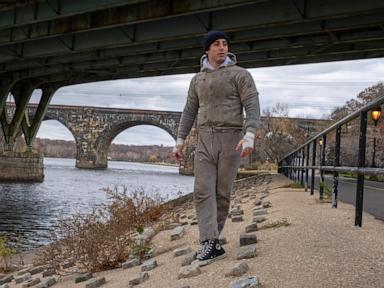
So when I heard about Anthony Ippolito landing the role of a young Sylvester Stallone in I Play Rocky, my first instinct wasn't envy. It was recognition. Because anyone who has ever chased a part knows the standard playbook: wait quietly for your agent to submit you, pray your headshot survives the scroll, read the lines the way the breakdown describes them, and thank everyone politely as you walk back into the street.
Ippolito didn't do that.
The dry version of this story—the kind that gets condensed into three paragraphs between banner ads—reads like a tidy résumé line. Young actor pursues role. Reaches out directly. Books the job. Clean. Linear. Safe.
Safe is a lie in this business. Nothing about stepping into the skin of Sylvester Stallone is safe. Stallone isn't just a face or a gravelly voice or a pair of boxing trunks frozen in bronze at the top of the Philadelphia steps. He is a walking myth about stubbornness—a guy who famously refused to sell his Rocky script unless he played the lead, sleeping in a bus station and eating dog food when the money ran out, holding onto a dream with white knuckles until someone finally blinked.
To play the man who built a career out of refusing to take no for an answer, you cannot sit politely in the lobby waiting to be summoned.
When Waiting Stops Being Patience
Picture a hypothetical actor—let's call him Julian—sitting on the edge of a thrift-store couch at 11:40 at night. Julian has three credits on his page, two of them are "Bar Patron #2," and his rent is due in eight days. His agent told him last week that a major project is casting a coveted part, and Julian's name wasn't even on the initial shortlist. Julian has a choice. He can trust the machinery, check his email forty times an hour, and accept that the gatekeepers know best. Or he can write a note, send a tape, risk looking foolish or pushy, and put his own hand on the doorknob.
Most people wait. Waiting feels virtuous. It feels like respecting the process.
I used to call it patience, too, until I realized I was just hiding behind good manners. Fear wears a very polite mask. It tells you not to bother people. It tells you that if you were "right" for something, the universe—or the casting office—would somehow telepathically notice you sitting in the dark.
Think about what happens in casting rooms every single day. Hundreds, sometimes thousands, of submissions flood in for a single role. Casting directors and producers are staring at screens until their eyes ache, looking for someone who solves a problem for them. Not just someone who looks vaguely like the person in question, and not just someone who can hit a mark without tripping over a cable. They are looking for conviction. They are looking for proof that this person will not crumble when the cameras roll and the pressure spikes.
When Anthony Ippolito set his sights on playing Sylvester Stallone in I Play Rocky, he understood an uncomfortable truth about creative work: permission rarely arrives on a silver platter. You have to build a bridge across the gap between where you are and where the room needs you to be.
The Weight of a Slurred Syllable
Playing a real icon carries a trap that trips up even seasoned performers. Impersonation is easy to spot and exhausting to watch. If you lean too hard into the lip curl, the half-closed eyes, or the rhythmic cadence of Stallone's speech, you turn a human being into a carnival caricature. You get a laugh at a party, maybe, but you lose the heartbeat.
What made Stallone magnetic in the first place wasn't the mechanics of his delivery. It was the friction underneath it. You could hear the struggle to get a thought out into the open air, the sense that every word cost him something, and then—once it landed—you felt how fiercely he meant it.
Now imagine being the actor tasked with capturing that before the global superstardom, before the yachts and the red carpets and the statues. You are portraying someone hungry enough to gamble everything on a single script. If you approach that with timid energy, the contrast collapses. A timid actor playing a famously unyielding man creates a hollow space right in the center of the scene.
Persuading people that you belong in that space requires more than confidence. It requires preparation that looks almost obsessive from the outside. You study the posture. You study the rhythm of the voice without turning it into a parlor trick. Most of all, you embody the hunger that drove the real man to fight for his own story in the first place.
If you want to convince someone you have the grit of Stallone, you have to show grit before the contract is even signed.
A Different Kind of Pitch
Let's be honest about how cold outreach feels. Nobody loves sending a message into the void. Your stomach knots up before you hit send. You read the words three times, worried you sound delusional, arrogant, or naive. Who do I think I am? the voice in your head asks. I don't have the credits. I don't have the leverage.
That question is real, and pretending it isn't foolish. In entertainment, overstepping without substance gets tuned out fast. Producers can smell desperation a mile away, and they can also smell empty bravado. The line between bold and annoying is razor-thin.
So how does an actor cross that line without getting laughed out of the room?
By shifting the center of gravity from me to us. Instead of begging for a chance, you offer clarity. You show them what the character feels like when you inhabit it. You take the risk of putting actual work in front of them so they don't have to squint and imagine what you might do—they can see it right there in front of their eyes.
That is the pivot point that separates people who talk about wanting a career from people who actually carve one out. When Ippolito went after playing Sylvester Stallone in I Play Rocky, he wasn't asking for charity. He was making a case—line by line, instinct by instinct—that he could carry the emotional weight of the role.
Look at how that changes the dynamic in the room. Suddenly, the conversation isn't "Should we take a chance on this guy?" It becomes "How did he get inside this so fast?"
Why Underdog Stories Hit Different
There is a reason Rocky has lasted half a century, and it has nothing to do with boxing technique. Most of us will never step into a ring under stadium lights. Most of us will never fight for a heavyweight title.
We do, however, know what it feels like to be underestimated. We know what it feels like to be told—explicitly or implicitly—to stay in our lane, lower our expectations, and be grateful for scraps.
When an actor fights for a role about a writer and fighter who refused to be dismissed, art and reality start echoing each other. The meta-narrative becomes impossible to ignore. Watching someone refuse to wait passively on the sidelines to play a man who refused to wait passively on the sidelines gives the whole endeavor a pulse.
And isn't that true far beyond Hollywood? Whether you are pitching an idea at work, trying to break into a crowded field, or asking for a seat at a table that wasn't built for you, the quiet killer is passivity. Waiting to be chosen feels safe because if nothing happens, you never had to risk rejection in the open.
Yet that safety has a price tag. You look back a year later, or five years later, and realize you spent half your life rehearsing for an audition nobody scheduled.
Stepping Past the Velvet Rope
I still think about that basement theater sometimes. Not with bitterness—time smooths down sharp edges—but with a clearer sense of what was missing back then. I had passion. I had memorized monologues until my jaw ached. What I lacked was the nerve to treat my own career like something worth fighting for before anyone else stamped it approved.
Watching stories like Anthony Ippolito's journey toward I Play Rocky reminds me that the gatekeepers aren't carved out of granite. They are human beings looking for a spark that wakes them up at the end of a long day. Sometimes that spark comes from a traditional submission. Sometimes it comes from someone refusing to stay invisible.
You won't win every gamble. Boldness doesn't come with a guarantee; it comes with bruises. A door can still stay shut even after you knock with everything you've got.
Still, there is a quiet dignity in knowing you didn't wait for permission to step up to the plate.
At the top of those famous stone steps in Philadelphia, arms raised toward the sky, the victory isn't really about the fight. It's about the nerve it took just to climb them while everyone else stood still.