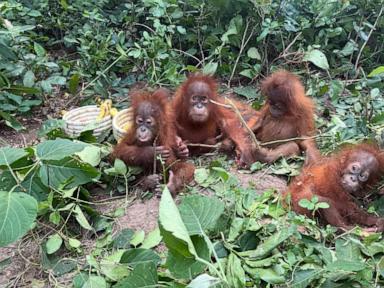
Orangutans don't live in India. They never have.
In the wild, you'll only find them swinging through the shrinking rainforests of Borneo and Sumatra. Yet over the past few years, Indian customs officers and wildlife crime investigators have repeatedly intercepted terrified, malnourished baby orangutans stuffed into plastic baskets, hidden inside luggage, and smuggled through major airports like Chennai, Mumbai, and Bengaluru.
When a critically endangered great ape thousands of miles from its native habitat turns up in a baggage claim scanner, it isn't a weird anomaly. It's proof of a booming, ruthless underground market feeding the demand for status-symbol exotic pets among India's ultra-wealthy.
If you want to understand how this happens—and why the current enforcement model keeps playing catch-up—you have to look past the tear-jerking airport rescue photos and examine the supply chain driving them.
How a Baby Orangutan Ends Up in an Indian Airport
The logistics of smuggling a live ape across international borders are brutal. Poachers don't just stumble across orphaned infants in the Indonesian or Malaysian jungle. To get a baby orangutan, traffickers almost always shoot and kill the mother first. Female orangutans fiercely protect their offspring, keeping their young close for up to eight years—the longest childhood dependency of any land mammal other than humans.
Once the mother is dead, the infant is torn off her body. From there, the surviving baby enters a shadowy transit network.
Smugglers frequently route these animals through Southeast Asian transit hubs like Bangkok or Kuala Lumpur before putting them on commercial flights to India. They use forged CITES (Convention on International Trade in Endangered Species of Wild Fauna and Flora) permits, hide the drugged infants in false-bottom suitcases, or slip them inside ventilated fruit crates alongside legal cargo. Many don't survive the trip. Suffocation, dehydration, and extreme stress kill a massive percentage of trafficked primates before they ever reach a buyer.
Those that do survive are often sick, traumatized, and suffering from severe respiratory infections or malnutrition. When customs officials at Chennai International Airport or Mumbai's Chhatrapati Shivaji Maharaj International Airport bust a courier, they aren't catching the kingpins. They're catching low-level mules paid a few hundred dollars to carry a bag through the green channel.
The Exotic Pet Loophole Fueling Demand
You might wonder why anyone in India would risk prison for an ape that grows to weigh over 200 pounds and possesses the strength of several adult men.
Status. Pure and simple.
On Instagram, YouTube, and private WhatsApp groups, owning rare exotic animals has become the ultimate flex for certain segments of India's elite, influencers, and political insiders. A regular luxury car doesn't turn heads anymore. A baby primate wearing a diaper in a private farmhouse does.
For years, India's legal framework made prosecuting these buyers surprisingly difficult. India's Wildlife (Protection) Act of 1972 was originally built to protect native species like Bengal tigers, Indian rhinos, and Asian elephants. Because orangutans aren't native to India, foreign exotic species fell into a murky regulatory gray zone once they cleared—or bypassed—customs.
In 2020, the Indian government tried to close this gap by launching a voluntary disclosure scheme for exotic live species, followed by the Wild Life (Protection) Amendment Act of 2022, which formally integrated CITES-listed foreign species into the national law. On paper, that changed everything. In practice, enforcement on the ground still lags far behind the smugglers' adaptability.
Why Rescue Centers Struggle With Great Apes
Confiscating a baby orangutan at an airport is only the beginning of a logistical nightmare. India doesn't have wild orangutan populations, which means local state forest departments rarely have staff trained in great ape rehabilitation.
Unlike a rescued leopard cub or a native monkey, an infant orangutan needs round-the-clock surrogate maternal care. They require specialized milk formulas, psychological trauma recovery, and decades of dedicated sanctuary space. A captive orangutan can live 50 years or more.
Repatriating them back to Indonesia or Malaysia sounds like the obvious solution, right? It isn't that easy. International repatriation under CITES rules requires exhaustive diplomatic paperwork, strict quarantine protocols to prevent cross-border disease transmission, and proof of origin. While governments trade paperwork, the young ape sits in a zoo quarantine enclosure, losing critical developmental months it should be spending learning how to forage and climb.
What Most People Get Wrong About Wildlife Trafficking
When news breaks about baby orangutans in India, public outrage usually focuses entirely on the airport smugglers. That misses the real engine of the trade.
- It isn't run by amateur poachers. Wildlife trafficking is organized crime, plain and simple. The same syndicates moving gold, narcotics, and counterfeit currency across the Bay of Bengal and the Andaman Sea use identical routes and corrupt officials to move live animals.
- Social media acts as an open-air marketplace. Investigators from organizations like TRAFFIC and the Wildlife Justice Commission have documented how encrypted messaging apps and mainstream social platforms allow buyers to browse catalogs of live primates, big cats, and reptiles with minimal risk.
- Rescued babies rarely return to the wild. Even when repatriation to Borneo or Sumatra succeeds, an infant taken from its mother too early misses years of survival education. Many end up spending their entire lives in sanctuary enclosures because they literally don't know how to survive in a rainforest canopy.
Buying a baby orangutan doesn't "save" it from a bad dealer. Every single purchase funds the murder of another wild mother and keeps the smuggling pipeline profitable.
The Bigger Picture for Southeast Asia's Forests
Orangutans are already on the brink. Both the Bornean orangutan (Pongo pygmaeus) and the Sumatran orangutan (Pongo abelii) are classified as Critically Endangered by the IUCN, alongside the even rarer Tapanuli orangutan (Pongo tapanuliensis), which has fewer than 800 individuals left on Earth.
Palm oil plantations, illegal logging, and mining have already carved up their forest homes. Habitat loss pushes orangutans closer to human settlements, making them easier targets for poachers looking to cash in on the international exotic pet trade. When a breeding female is killed to steal her baby for a wealthy buyer in New Delhi or Bengaluru, the species loses decades of future reproductive potential.
It's a slow-motion extinction event driven by vanity.
How to Actually Help Stop the Trade
You don't need to be a customs agent or a conservation biologist to cut off the oxygen supply to exotic pet trafficking. Digital visibility is what gives these animals value to buyers, and starving that visibility works.
Stop engaging with "cute" primate videos on social media. When you like, share, or comment on clips of baby orangutans, chimpanzees, or slow lorises wearing clothes or living in human houses, you boost the algorithm that drives buyer demand. Instead, use platform reporting tools to flag animal exploitation and suspected illegal wildlife trade directly to Instagram, YouTube, or TikTok.
Support organizations doing the unglamorous frontline intelligence and rehabilitation work. Groups like TRAFFIC, International Animal Rescue (IAR), and the Borneo Orangutan Survival Foundation (BOSF) track smuggling networks, lobby for tighter customs screening, and fund the lifelong care of confiscated apes that can never go home.
Finally, pay attention to supply chains in your own kitchen. Uncertified palm oil drives the deforestation that exposes wild orangutans to poachers in the first place. Look for products certified by the Roundtable on Sustainable Palm Oil (RSPO), and hold major consumer brands accountable when they source from clear-cut rainforest land.
The next time a customs scanner in India lights up with the silhouette of a curled-up baby ape inside a suitcase, it won't be an isolated crime—it'll be the bill coming due for a global market that still treats living creatures like luxury goods.