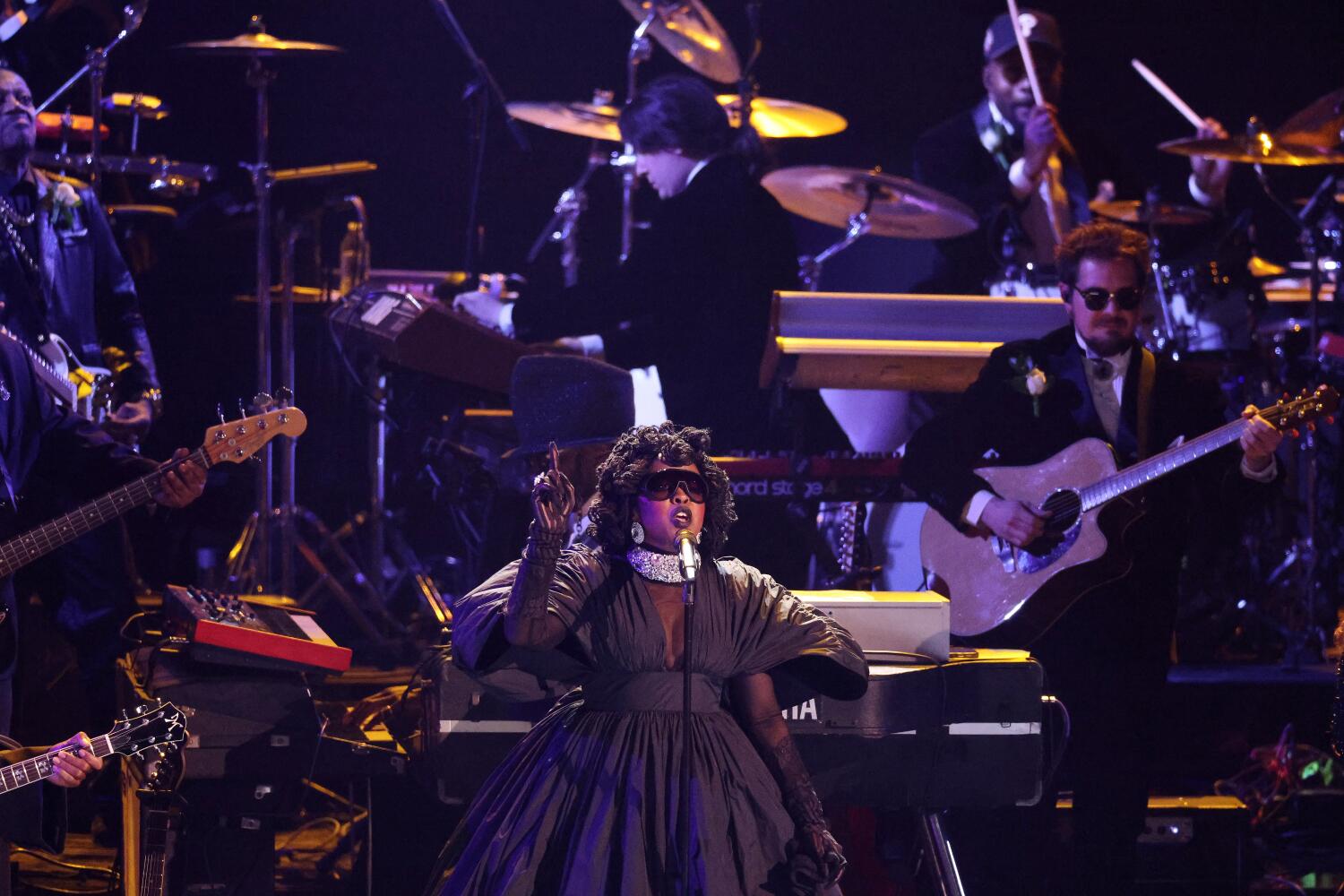
The Recording Academy’s recognition of a Spanish-language project for Album of the Year represents more than a cultural milestone; it signifies the total collapse of the linguistic barrier as a primary constraint on market penetration. Benito Antonio Martínez Ocasio, known as Bad Bunny, has systematically decoupled high-volume commercial success from the requirement of English-language localization. This shift is not a byproduct of "diversity" initiatives, but rather the result of three specific structural drivers: the democratization of distribution via algorithmic streaming, the hyper-localization of brand identity, and the inversion of the traditional crossover model.
The Infrastructure of Global Dominance
The traditional music industry operated on a scarcity model. Radio play and physical shelf space were the gatekeepers, and they favored English-language content because it was perceived as the "neutral" global standard. The transition to a data-driven streaming economy replaced geographic gatekeeping with engagement-based discovery.
Bad Bunny’s success can be quantified through a three-pillar framework that explains his sustained presence at the top of the Billboard charts:
- Retention Velocity: Unlike "one-hit wonders" who rely on a single viral track, Martínez Ocasio maintains high listener retention across 20+ track albums. This creates a compounding effect on streaming algorithms, which prioritize total time spent on platform over individual song plays.
- Cultural Authenticity as a Moat: By refusing to record in English—a departure from the mid-90s "Latin Explosion" strategy utilized by Ricky Martin or Shakira—he avoids the "dilution trap." This preserves his core demographic while paradoxically increasing his exotic appeal to non-Spanish speakers who prioritize vibe and sonic texture over literal lyrical comprehension.
- Cross-Platform Synergy: His presence in the WWE and high-fashion partnerships (Jacquemus, Adidas) serves as an acquisition funnel, bringing disparate audiences into his musical ecosystem without requiring traditional PR cycles.
Deconstructing the Crossover Inversion
For decades, the "Crossover" was a one-way street: an international artist adapted their sound and language to fit the American market. Bad Bunny has inverted this mechanism. Instead of moving toward the center, he has forced the center to move toward him.
The economic implications are significant. When an artist adapts to the U.S. market, they often lose their "home court" advantage, alienating their original fan base. By maintaining his Puerto Rican vernacular and specific regional references, Bad Bunny has achieved Global Hyper-Localization. This strategy leverages the internet’s ability to find "tribes" of listeners. Even if only 5% of a foreign market understands the specific slang of San Juan, the sheer scale of the global internet makes that 5% a massive, highly engaged cohort.
The Cost Function of Cultural Advocacy
During his Grammy acceptance, Martínez Ocasio dedicated the award to those who left their homeland. From a strategic consulting perspective, this is not merely a sentimental gesture but a reinforcement of Brand Equity through Shared Identity.
The Puerto Rican diaspora acts as a force multiplier. Because Puerto Rico is a territory of the United States, its population has a unique, friction-less movement between the island and the mainland. This creates a permanent cultural bridge.
- The Diaspora Multiplier: Immigrant communities serve as the initial "seed" for viral content in their new geographic locations.
- The Political Feedback Loop: By addressing issues like power outages in Puerto Rico or the displacement of locals, Martínez Ocasio converts "listeners" into "advocates." The cost of acquiring a new fan through advocacy is significantly lower than through paid advertising because the relationship is built on shared grievance and pride rather than just aesthetic preference.
Analyzing the 2023 Grammy Outcome
The Grammy for Album of the Year (AOTY) is often viewed as a subjective artistic judgment. However, viewed through a data-centric lens, the win for Un Verano Sin Ti was an inevitability based on market saturation.
The Academy’s voting block, traditionally older and more conservative, had to reconcile a disconnect between their historical preferences and the objective reality of the global market. Bad Bunny’s album was the first Spanish-language project to reach #1 on the Billboard 200 year-end chart. To deny it the top prize would have signaled the Grammys' irrelevance to the modern economy.
Revenue Streams and the New Artist Model
The financial architecture of Bad Bunny’s career provides a blueprint for the next decade of entertainment moguls. His revenue is diversified across four main vertical integration points:
- Touring Efficiency: His tours consistently rank among the highest-grossing globally, boasting a high "Revenue Per Attendee" (RPA) driven by premium merchandise sales and high-demand secondary markets.
- IP Control: By maintaining significant control over his masters and publishing through Rimas Entertainment, he captures a larger percentage of the "Gross Margin" than legacy artists signed to major 360 deals.
- Strategic Scarcity: Despite being a "streaming giant," he limits his media appearances, which increases the value of his public "outings" (like the Grammys).
- Ancillary Ventures: His partnership with Adidas is not a simple endorsement but a long-term design collaboration that integrates his aesthetic into a global supply chain.
Limitations of the Bad Bunny Model
While Martínez Ocasio has cracked the code for global dominance, his model has inherent risks that other artists may struggle to replicate.
- Linguistic Ceiling: While he has pushed the boundary, there is a finite limit to how much a non-English artist can influence policy or media within the U.S. without linguistic fluency. This creates a "glass ceiling" in traditional corporate boardrooms, even if he dominates the charts.
- Burnout and Output Frequency: To maintain his position on the algorithmic "treadmill," he must release content at a pace that is physically and creatively taxing. The moment the output slows, the algorithm begins to favor the next high-velocity creator.
- Political Exposure: By taking firm stances on Puerto Rican sovereignty and social issues, he risks "alienating" segments of the market. While this builds deep loyalty among his core, it creates a ceiling for his brand’s "neutrality" in corporate partnerships.
The Mechanism of the "Homeland" Narrative
When Martínez Ocasio speaks about the "homeland," he is tapping into a global sentiment of displacement. This narrative is a powerful tool for global scaling. Whether a listener is a Puerto Rican in New York, a Mexican in Los Angeles, or a Nigerian in London, the theme of "success despite displacement" is a universal psychological hook.
The "Homeland Variable" functions as follows:
- Identity Reinforcement: The artist becomes a surrogate for the listener’s own success.
- Geographic Arbitrage: The artist uses the resources of a developed economy (U.S. recording studios, global distribution) to amplify the sounds of an emerging or marginalized economy (Reggaeton, Trap Latino).
Strategic Forecast: The Post-Language Era
The success of Bad Bunny at the Grammys is the final proof-of-concept for the "Post-Language" era of entertainment. We are moving toward a market where the "Sonic Profile" of a track matters more than the "Semantic Content."
For stakeholders in the music industry, the strategic pivot is clear:
- Stop Investing in Localization: Do not force international artists to record in English. It dilutes the brand and fails to capture the authenticity that drives modern algorithms.
- Focus on Regional Soundscapes: The next global stars will come from high-density, culturally distinct regions (Lagos, Seoul, Medellín, Mumbai) that have high internal consumption rates before they ever hit the U.S. market.
- Optimize for "Vibe" over "Lyrics": Production quality and rhythmic complexity are the new universal languages.
The Grammy win is not a "victory for Latin music" in a vacuum; it is the formal recognition that the U.S. market is now just one province in a global musical empire where English is no longer the mandatory currency. Investors and labels should aggressively reallocate capital toward "Hyper-Local" talent with "Global-Ready" digital footprints. The objective is no longer to find the next American superstar, but to find the artist who can command a diaspora so effectively that the American market has no choice but to follow.