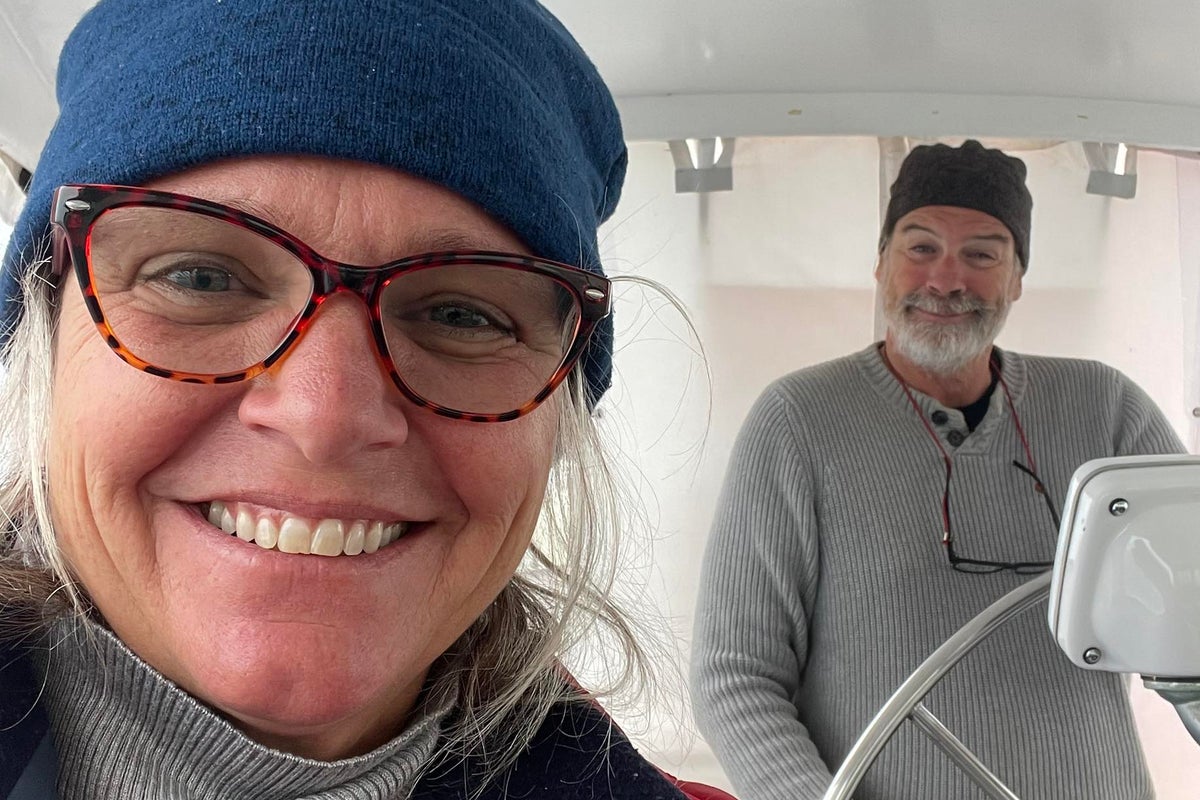
The release of a husband without charges after his wife vanished in the Bahamas highlights a recurring, jagged rift between local policing and the expectations of international families. When an American citizen disappears in a foreign vacation hub, the clock does not just tick; it screams. Yet, in the case of the missing woman whose husband was recently set free by Bahamian authorities, we see the familiar friction of a legal system that prioritizes procedural caution over the high-speed optics of a modern missing-persons hunt. He is out. She is still gone. And the investigation has hit the wall of silence that often follows the initial media storm.
The case follows a grimly predictable arc. A couple arrives for a reprieve in paradise. One vanishes. The other is detained under a cloud of suspicion, only to be released when the evidentiary threshold for a "holding charge" fails to materialize. For the family left behind, this looks like a failure. For the Royal Bahamas Police Force, it is simply the law of the land. But beneath the surface of this specific release lies a deeper, more troubling reality about how island jurisdictions handle high-profile disappearances involving foreign nationals.
The Evidence Gap in Maritime Jurisdictions
Police work in a dense urban environment relies on a web of digital breadcrumbs. Ring doorbells, license plate readers, and cell tower triangulation create a net. In the Bahamas, particularly on the outer islands or out at sea, that net is full of holes. When a person goes missing from a boat or a secluded beach, the physical evidence is often reclaimed by the Atlantic before a forensic team even arrives.
The husband’s release suggests that the "scratches on the surface" were not enough to build a case. In many of these incidents, investigators find themselves in a bind. They lack the body, the weapon, and the witness. In the United States, prosecutors might lean on circumstantial evidence to hold a person of interest. In the Bahamas, the legal system—heavily influenced by English Common Law but slowed by limited local resources—tends to be more conservative. Without a "smoking gun" or a confession, holding a foreign national indefinitely creates a diplomatic nightmare that the local government is keen to avoid.
The Problem with the First Forty Eight
In island disappearances, the first two days are frequently squandered. Local police are often spread thin, and their initial reaction to a missing adult is frequently to assume the person wandered off, got drunk, or had a mishap while swimming. By the time the case is elevated to a criminal investigation, the scene is contaminated. Tourists have walked over the sand. Rain has washed away tracks. The husband in this case was released because, after the initial period of detention, the police could not produce a link that moved beyond speculation.
This isn't just about one man’s freedom. It is about a systemic inability to secure a perimeter in a geography defined by its openness.
Tracking the Financial and Diplomatic Pressure
Tourism accounts for a massive chunk of the Bahamian GDP. Every time a headline screams about a missing American, the "paradise" brand takes a hit. There is an unspoken but palpable pressure on local authorities to resolve these matters quietly or quickly. If they can’t find a body and they can’t prove a crime, the path of least resistance is often to release the suspect and let the international media cycle move on to the next tragedy.
We have seen this before. From Aruba to Jamaica, the pattern holds. The local police face a choice: admit their territory has a safety problem or frame the incident as an isolated domestic tragedy where "accidents happen." By releasing the husband without charges, the authorities effectively shift the burden of proof back onto the family and private investigators. They are no longer defending their handling of a prisoner; they are simply "continuing an open investigation."
The Role of the FBI and Extraterritorial Reach
The public often asks why the FBI doesn't just take over. The answer is a cold bucket of water for those seeking justice. The FBI has no jurisdiction on Bahamian soil. They can provide technical assistance, forensic lab work, and "legal attachés," but they cannot kick down doors or make arrests.
When the Bahamian police released the husband, they did so knowing that the U.S. government has limited moves. Unless a crime can be proven to have occurred on a U.S.-flagged vessel or involved specific federal statutes, the American legal machine stays in neutral. The release is a signal that the local authorities are not willing to gamble their international standing on a case built on vibes rather than verified facts.
The Vanishing Point and Forensic Limitations
The ocean is the perfect eraser. In many of these maritime disappearances, the lack of a body is the ultimate defense. Without a "corpus delicti"—the body of the crime—bringing a murder charge is an uphill battle that most island prosecutors are unwilling to fight. They know that a failed prosecution is worse than no prosecution at all.
Why Circumstantial Evidence Fails in the Tropics
- Environmental Degradation: High salt content, humidity, and heat destroy DNA faster than in temperate climates.
- Transient Witnesses: The people nearby are often tourists who fly home three days later, making them impossible to depose or bring back for a trial.
- Surveillance Gaps: Unlike London or New York, the Bahamas lacks a centralized CCTV network, especially in high-end resort areas or private marinas where privacy is sold as a luxury.
The husband’s release is not an exoneration. It is a reflection of a forensic vacuum. If the police cannot place the suspect and the victim in a specific location at a specific time with a specific motive, the cell door stays open.
The Silence of the Resorts
There is a wall of silence that surrounds these cases, built by the stakeholders of the travel industry. When a guest disappears, the resort's legal team often reaches the scene before the local detectives. Their goal is liability management. They want to ensure that the disappearance is framed as a personal matter, not a security failure of the property.
In this current case, the lack of detail surrounding the woman’s final movements suggests a gap in the "official" narrative provided by the establishments she visited. Information is metered out in tiny, controlled doses. This creates a situation where the husband is the only available target for public anger, regardless of his actual involvement. When he is released, that anger turns toward the Bahamian government, but the resorts—the places where these people were actually staying—remain largely unscathed in the press.
The Husband’s Perspective and the Presumption of Innocence
We must also consider the terrifying possibility of the "innocent survivor." If a spouse truly vanishes due to a random act of violence or a tragic accident, the surviving partner is immediately thrust into a Kafkaesque nightmare. They are in a foreign country, their loved one is gone, and they are being interrogated by a police force that might be looking for a quick scapegoat to satisfy the U.S. Embassy.
Being released without charges is, in a healthy legal system, the correct outcome if evidence is missing. However, in the court of public opinion, the release is viewed as a "get out of jail free" card. The nuance of "insufficient evidence" is lost in the roar of social media true-crime sleuths.
The Realities of Search and Recovery in the Archipelago
The Bahamas consists of 700 islands and thousands of cays. Searching for one person in that maze is like looking for a specific grain of sand in a hurricane. The Royal Bahamas Defence Force has limited assets. Their primary focus is often on intercepting drug runners or human traffickers, not conducting meticulous grid searches for a single missing person.
When the husband was released, the search effort likely shifted from a "rescue" to a "recovery" in all but name. The resources required to maintain a high-intensity search are astronomical. Once the primary suspect is no longer in custody, the political will to keep helicopters in the air and divers in the water begins to evaporate.
The Private Investigator Pivot
Now that the official police intervention has hit a stalemate, the family will likely turn to private eyes. These retired feds and high-priced security consultants operate where the law cannot. They don't need a warrant to talk to a bartender, and they don't need a diplomatic clearance to follow a lead. But they also can’t make an arrest. They are there to find the truth, not to provide justice.
The release of the husband marks the end of the "official" phase of this tragedy. It moves from a criminal matter to a cold case.
Lessons for the Modern Traveler
This case serves as a brutal reminder that the protections you enjoy at home do not travel with your passport. You are entering a different legal ecosystem the moment you clear customs.
If you find yourself in a situation where a companion goes missing in a foreign jurisdiction, the steps you take in the first hour are the only ones that matter. Contact the U.S. Embassy immediately. Do not rely on resort security. Demand a representative from the Consular Affairs office. Document everything yourself. The husband in this case is free, but the "truth" is now a casualty of a system that wasn't built to find it.
The investigation will continue in the shadows, but without a significant shift in the evidence—or the discovery of the missing woman—this story will likely join the long list of island mysteries that remain unsolved. Justice in the tropics is often as fleeting as the tide.
Don't wait for the local police to give you answers. If you are traveling in these regions, you are your own first responder.