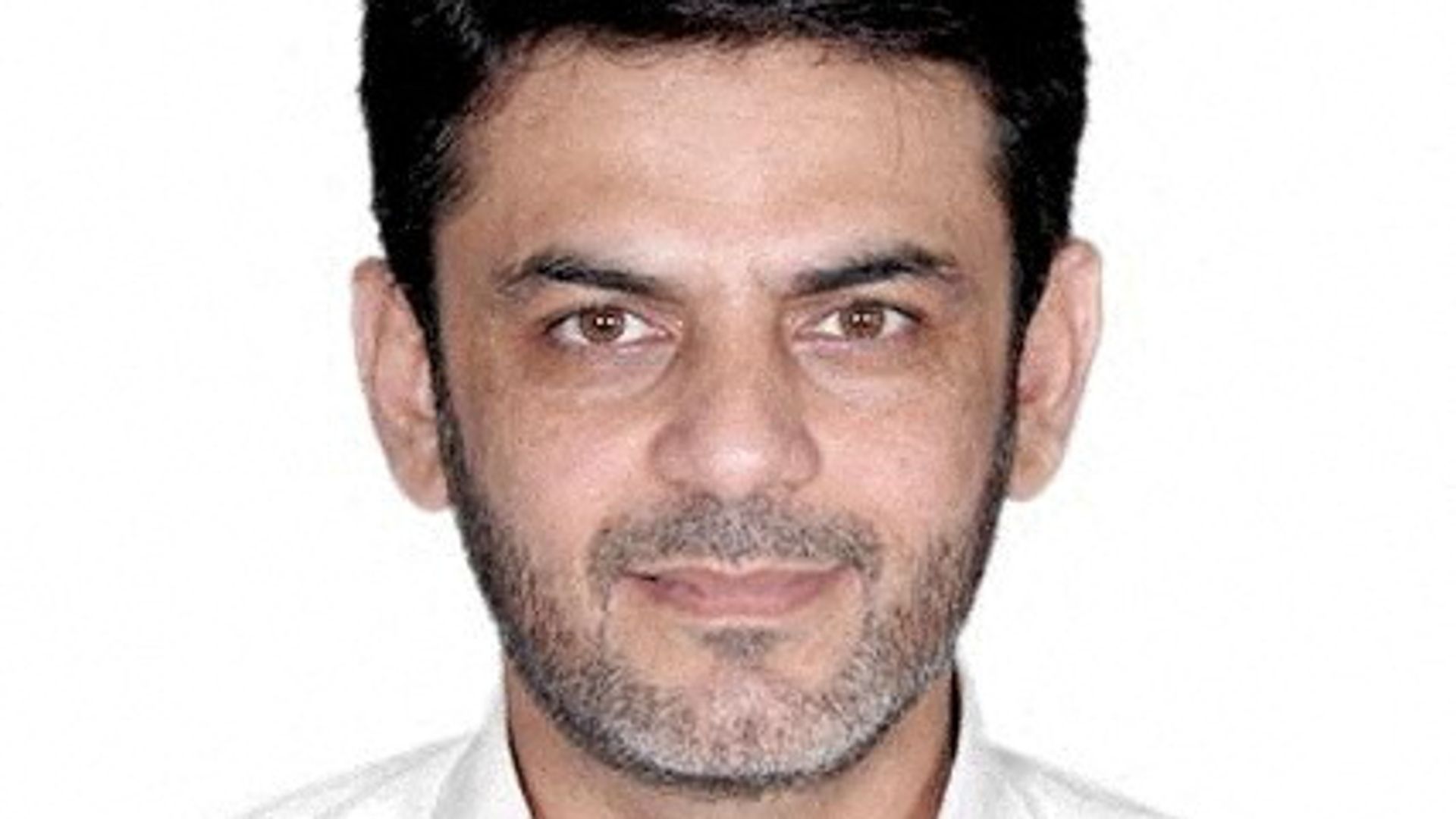
The death of a civilian from a missile strike in a global financial center like the United Arab Emirates signals a collapse of the "sanctuary logic" that has historically governed non-belligerent trade hubs. When a ballistic trajectory terminates in a civilian residential zone, it is rarely a singular failure of air defense; rather, it is the result of a multi-stage breakdown in regional deterrence, sensor-to-shooter identification, and the physics of kinetic interception. The incident involving a British-South African expatriate during the Houthi-led missile attacks on Abu Dhabi functions as a case study in the increasing vulnerability of high-density, high-value urban environments to low-cost, long-range asymmetric munitions.
The Triad of Kinetic Risk in Urban Centers
Analyzing the lethality of a missile strike in an expat-heavy environment requires a breakdown of three specific variables: the probability of interception, the debris field physics, and the failure of early warning dissemination.
- The Interception Paradox: While Missile Defense Systems (MDS) like THAAD (Terminal High Altitude Area Defense) or Patriot batteries have high success rates, an "interception" does not eliminate mass. It converts a guided, singular kinetic threat into an unguided, multi-point debris threat. In a high-density urban landscape, the "protected footprint" often contains hundreds of thousands of non-combatants. If an intercept occurs at a low altitude, the resulting shrapnel and unspent fuel can be as lethal as the original warhead.
- Structural Vulnerability vs. Material Resilience: Modern high-rises in the Gulf are designed for wind loads and seismic activity, not the high-velocity impact of ballistic fragments. The kinetic energy of a falling missile casing—even without an active payload—is sufficient to penetrate reinforced concrete.
- The Information Gap: In the seconds between detection and impact, the "time-to-shelter" window is often less than ninety seconds. In a society built on the premise of total safety, the absence of ingrained civilian defense protocols creates a "friction of shock" that increases casualty rates.
The Mechanics of Asymmetric Escalation
The transition of the UAE from a "safe harbor" to a kinetic target represents a shift in the cost-benefit analysis of regional non-state actors. The use of the Zulfiqar or Quds-type missiles against Abu Dhabi targets specific economic pressure points.
The Economic Damage Function
The objective of such strikes is not the destruction of military assets, but the spike in the "risk premium" for foreign direct investment and expatriate labor. The calculus follows a predictable sequence:
- Perception of Permeability: Once a missile lands, the myth of an impenetrable air defense shield is discarded.
- Insurance Escalation: Marine and property insurance rates in the region correlate directly with the frequency of successful or near-miss kinetic events.
- Talent Flight: For a nation where 80% of the population consists of foreign nationals, the safety of the individual is the primary product. A single civilian death, such as the expat victim in this case, serves as a proof of concept for the attacker's ability to disrupt the social contract.
Engineering the Intercept: Why Failures Occur
Missile defense is a game of probability, not certainty. The failure to prevent a civilian death in an urban center usually stems from one of three technical bottlenecks:
- Saturation: Launching multiple low-cost drones alongside high-speed ballistic missiles to overwhelm the radar's tracking capacity.
- The Look-Down/Shoot-Down Limitation: Radars may struggle to distinguish between low-flying cruise missiles and ground clutter or civilian air traffic in a crowded corridor like the Persian Gulf.
- Late-Stage Maneuvering: If a missile has a terminal guidance system or a re-entry vehicle that maneuvers, the interceptor’s predicted "kill point" becomes a moving target, often forcing an intercept at a lower, more dangerous altitude.
The Human Cost as a Geopolitical Variable
The narrative of the victim—a grandfather and expat—highlights the disconnect between the technical language of "collateral damage" and the operational reality of urban warfare. From a strategic perspective, the death of a non-combatant from a neutral nation (the UK or South Africa) creates a diplomatic "entanglement" that the attacker seeks to exploit. It forces the victim's home country to choose between silent complicity or active involvement in a regional conflict they previously ignored.
The structural failure here is the assumption that high-tech defense can replace political de-escalation. When a missile lands in a living room, it exposes the limits of the "Technological Shield" theory. The shield is porous. It is designed to protect "Value at Risk" (oil refineries, palaces, hangars), while the individual civilian often exists in the statistical "margin of error."
Operational Realignment for Urban Safety
For the UAE and similar hubs, the path forward requires a transition from a purely military defense posture to a "civil resilience" framework. This involves several hard-coded changes to the urban operating environment:
- Hardening of Residential Infrastructure: Updating building codes to include "safe zones" on every floor, capable of withstanding secondary fragmentation.
- Automated Civil Alerts: Direct-to-handset early warning systems that bypass traditional media to provide instant, localized "get-to-ground" instructions.
- Post-Kinetic Forensic Transparency: Rapidly identifying and publicized the origin of the munition to mobilize international diplomatic pressure, shifting the "blame" from the failure of defense to the illegality of the attack.
The current trajectory suggests that the "protected status" of global trade cities is no longer a given. The death of a civilian in Abu Dhabi was not a fluke; it was a demonstration of the narrowing gap between the front line and the boardroom. The strategic imperative for these hubs is now the management of "residual risk"—the 1% to 5% of threats that the most advanced systems in the world simply cannot catch.
The immediate requirement for stakeholders in high-risk zones is the integration of kinetic risk into standard operational continuity plans. This includes the installation of private-sector sensor arrays to supplement state defense data and the mandatory implementation of ballistic-shelter protocols for all high-occupancy residential developments. The era of passive reliance on national missile umbrellas has ended; the era of localized, architectural defense has begun.