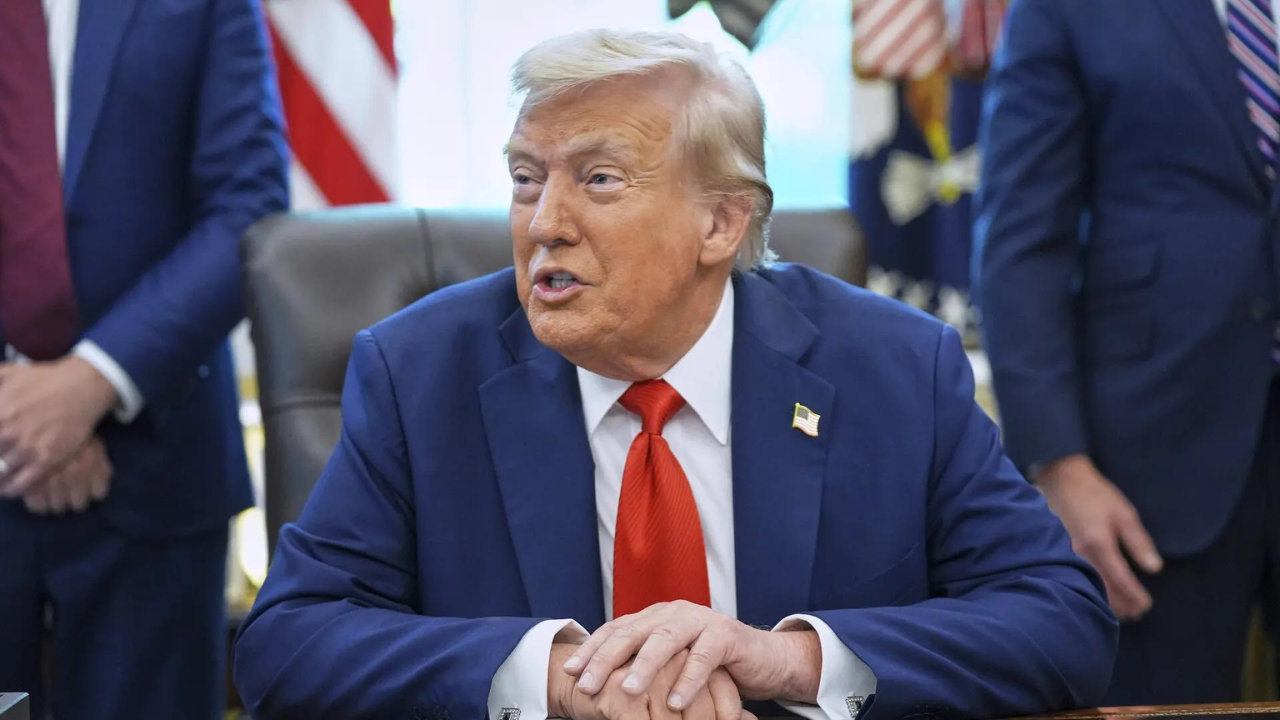
The intersection of high-level executive protection and political optics creates a fundamental engineering conflict: the requirement for maximum ballistic coverage versus the necessity of maintaining a specific public-facing silhouette. In the context of Donald Trump’s reaction to reports of wearing a bulletproof vest during a White House dinner event, the friction lies not in the security protocol itself, but in the anatomical distortion caused by modern soft-armored systems. For a political figure whose brand is predicated on strength and physical presence, the "bulk" of a Level IIIA vest represents more than just a sartorial inconvenience; it is a degradation of the visual identity that signals vitality and unencumbered leadership.
The Physics of Ballistic Bulk
Body armor operates on the principle of energy dissipation through layer-count and fiber density. To understand why a standard protection detail creates a "20-pound heavier" visual profile, one must examine the material constraints of Ultra-High-Molecular-Weight Polyethylene (UHMWPE) and aramids like Kevlar.
- Areal Density Requirements: A vest rated to stop high-velocity handgun rounds (Level IIIA) requires a specific thickness. While weight has decreased over decades, the volume displacement remains constant. A typical concealed vest adds 0.25 to 0.5 inches of depth to the torso.
- The Multi-Layer Compression Gap: The visual "heaviness" does not originate solely from the vest's thickness, but from the air gap created between the armor and the wearer’s dress shirt. Unlike athletic gear, armor panels are semi-rigid. They do not contour to the natural curves of the human waist or armpits, leading to a "barrel-chested" effect that obscures natural tailoring.
- Thermal Expansion and Stance: Armor is an insulator. The physiological response to wearing 5–8 pounds of non-breathable material includes increased core temperature and a slight change in gait or shoulder positioning to compensate for the restrictive side panels. This shift in posture is often interpreted by observers as increased body mass.
The Taxonomy of Political Armor
The decision to wear armor in a "soft" environment, such as a formal dinner, suggests a specific threat-level escalation that overrides standard comfort protocols. Executive protection details utilize three primary categories of concealment:
- Under-Shirt Skin-Thin Carriers: These provide minimal protection (Level II or IIA) against smaller caliber rounds. They are the most discrete but offer the lowest safety margin.
- Integrated Ballistic Tailoring: This involves sewing ballistic panels directly into the lining of a suit jacket or overcoat. While this maintains the "hang" of the garment, it makes the jacket significantly heavier and prone to unnatural swaying during movement.
- External Concealable Carriers: These are worn over an undershirt but under a dress shirt. This is the likely culprit in the reported scenario. Because the carrier sits atop the ribcage, it pushes the dress shirt outward, creating the illusion of a thicker midsection.
The Optics of Vulnerability vs. Vitality
In political communication, the body is a tool of statecraft. Any perceived change in physical dimensions is immediately scrutinized by opposition and media alike. Trump’s pushback against the "heavy" look is a tactical defense of his "strongman" archetype.
From a strategic perspective, the "20 pounds" comment addresses the Cost Function of Protection. Every increase in physical safety (the Y-axis) results in a corresponding decrease in "Naturalism" (the X-axis). For a populist leader, appearing "natural" and "untouchable" is a core asset. Admitting to wearing armor is a tacit admission of vulnerability—it acknowledges that the environment is hostile and that the leader is, in fact, mortal.
The denial of the vest, or the mockery of the visual side effects, serves to re-establish the narrative that the leader’s physical form is unchanged and that the security apparatus is invisible. This creates a paradox for the Secret Service: their success depends on a layer of protection that the protectee may actively resent for its aesthetic impact.
Logic of the Tactical Silhouette
The "20-pound" distortion is particularly acute in formal wear. A tuxedo or a high-end business suit is designed with specific "drop" ratios—the difference between chest and waist measurements. Armor negates this ratio.
- The Rectangular Effect: Armor fills the space between the lats and the waist, turning a V-taper or an average torso into a rectangle.
- The Neck-to-Shoulder Ratio: High-sitting ballistic panels can push up against the collarbone, making the neck appear shorter. In visual psychology, a shorter neck is often associated with age or poor physical condition.
- The Shadow Gap: Under professional lighting (such as a White House event), the lack of fabric-fold shadows on a torso covered by a rigid plate makes the person look wider. Human eyes look for the "pinch" of a suit at the waist to determine weight; armor removes this visual anchor.
Operational Constraints of High-Profile Security
When an executive protection team insists on armor for an indoor event, it usually follows a specific intelligence trigger or a failure to secure the "inner perimeter" to 100% certainty.
Variable 1: Line of Sight Logic
In a large room with many attendees, "Long-Gun" threats are reduced, but "Close-Quarter" threats increase. Soft armor is designed specifically for handgun threats common in crowd-penetration scenarios.
Variable 2: The "Stand-Down" Conflict
There is an inherent tension between the Protectee (who wants to look good) and the Detail Leader (who wants to keep the Protectee alive). If the Protectee refuses the vest due to "looking heavy," the detail must increase the "Human Shield" protocol—positioning agents closer to the subject. This, however, also ruins the optics by making the subject look "babied" or surrounded.
Structural Misalignments in Media Reporting
Media outlets often focus on the "vanity" aspect of the "20 pounds" comment, but this misses the structural reality of political branding. In high-stakes environments, vanity is a functional component of power projection.
The reporting fails to quantify the Tradeoff Ratio:
- If the vest is worn: Safety increases by 85% against small arms; perceived physical fitness decreases by 15%.
- If the vest is omitted: Perceived physical fitness remains at 100%; safety drops to base-level perimeter security.
The jab at the reports is a method of reclaiming the "Vitality Narrative." By blaming the "look" on the reporting rather than the equipment, the subject attempts to decouple the reality of the threat from the public's perception of his body.
Future Implications for Executive Sartorial Defense
As ballistic materials evolve, the "20-pound" problem will likely be solved by non-Newtonian fluids or graphene-based composites that offer the same protection at 1/10th the thickness. Until then, the conflict remains.
The strategic play for any high-profile figure in this position is not to deny the equipment, but to optimize the Tailoring-to-Armor Integration. A suit must be cut specifically to accommodate the armor, with "false" waistlines and reinforced shoulders to mimic natural drape. If the garment is not custom-fitted over the ballistic panels, the "20-pound" distortion is an inevitable mathematical outcome of fabric tension over a rigid substrate.
The ultimate defense against "looking heavy" isn't a better diet; it's better engineering of the interface between the ballistic carrier and the wool-silk blend of the outer shell. Moving forward, the standard for executive protection will shift toward Total System Integration, where the armor and the suit are designed as a single, multi-functional unit rather than two competing layers. This eliminates the air gaps that cause the "barrel" effect and allows for the maintenance of a sharp silhouette without compromising the integrity of the ballistic envelope.



