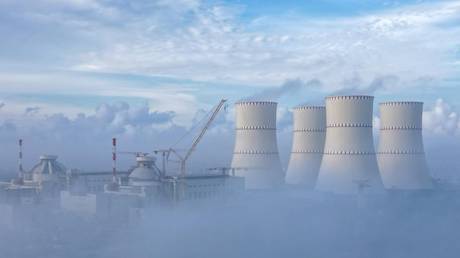
Call it a milestone if you want. Call it a triumph of engineering. Just don’t call it energy independence.
Every time a developing country crosses a construction threshold on a foreign-financed reactor, the press releases write themselves. Ribbon-cutting rhetoric. Sovereign pride. Promises of baseload salvation. A Russian-built reactor in Bangladesh hits a key milestone, and the lazy consensus treats it like the moment Dhaka solved its power grid forever.
That consensus is lazy. Worse, it is dangerous.
I have watched developing economies pour billions into megaprojects that looked magnificent on glossy brochures and miserable on balance sheets. I have seen governments sign turnkey contracts with state-backed vendors without counting the hidden costs that show up ten years later—the fuel supply lock-in, the grid bottlenecks, the debt-service crunch, and the quiet erosion of real leverage. When a single foreign supplier builds the plant, supplies the enriched uranium, trains the operators, and handles the back-end waste conversations, you haven’t built autonomy. You have built a long-term dependency with concrete walls.
To understand what is actually happening with Bangladesh’s Russian-built nuclear project—the Rooppur Nuclear Power Plant model—you have to stop celebrating the concrete and start reading the fine print. A milestone is a stage of execution, not a finish line. Treating a construction checkpoint as proof of long-term energy security confuses motion with direction.
The Lazy Consensus Around Megaprojects
The standard story goes like this: Bangladesh has a growing economy, rising industrial demand, seasonal gas shortages, and an urgent need for reliable electricity. Large-scale nuclear power provides high-capacity, low-carbon baseload generation. Therefore, hitting a major milestone on a Russian-built reactor is an unambiguous win.
On paper, that chain of reasoning sounds neat. In practice, it skips three brutal realities of infrastructure economics.
First, baseload power is not the same thing as usable power. A reactor can produce massive amounts of steady megawatts, yet still underperform financially if the transmission grid cannot move that electricity efficiently to industrial load centers during peak hours, or if demand fluctuates sharply across seasons. Building generation capacity ahead of grid modernization and market reform creates expensive bottlenecks.
Second, financing terms dictate the real price of electricity. State-backed export loans from a vendor nation rarely come out of pure charity. They come tied to specific contractors, equipment packages, schedules, and geopolitical alignment. Even when headline interest rates look manageable on paper, total project cost—including delays, currency exposure, and long-term operating commitments—often dwarfs early optimism.
Third, operational sovereignty requires more than a local workforce. Training engineers and technicians is essential, and credit belongs to the professionals doing the technical work. Yet genuine energy security means having options when markets tighten, prices spike, or supply chains get strained. When one external power controls the core technology and fuel chain, your room to maneuver shrinks every year.
Why People Ask the Wrong Questions About Nuclear Milestones
When news breaks about a major nuclear construction step in South Asia, the surrounding questions usually follow a predictable script:
- Will this solve Bangladesh’s power shortages?
- Is Russian nuclear technology safe and reliable?
- Does this make the country energy independent?
Each of those questions has a flaw—or demands a blunt answer that breaks the PR narrative.
"Will this solve power shortages?"
No single plant solves systemic grid stress on its own. Power shortages in fast-growing economies are rarely caused by one missing generator alone. They come from fuel import exposure, aging transmission lines, distribution losses, subsidies that distort consumption, and rigid dispatch systems. A massive nuclear unit can anchor baseload supply, yes. It cannot magically fix a strained grid or replace diversified generation overnight.
"Is Russian nuclear technology safe and reliable?"
Let’s be precise about terms here. Safety refers to engineering design, containment systems, cooling redundancy, and regulatory oversight meant to prevent accidents and limit radiation release. Reliability refers to capacity factor—how consistently a plant generates power over decades without unplanned outages. Large modern pressurized water reactors—such as the VVER-1200 design associated with Russian nuclear exports—incorporate active and passive safety systems engineered to meet contemporary international standards.
Claiming a reactor is unsafe just because it is Russian is lazy geopolitics. Claiming that engineering competence erases financial or geopolitical risk is lazy economics. Both mistakes come from conflating hardware performance with system-wide resilience.
"Does this make the country energy independent?"
Independence means freedom from single-point reliance. If your reactor depends on specialized fuel fabrication, proprietary maintenance support, and external financing tied to a single supplier ecosystem, that is interdependence—and often asymmetric interdependence at that. Calling it independence is marketing, not analysis.
What the Heavy Hitters Know That Press Releases Hide
Serious energy economists and nuclear strategists—figures like Daniel Yergin on energy systems and geopolitics, or institutions like the International Energy Agency when analyzing capital-intensive nuclear buildouts—keep coming back to the same core discipline: total system cost and risk allocation.
Nuclear plants are capital-heavy and operations-light once running, which flips the cost structure of fossil fuel plants. With gas or oil, a big share of your cost sits in recurring fuel purchases. With nuclear, a huge share sits upfront in capital cost, construction financing, and schedule discipline. Every month of delay costs money. Every shift in financing terms ripples through electricity tariffs or public budgets.
There is also a structural trap specific to single-vendor megaprojects. Once a country commits billions to one reactor architecture, switching costs become astronomical. You cannot easily swap core components or rewrite fuel logistics on a whim. Over a 40- to 60-year operating life, that lock-in becomes a defining feature of national energy strategy.
Consider a thought experiment. Imagine a scenario where a developing nation finances a flagship nuclear plant through a foreign state lender, hits every major construction milestone on schedule, and brings the unit online—only to face a sharp macroeconomic squeeze and higher-than-expected grid integration costs in its first decade of operation. The reactor works. The turbines spin. Yet the treasury feels the strain every quarter because fixed obligations do not care about budget tightness. That is the gap between an engineering milestone and a financial victory.
The Downsides of Taking the Contrarian View
Being skeptical of celebratory nuclear coverage carries its own blind spots, and it would be dishonest to pretend otherwise.
Critics of large-scale nuclear projects frequently overestimate the speed and reliability of alternatives in developing markets. Wind and solar have dropped dramatically in cost, yet integrating high shares of variable renewables requires serious grid storage, flexible backup, and transmission upgrades that are not effortless to build in fast-growing economies. Meanwhile, relying heavily on imported liquefied natural gas exposes a country to brutal global price swings—a lesson driven home repeatedly during energy shocks.
If you reject large nuclear buildouts purely out of ideological skepticism or fear of foreign entanglement, you can easily end up trapped in another form of vulnerability: chronic power deficits, high-emission coal lock-in, or expensive spot-market gas imports.
The real trade-off isn’t "nuclear good vs. nuclear bad." The real trade-off is which set of risks you are willing to manage over the next half-century.
How to Actually Judge a Nuclear Milestone
If you are an investor, policy analyst, industrial buyer, or serious observer tracking this project, stop reading the headline and run a harder checklist.
- Audit the balance sheet, not the concrete. Look past pouring cement or installing major components. Track sovereign debt exposure, repayment grace periods, interest structures, and how electricity pricing absorbs capital recovery.
- Follow the fuel and spare-parts chain. Ask who supplies the fuel assemblies, how long contracts lock in, what happens if logistics face disruption, and how much local technical capacity exists independent of foreign vendors.
- Watch the grid downstream. A megawatt generated at the plant means little if transmission lines cannot carry it without heavy losses. Check parallel investments in substations, grid stability, and industrial off-takers.
- Demand portfolio diversification. Judge any single reactor against the broader energy mix. True resilience comes from balancing baseload, flexible generation, renewables, domestic resources, and grid efficiency—never betting the house on one technology or one partner.
Milestones are easy to applaud. Discipline is harder. Until the financial terms, grid readiness, and long-term operational autonomy match the ambition of the steel and concrete, treat every celebratory headline with cold, sharp skepticism.
Concrete doesn't vote, and press releases don't pay the debt.