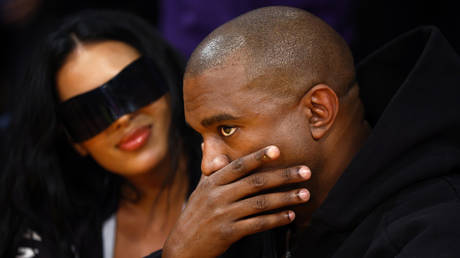
Dutch lawmakers are currently performing a masterclass in political theater. By calling for a preemptive entry ban on Kanye West—citing his history of antisemitic rhetoric and "unpredictable behavior"—they aren't protecting the public. They are auditioning for a role in a script he wrote years ago.
Banning a performer from crossing a border based on potential speech is the ultimate sign of institutional weakness. It signals that a modern, developed democracy is so fragile that the mere presence of a disgraced rapper might destabilize its social fabric. It is a move born of panic, not principle. Recently making headlines in related news: Stop Pretending Celebrity Trials Are About Justice.
The Sovereignty Trap
The standard argument for an entry ban is simple: "We have the right to refuse entry to those who incite hatred." On paper, this aligns with various EU directives regarding public order and security. However, lawmakers are conflating "public annoyance" with "public danger."
When the UK banned Snoop Dogg in 2006 or Tyler, the Creator in 2015, did it stop their music from being streamed? Did it scrub their influence from the cultural consciousness? No. It turned them into martyrs of "free expression" for a youth demographic already suspicious of government overreach. More details on this are covered by Vanity Fair.
By pushing for a ban, the Dutch government is handing West the one thing he currently lacks: legitimate victimhood. You cannot "deplatform" someone who owns their own servers and commands a global audience of millions through decentralized social media. A physical ban is a 20th-century solution to a 21st-century ideological problem.
The Cost of Preemptive Censorship
Let’s look at the legal mechanics. Under the Schengen Agreement, a member state can refuse entry if a person is considered a threat to "public policy, internal security, or public health."
Is West a threat to public health? No.
Is he a threat to internal security? Only if you believe the Dutch police are incapable of managing a concert crowd.
The "public policy" clause is the loophole lawmakers love. It’s a vague bucket used to catch anyone who says something unpopular. But here is the nuance the "lazy consensus" misses: the moment you use border control as a tool for moral policing, you set a precedent that will inevitably be used against someone you actually like.
Imagine a scenario where a future, hard-right government uses this exact same "public policy" justification to ban human rights activists or climate protestors because their rhetoric is "destabilizing." When you cheer for the ban of a villain, you are sharpening the blade that will eventually be held to the throat of your allies.
The Myth of the "Clean" Public Square
There is a flawed premise in the "People Also Ask" sections of this debate: Will banning Kanye West reduce antisemitism in the Netherlands?
The answer is a brutal, resounding no.
Antisemitism is a systemic, ancient poison that exists independently of American celebrities. Removing the man from the soil does nothing to remove the ideas from the internet. In fact, it validates the conspiratorial "they are out to get me" narrative that fuels the very fringe groups the lawmakers claim to oppose.
I’ve watched industries try to sanitize their ecosystems by purging controversial figures. It never works. It creates a "Streisand Effect" where the forbidden content becomes more valuable precisely because it is suppressed. If the Dutch government wanted to actually combat West’s influence, they would let him perform to a half-empty arena and let the critics dismantle his arguments in the open air. Instead, they want to hide him in the basement, making everyone wonder what’s behind the door.
Professional Outrage vs. Practical Governance
Lawmakers are currently focused on the "optics" of the visit. They fear the headlines. They fear the protests. They are choosing the path of least resistance.
But practical governance requires more than just reacting to the outrage cycle. It requires an understanding of the Cost of Enforcement.
- Legal Appeals: West has the resources to tie this up in court for years, forcing the state to spend taxpayer money defending a ban on a guy who just wanted to play some beats.
- Diplomatic Friction: While the US government isn't going to war over a rapper, these bans create unnecessary bureaucratic sludge between allies.
- Radicalization: You don't defeat an extremist by silencing them; you defeat them by making their ideas look ridiculous. A ban makes them look dangerous. Dangerous is cool. Ridiculous is not.
The Failure of "Public Order" Arguments
Whenever a state invokes "Public Order," they are usually admitting they can't handle a difficult conversation.
If West comes to the Netherlands and breaks a law—incites immediate violence or violates specific hate speech statutes on stage—then arrest him. That is how a confident legal system works. You punish the act, not the person’s existence.
The Dutch call for a ban is a confession of intellectual bankruptcy. It suggests that Dutch citizens are so easily swayed, so lacking in discernment, that they must be shielded from a man whose most recent public appearances involved wearing a net over his head and praising dictators.
The Nuance of Entry Requirements
Let's get technical. To justify a ban under the Schengen Borders Code (Regulation EU 2016/399), the threat must be "genuine, present, and sufficiently serious."
Does a rambling interview from two years ago constitute a "present" threat? Highly unlikely. Most legal experts know these bans are often overturned on appeal because they rely on past behavior rather than imminent risk. The Dutch lawmakers know this too. They don't actually care if the ban sticks; they just want the credit for "standing up" to him. It’s performance art masquerading as policy.
The Actionable Reality
If you are a policymaker, the move isn't to ban. It's to ignore.
The oxygen of the Kanye West brand is conflict. He thrives in the friction between himself and "The System." By denying him entry, the Dutch government becomes a supporting character in his drama.
True authority doesn't need to slam the door. True authority allows the visitor in, observes the law, and demonstrates that the nation's values are robust enough to withstand a few hours of nonsense.
Stop trying to sanitize the world with border guards. It’s a hollow strategy that fails the moment the target logs onto a livestream. If your democracy is so weak that it can’t survive a visit from a musician with a crumbling reputation, the musician isn’t your biggest problem.
Governments should stop acting like high school principals and start acting like sovereign states. Open the gates, let him speak, and let the public decide he’s not worth the ticket price. That is the only way to actually win.
Silence is not a policy. It’s a white flag.