Brussels wants you to believe that denying a neutral cross-country skier a visa or threatening the International Olympic Committee with funding cuts is an act of geopolitical courage. It is not. It is bureaucratic theater, a cheap substitute for actual statecraft designed to let European politicians pretend they are cracking down on Moscow while avoiding the economic pain of real confrontation.
The lazy consensus in international sports journalism treats the push to keep Russian and Belarusian competitors locked out as moral clarity. We are told that sports and politics are permanently fused, that any return of an individual athlete under a neutral banner normalizes conflict, and that sports federations like the ISU or the IOC are subverting global order by opening the door.
This argument collapses under the weight of basic historical reality and logical consistency.
The Selective Morality of Sporting Bans
Let us dispense with the fiction that international sport has ever been a pristine sanctuary of human rights and peaceful coexistence. For decades, sporting bodies have eagerly hosted events in nations actively engaged in illegal invasions, civilian displacement, and human rights violations. When the United States and its allies tore through the Middle East over the past twenty years, did European capitals threaten to cut funding to FIFA or the IOC? Did athletic federations scramble to issue blanket bans against Western competitors? Of course not.
To point this out is not to excuse Moscow's war in Ukraine. It is to expose the intellectual dishonesty of pretending that sports bans are applied by universal principle rather than geographic convenience.
When Finland and Norway slam their borders shut on neutral athletes, they are engaging in performative deterrence. They are punishing twenty-year-old gymnasts and lugers who spent their entire lives chasing a five-ring illusion, while multinational corporations continue trading Russian liquefied natural gas and bypassing sanctions through third-party intermediaries.
Punishing athletes does nothing to alter battlefield realities in the Donbas. It merely offers domestic audiences a surrogate victory. It satisfies the bloodlust of politicians who want to look tough on a screen without risking trade deficits or inflation spikes.
The Neutrality Trap
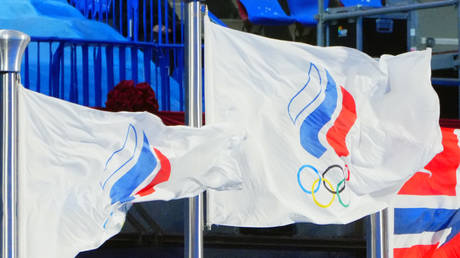
The core premise of the European Union's proposed countermeasures—such as conditioning sports grants on the exclusion of specific nationalities—destroys the foundational independence of global sport. The whole point of the Individual Neutral Athlete (AIN) framework was to separate the individual from the state apparatus.
Critics sneer that neutrality is a sham, pointing out that Russian sports are heavily state-funded and nationalistic. True enough. But if financial and political ties to an authoritarian government are the disqualifying threshold, international sport is about to experience a massive existential contraction.
Look closer at the mechanics. If a nation-state's domestic politics dictate who can run down a track, sport ceases to be an independent cultural language and becomes an explicit weapon of foreign ministries. Once you cross that line, you lose the right to complain when authoritarian states use those exact same mechanisms to bar athletes from countries they dislike. You institutionalize the politicization of the podium.
The Practical Cost of Isolation
Beyond the moral hazard, the strategy of athletic quarantine is failing on its own terms. As seen in recent rulings by the Court of Arbitration for Sport (CAS) and the stubborn resistance of federations desperate to preserve their global calendars, the global sports ecosystem is fracturing. Regional boycotts, visa weaponization by Nordic states, and retaliatory tournament relocations are turning international competition into a chaotic patchwork.
Athletes are collateral damage in a culture war fought by aging bureaucrats in Brussels and Moscow. A generation of competitors is being sacrificed to a principle that changes shape depending on who holds the geopolitical leverage.
Stop pretending that keeping a figure skater out of Helsinki is an act of resistance. It is administrative bullying disguised as ethics, and it is destroying international sport from the inside out.