The operating room smells faintly of ozone and warm copper.
Dr. Helena Vance knows this smell better than her own kitchen. She stands over a patient whose tibia has been shattered into six distinct pieces by a motorcycle bumper. The human body is remarkably stubborn, yet it has limits. When bone breaks beyond a certain threshold, it refuses to bridge the gap. It gives up. In the old days, surgeons fought this surrender with crude metal plates and desperate prayers against infection. Today, Helena reaches for a ceramic substitute. It is synthetic, porous, and startlingly white. It mimics the architecture of natural bone so closely that the body is tricked into treating it not as a foreign invader, but as an invitation. You might also find this connected article insightful: The Cost Of Defiance Inside The Federal Reserve Battleground.
This is the microscopic miracle of BoneSupport.
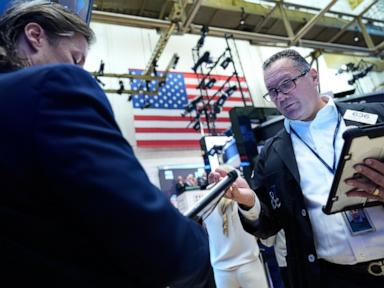
Yet, miles away from the quiet hum of the surgical suite, another kind of theater is playing out. A theater of cold numbers, blinking monitors, and high-stakes aggression. On the trading floors of Frankfurt and London, a different group of people are staring at the same company, but they see a target painted in neon red. As discussed in latest coverage by Harvard Business Review, the effects are worth noting.
BoneSupport, the Swedish orthobiologs darling, has found itself trapped in the crosshairs of a brutal phenomenon. It is currently one of the most heavily shorted stocks in Europe.
To understand why a company rebuilding human limbs is simultaneously facing a pack of financial wolves, we have to look past the spreadsheets. We have to look at the anatomy of fear, ambition, and the brutal physics of the public markets.
Markets do not care about healing. Markets care about velocity.
When a company develops a breakthrough like Cerament—an injectable bone graft substitute that delivers antibiotics directly to the site of an infection while simultaneously being absorbed and replaced by real bone—it sounds like science fiction. Patients who faced amputation walk away. Diabetics with severe foot ulcers avoid the surgeon's saw. The clinical data is robust. The adoption rate in hospitals across the United States and Europe is climbing.
So why are the short sellers circling like vultures?
To the skeptics, the issue is never the quality of the science. The issue is the tyranny of valuation. BoneSupport has enjoyed a meteoric rise. Its price-to-earnings multiple makes traditional value investors sweat through their collars. In the eyes of the short sellers—hedge funds that borrow shares, sell them in the hope of buying them back cheaper later, and pocket the difference—this company is a balloon inflated past its breaking point.
Imagine you are standing at the edge of a cliff, holding a kite that is pulling you upward with terrifying force. You know the wind is real. You know the kite is well-made. But you also know that if the wind dips for even a single second, you are going to fall a very long way.
That is where BoneSupport sits today. It is crunch time.
Let us step inside the mind of a short seller for a moment. This is a hypothetical exercise, clearly labeled, but it captures the mindset of the trade.
You are sitting in a high-rise office in Mayfair. You look at a medical technology company trading at a multiple that assumes flawless, uninterrupted hyper-growth for the next decade. You note that supply chains can stutter, hospital budgets can tighten, and a single delayed regulatory approval in a key international market could puncture the narrative. You calculate the risk. You borrow a million shares. You sell them into the market. You are betting, quite literally, that the company will stumble.
Now, imagine what happens when the company refuses to stumble.
Every time BoneSupport releases a quarterly earnings report showing accelerating U.S. sales, the ground shifts beneath the short sellers' feet. The stock does not drop; it climbs. And as it climbs, the pressure mounts. Short selling is a game with an asymmetric risk profile. Your upside is capped at the price you sold the stock for, but your downside is mathematically infinite.
If the price keeps rising, brokers make a margin call. The short sellers are forced to buy back the shares they borrowed, just to stop the bleeding.
This frantic buying creates a phenomenon known as a short squeeze. It is financial rocket fuel. A company that looked like an easy target suddenly becomes a pressure cooker, and the people holding the short positions are the ones trapped inside.
Back in the hospital, Helena Vance does not know what a short squeeze is, and frankly, she does not care.
She cares about the patient waking up from anesthesia. She cares about whether the ceramic scaffold she implanted will integrate cleanly over the next twelve weeks. When she talks about BoneSupport, she talks about it in terms of structural integrity, osteoconduction, and infection rates. She talks about the mother of three who can now walk her daughter to school without crutches.
This disconnect is the eternal chasm of modern capitalism. On one side, human utility and the agonizingly slow, beautiful work of medical innovation. On the other side, algorithmic trading bots and high-net-worth speculators trying to squeeze a few percentage points out of a valuation spread.
Yet, the two worlds are inextricably linked.
Public markets provide the capital that allows companies to fund the massive clinical trials required to get medical devices into the hands of surgeons like Helena. Without the stock market—volatile, emotional, and often irrational—Cerament would likely remain a brilliant idea trapped in a university laboratory. The speculation is the price of admission for the miracle.
Consider what happens next for BoneSupport.
The company is no longer a quiet Scandinavian secret. It is a battleground stock. Every quarterly release is now treated like a heavyweight title fight. Analysts parse every sentence uttered by the CEO for signs of weakness. Competitors watch from the sidelines, waiting for a misstep.
If you are an investor looking at this situation, you are standing at a crossroads. Do you look at the lofty valuation and see a bubble ready to pop? Or do you look at the aging global population, the rising incidence of complex trauma and revision surgeries, and see a secular tailwind that makes current prices look cheap in hindsight?
There is no safe harbor here. The easy money has already been made. What remains is a high-stakes crucible where only the resolute survive.
The short sellers are betting on gravity. BoneSupport is betting on biology.
Biology has been refining its methods for billions of years. It builds slowly, cell by cell, calcium crystal by calcium crystal, creating structures that can withstand the crushing weight of a human life. Gravity, eventually, wins everything. But not today. Today, the ceramic holds. Today, the bone grows back. And somewhere in Europe, a trading screen flashes green as another short seller covers their position, admitting defeat to a company that refused to break.