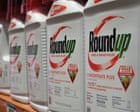
Mainstream legal commentators are popping champagne over a judge signing off on a $7.25 billion Bayer payout to resolve Roundup cancer claims. They call it corporate accountability. They frame it as a triumph of the little guy over a chemical giant.
They are completely missing the plot.
If you look at the mechanics of mass tort litigation and corporate risk management, a $7.25 billion settlement is not a moral victory for plaintiffs, nor is it an admission of scientific guilt by Bayer. It is a calculated, cold-blooded financial transaction designed to stop the bleeding on a balance sheet. Worse yet, it exposes a massive structural flaw in how American courtrooms handle complex toxicology—a flaw where emotional storytelling routinely beats decades of regulatory consensus.
I have spent years watching corporate boards and litigation funders play chicken in high-stakes mass torts. I have seen companies blow hundreds of millions fighting cases they were scientifically right about, only to fold because their stock price couldn't survive another five years of headline risk. When a conglomerate writes a multi-billion-dollar check, the public assumes the company finally admitted the product is poison. In reality, the board simply decided that paying ransom is cheaper than explaining epidemiology to twelve angry jurors.
The Lazy Consensus Around Mass Tort Settlements
Every major outlet covering this payout falls back on the exact same lazy script. A massive corporation makes a weedkiller. People get non-Hodgkin lymphoma. Juries award astronomical sums. A judge approves a multi-billion-dollar fund. Therefore, the weedkiller causes cancer, and justice has been served.
That narrative is clean, emotionally satisfying, and factually broken.
To understand what is actually happening, you have to separate legal causation from scientific causation. They do not operate by the same rules. Scientific causation requires repeatable, controlled, peer-reviewed evidence across massive cohorts, accounting for confounding variables like genetics, age, and exposure to other farm chemicals. Legal causation in a civil courtroom only requires convincing a lay jury that it is "more likely than not"—a 50.1 percent threshold—that a plaintiff's illness was linked to the defendant's product.
When you put a sympathetic cancer patient in front of a jury alongside an aggressive plaintiff attorney and a trillion-dollar corporate defendant, the burden of proof quietly shifts. Suddenly, the chemical company has to prove a negative. They have to prove beyond a shadow of a doubt that their product didn't cause the cancer. In science, proving a negative is nearly impossible. In a courtroom, failing to do so costs billions.
The Science Nobody Wants to Read
Let’s look at the actual data on glyphosate, the active ingredient in Roundup, because the gap between courtroom verdicts and global regulatory science is staggering.
If glyphosate is the indisputable carcinogen portrayed in plaintiff closing arguments, why does almost every major health and environmental regulator on earth disagree?
- The U.S. Environmental Protection Agency (EPA) has repeatedly evaluated glyphosate over decades and concluded that it is not likely to be carcinogenic to humans when used according to label instructions.
- The European Food Safety Authority (EFSA) and the European Chemicals Agency (ECHA) conducted exhaustive reviews of thousands of studies and refused to classify glyphosate as a carcinogen.
- Health Canada, Australia’s APVMA, and Japan’s Food Safety Commission reached the exact same conclusion.
- The Agricultural Health Study, a massive, long-term prospective cohort study funded by the U.S. National Institutes of Health tracking over 50,000 licensed pesticide applicators for decades, found no statistically significant association between glyphosate use and non-Hodgkin lymphoma.
So where did the cancer label come from? One agency: the International Agency for Research on Cancer (IARC), a semi-autonomous branch of the World Health Organization. In 2015, IARC classified glyphosate as "probably carcinogenic to humans" (Group 2A).
Here is the critical distinction that mainstream coverage completely glosses over: IARC measures hazard, not risk.
A hazard assessment asks whether a substance can theoretically cause cancer under any conceivable circumstance—even if you force-feed rodents massive, toxic doses that no human would ever encounter in the real world. Risk assessment, which the EPA and EFSA perform, measures the actual likelihood of harm at real-world exposure levels. For context, IARC places red meat, shift work that disrupts circadian rhythms, and beverages hotter than 65 degrees Celsius in the exact same Group 2A "probably carcinogenic" category as glyphosate. Nobody is filing $7 billion class-action lawsuits against steakhouses or late-night nurses.
Yet, the moment IARC dropped that Group 2A classification, the American mass tort machine shifted into overdrive.
Why Bayer Really Paid the $7.25 Billion
If the regulatory science is overwhelmingly on Bayer’s side, why on earth did they agree to a $7.25 billion settlement structure? Are their lawyers incompetent? No. Their financial analysts are simply doing math that journalists ignore.
When Bayer acquired Monsanto for $63 billion in 2018, it didn't just buy a seed and agrochemical business; it bought an open-ended litigation liability that poisoned its equity valuation for nearly a decade. At one point, Bayer’s entire market capitalization dropped below what it paid for Monsanto alone. Institutional investors weren't fleeing because they thought Roundup was dangerous. They were fleeing because Wall Street hates unquantifiable risk.
When you face over 100,000 individual lawsuits, winning 80 percent of your trials still destroys you. Do the math. If you go to trial 100 times and win 80 cases, you pay nothing on those 80—except tens of millions in legal defense fees. On the 20 cases you lose, runaway juries hit you with nuclear verdicts ranging from $80 million to over $2 billion per plaintiff, bloated by punitive damages designed to punish corporate arrogance. Even when appellate judges slash those punitive awards later, the stock takes a beating every single time a verdict hits the wire.
A $7.25 billion settlement cap turns an infinite, unpredictable bleed into a fixed, predictable debt. Bayer’s management can finally put a number on a spreadsheet, ring-fence the liability, appease activist investors, and get back to running a pharmaceutical and agricultural business. They didn't buy forgiveness. They bought certainty.
The Litigation Finance Cartel Behind the Curtain
If you want to understand why these mass torts explode into multi-billion-dollar payouts regardless of regulatory consensus, follow the money behind the plaintiff bar.
We are no longer living in an era where local personal injury lawyers organically discover harmed clients and represent them out of pocket. Modern mass tort litigation is a sophisticated, speculative asset class fueled by third-party litigation funding and industrial-scale lead generation.
Here is how the machine works:
- The Trigger: A single controversial report—like the 2015 IARC monograph—drops.
- The Ad Blitz: Marketing aggregators and plaintiff firms immediately spend hundreds of millions of dollars on late-night television ads, Facebook targeting, and Google search terms. Have you used Roundup? Do you have non-Hodgkin lymphoma? Call now for your share of billions.
- The Inventory: Law firms harvest tens of thousands of claimants, bundling them into massive inventories. Many of these claimants have minimal, unverified exposure histories, or clear alternative risk factors for lymphoma—a disease whose primary known driver is simply getting older and having a compromised immune system.
- The Leverage: Armed with 100,000 plaintiffs, lawyers don't need to prove every case. They cherry-pick the five most sympathetic, visually compelling plaintiffs to put in front of plaintiff-friendly venues like St. Louis or California state courts.
- The Squeeze: Once a few nuclear verdicts land, the plaintiff bar demands a global settlement. Out of that $7.25 billion headline figure, plaintiff attorneys and their litigation funders typically walk away with 30 to 40 percent in contingency fees and reimbursed marketing expenses.
That means roughly $2.2 billion to $2.9 billion of this historic "justice" goes straight into the pockets of lawyers and hedge funds, while individual claimants often end up with modest payouts after years of waiting and medical lien deductions.
Dismantling the Questions Everyone Gets Wrong
When news of a massive settlement breaks, people instinctively search for answers that validate the headline. Let's look at the real answers behind the questions driving the public conversation.
Does a multi-billion-dollar settlement prove Roundup causes cancer?
No. A civil settlement is a contract to end a dispute without a final admission of liability. Companies settle scientifically defensible claims every day because the cost of winning at scale exceeds the cost of paying out. If settlements proved scientific truth, then pharmaceutical companies paying billions over vaccines or birth control devices that were later vindicated by decades of clinical data would mean the science was wrong. Courts resolve disputes; they do not conduct peer-reviewed toxicology.
Why did juries award billions if the EPA says glyphosate is safe?
Because juries do not read 4,000-page EPA toxicological monographs. Juries react to human emotion and corporate optics. During the early Roundup trials, plaintiff attorneys didn't win by proving cellular mechanisms of carcinogenesis. They won by showing juries internal Monsanto emails where company scientists discussed ghostwriting academic reviews and pushing back against critics. Even if the underlying science was sound, the corporate behavior looked shady. Juries punish bad corporate behavior by siding with the sick plaintiff in front of them.
Will this payout force Roundup off the market?
Not a chance. In fact, the whole point of structuring massive settlements—and pushing for Supreme Court clarity on federal preemption under the Federal Insecticide, Fungicide, and Rodenticide Act (FIFRA)—is to keep the product on shelves while capping legal exposure. While Bayer phased out glyphosate in residential lawn and garden products in the U.S. to cut off future consumer lawsuits, glyphosate remains the backbone of global industrial agriculture. Farmers rely on it for no-till farming, which prevents soil erosion and reduces carbon emissions. Banning it without a viable, equally effective alternative would trigger massive crop yield drops and spike global food prices.
The Uncomfortable Downsides of My Contrarian Take
I am not here to canonize Bayer or Monsanto. To pretend the agrochemical industry is blameless would be dishonest.
There is a legitimate criticism to be leveled at how Monsanto handled public relations and scientific discourse prior to the Bayer buyout. Aggressively attempting to discredit independent researchers, exerting heavy influence over trade publications, and failing to communicate transparently with the public created a massive trust deficit. When a corporation acts like it has something to hide, it shouldn't act shocked when a jury assumes it is hiding a carcinogen.
Furthermore, industrial agriculture’s hyper-reliance on a single herbicide created massive ecological headaches, most notably the rise of glyphosate-resistant superweeds. By engineering crops to survive heavy spraying year after year, agrochemical giants encouraged lazy farming practices that bred resistant weeds, forcing farmers to spray even harsher combinations of chemicals like dicamba and 2,4-D. Criticizing Roundup for driving monoculture dependency and weed resistance is entirely valid and backed by hard agronomic data.
The tragedy is that our legal system ignored the real, documented ecological problems of glyphosate overuse and instead fabricated a multi-billion-dollar panic over human cancer risks that regulators have repeatedly rejected.
How Smart Observers Should Read Mass Tort Headlines
If you are an investor, a business leader, or simply a citizen trying to separate signal from noise, stop treating courtroom verdicts as peer-reviewed science. The next time a multi-billion-dollar settlement hits the front page, run it through a different filter:
- Check the Regulatory Consensus, Not the Verdict: Look at what the EPA, FDA, EFSA, and NIH longitudinal studies say. If global regulators haven't pulled a product from the market despite decades of scrutiny, a courtroom payout is almost certainly a financial arbitrage play, not a public health revelation.
- Look at the Plaintiff Acquisition Costs: Watch television and social media ads. When you see coordinated, nine-figure ad campaigns hunting for plaintiffs before a single appellate court has weighed in on the science, you are looking at a manufactured mass tort, not an organic public health crisis.
- Watch the Stock Price, Not the Press Release: On the day a massive settlement is announced, look at the defendant's stock. Frequently, the stock rises on news of a multi-billion-dollar payout. That tells you everything you need to know: the market views the payout not as a defeat, but as the removal of a parasitic legal drag.
- Demand Venue and Evidentiary Reform: Until courts enforce strict Daubert standards—requiring judges to act as rigorous gatekeepers who block junk science and speculative hazard claims from reaching lay juries—billion-dollar shakedowns will remain a standard tax on doing business in America.
Bayer’s $7.25 billion check isn't the end of a public health crusade; it is simply the closing cost on the most lucrative litigation trade of the decade, and the bill is already being passed directly to the price of your groceries.