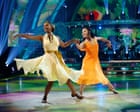
The corporate obsession with sanitized neutrality is destroying modern television. When the BBC scrubbed a trans rights slogan from an audience member's clothing during an episode of Strictly Come Dancing, media commentators rushed to predictable corners. The usual progressive chorus wailed about censorship and institutional transphobia, while conservative pundits applauded a return to impartial broadcasting standards. Both sides missed the entire point.
The broadcaster did not remove the slogan because of high-minded editorial principles or a steadfast commitment to political neutrality. They did it because institutional cowardice has replaced editorial backbone in British media boardrooms.
I have spent two decades watching television networks twist themselves into knots to avoid minor regulatory wrist-slaps from Ofcom, sacrificing cultural relevance at the altar of safe, vanilla programming. Let us look past the manufactured outrage of the culture war to examine what actually happened. A dancer or an audience member wore a garment displaying a socio-political message. The production floor panicked. Instead of treating television as a living, breathing reflection of contemporary British society, they reached for the digital eraser.
The lazy consensus in the mainstream media coverage frames this as a battle between free expression and institutional guidelines. That is a comforting fiction. The real driver here is risk aversion. Modern broadcasting executives operate under the terrifying realization that any live feed might trigger a Daily Mail headline or a social media pile-on. They have outsourced their editorial judgment to fear.
The Myth of Impartiality in Entertainment
Let us dismantle the core premise underpinning the BBC defense. The Corporation clings to a rigid definition of impartiality that assumes neutrality is achieved by erasing any sign of modern friction. This is an administrative delusion.
Strictly Come Dancing is not a news bulletin. It is a glitter-drenched entertainment juggernaut watched by millions, featuring contestants, judges, and professional dancers whose personal lives, political affiliations, and identities are constantly scrutinized, marketed, and monetized by the BBC itself. You cannot spend six days a week hyping up the personal identities of your cast for tabloid engagement and then pretend to maintain pristine political purity on a Saturday night simply because someone wore a badge or a slogan.
Impartiality does not mean the absence of reality. It means representing the full spectrum of reality fairly. By panicking over a trans rights slogan, the BBC did not look
Why BBC Editing Out a Trans Rights Slogan is a Masterclass in Protecting Entertainment From Propaganda
entertainment, news
The internet spent a collective afternoon hyperventilating over a clipped shirt. When the BBC edited out a slogan advocating for transgender rights during a broadcast of Strictly Come Dancing, the expected outrage machine spun into gear. Critics wailed about censorship, institutional cowardice, and the erasure of marginalized voices. Defenders of the broadcast pointed to strict broadcasting impartiality guidelines, treating the incident as a routine regulatory speed bump.
Both sides missed the point entirely.
The real story has nothing to do with culture wars or editorial cowardice. It is about the fragile barrier separating mass entertainment from ideological mobilization, and why that barrier is the only thing keeping mainstream culture functional.
For decades, I have watched cultural institutions stumble into the trap of treating entertainment as a public town square. It is not. It is a shared escape hatch. When production crews allow performers or crew members to smuggle socio-political slogans into prime-time light entertainment, they are not practicing bravery. They are breaking a social contract.
The Myth of the Neutral Broadcast
Let us dispense with the fiction of pure neutrality. No broadcast is neutral. From camera angles to song choices, editorial choices happen every second. But there is a massive gulf between structural bias and deliberate ideological signaling.
When a contestant or crew member flashes an explicit political or social slogan on a show watched by millions of families seeking a Saturday night distraction, they are leveraging an entertainment platform to bypass traditional debate. They are saying: You came here to watch glitter and quicksteps, but you are going to ingest our messaging while you do it.
The BBC did not censor a movement. They enforced a firewall.
If you permit a transgender rights slogan on Strictly Come Dancing, you must, by the iron logic of broadcasting parity, permit a pro-life slogan the following week. You must permit anti-immigration talking points, religious declarations, and partisan campaign symbols. Do you want your escapist dance competition turned into a proxy war for every polarized political faction on earth? Because that is the alternative. Once you open the door to righteous messaging, you lose the right to choose which righteousness is acceptable.
The Weaponization of Empathy
The lazy consensus among cultural commentators is that any suppression of a progressive statement equals oppression. This assumes that all cultural spaces must serve as frontline battlefields for social justice.
This is a profound strategic error. When every single square inch of human existence becomes politicized, empathy fatigue sets in. People do not become more supportive of a cause when it is aggressively shoved into their entertainment; they become resentful. They tune out.
Imagine a scenario where a popular cooking show host wears a slogan supporting an aggressive military intervention. The studio audience gasps, half cheer, half boo, and the internet erupts. Does that advance the cause of foreign policy? Of course not. It turns human suffering into branding. The same principle applies here. Reducing complex civil rights movements to a slogan pinned to a costume on a light entertainment program does nothing to help the people affected by those issues. It simply gives comfortable people at home a fleeting rush of moral alignment.
True advocacy requires institutional change, legal reform, and difficult public discourse. It does not happen via a quick camera pan past a sequined jacket.
The Commercial Reality of Mass Media
Let us talk about the economic engine beneath the outrage. Publicly funded broadcasters operate in a hyper-volatile landscape. Their legitimacy depends entirely on holding together a fractured, cynical public that agrees on very little outside of a mutual desire to watch people trip over their own feet on television.
When cultural activists demand that institutions like the BBC act as megaphones for their specific political projects, they are biting the hand that feeds cultural cohesion. If a broadcaster becomes synonymous with partisan factionalism—regardless of which faction it favors—it loses its core audience. Once trust is gone, funding follows it out the door.
The BBC's decision to remove the slogan was not an act of submission to dark forces. It was an act of self-preservation for the medium itself. We need places where we do not have to fight. We need cultural commons that are deliberately walled off from the relentless, exhausting tribalism of daily politics.
Stop pretending that every piece of entertainment is a referendum on human rights. Sometimes, a dance show is just a dance show, and keeping it that way is the hardest, most necessary job in media.