Data centers do not need a public relations hug. They need a reality check.
Every time a hyperscaler announces a massive campus in a quiet county, the PR machine rolls out the same tired playbook. Friendly explainers. Warm metaphors. Gentle reassurances that your electricity bill will barely budge, that water usage is "closed-loop," and that local tax revenue will magically pave every pothole from here to eternity. For a different perspective, check out: this related article.
I have sat in enough county commission hearings and utility boardrooms to tell you how that movie ends. Spoiler: the applause fades the moment the first summer heatwave hits the grid or the local water table drops.
Trying to make communities like data centers is a losing game. People do not fall in love with windowless concrete boxes humming behind chain-link fences. What they actually care about is fairness, predictability, and whether the infrastructure hosting the global digital economy is extracting wealth or building resilience. Similar analysis regarding this has been published by Gizmodo.
The lazy consensus says data centers are misunderstood neighbors that just need better PR. That is backwards. The real problem is not a lack of affection. It is a mismatch between how data centers operate at physical scale and how local grids, water systems, and tax codes are structured.
What Friendly Explainers Miss About Physical Scale
When someone tries to make you like data centers, they usually start with what lives inside them: your photos, your messages, your AI prompts, your cloud backups. The software feels weightless, almost cozy.
The hardware is anything but.
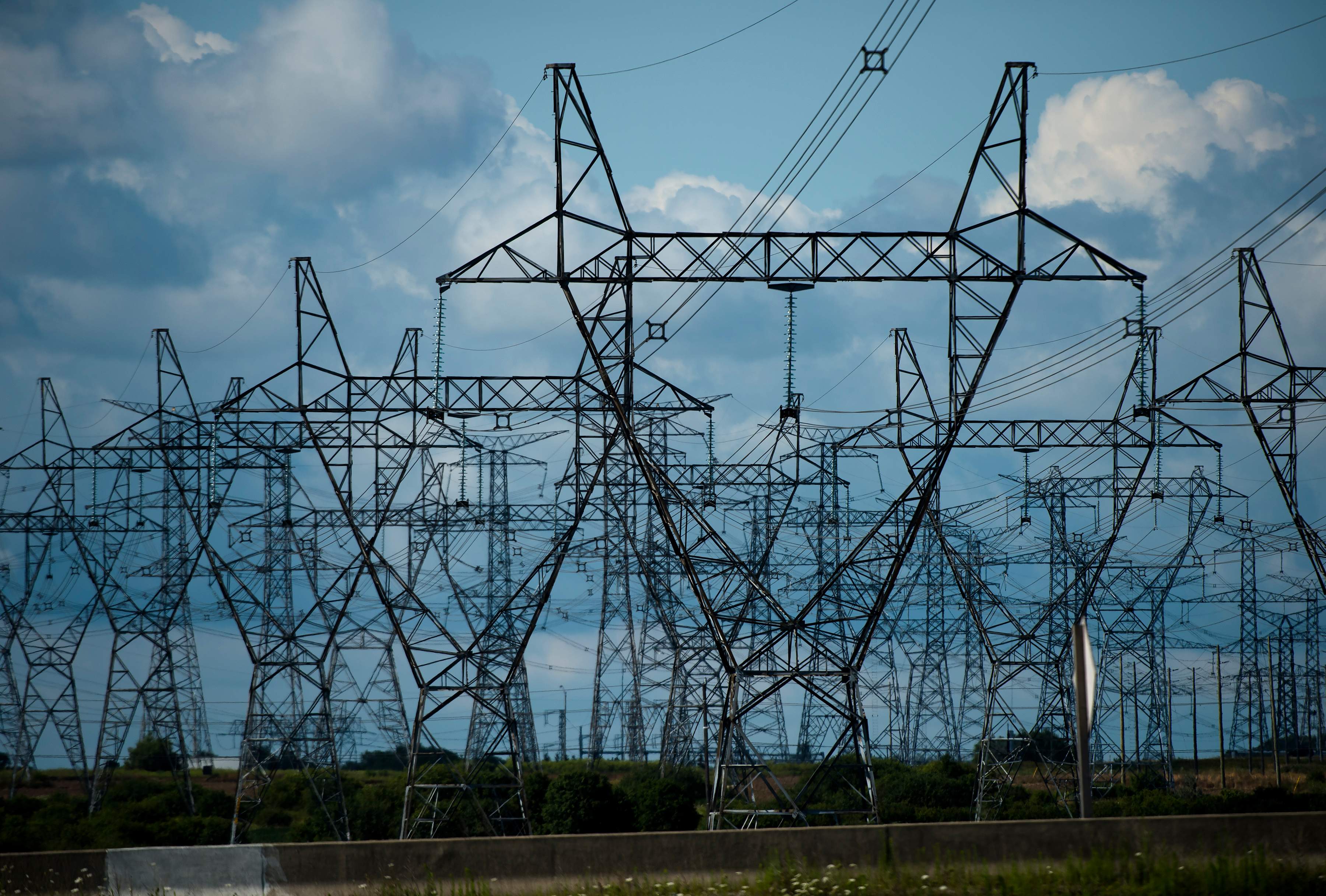
Modern data centers—especially those built for high-density AI training and inference—are industrial power plants disguised as office parks. Servers draw massive, continuous electrical loads. Cooling them requires rejecting staggering amounts of heat into the surrounding environment through air chillers, evaporative towers, or liquid cooling loops.
In infrastructure engineering, Power Usage Effectiveness (PUE) measures how efficiently a facility uses energy: total facility energy divided by IT equipment energy. A theoretical ideal is 1.0, meaning every watt goes straight to compute. Real-world facilities sit higher once you account for cooling, power conversion losses, and lighting. Even a facility with an enviable PUE still pulls colossal megawatts from a regional transmission grid that was often designed for predictable residential and light-commercial peaks, not round-the-clock industrial base load.
I have watched municipal leaders get dazzled by projected capital expenditure numbers—hundreds of millions or billions of dollars—only to discover years later that the permanent headcount is a few dozen technicians, while the strain on local substations and water rights lasts for decades.
When advocates gloss over those physical trade-offs to sound friendly, communities smell spin. Once trust breaks, no glossy brochure can put it back together.
Are Data Centers Actually Good for Local Economies?
"Do data centers bring jobs and tax revenue to local communities?"
Ask that question in a vacuum and you get a sales pitch. Ask it honestly and the answer splits in two.
During construction, yes. Cranes go up, concrete gets poured, and regional trades see real activity—often supplemented by specialized out-of-state contractors brought in for complex electrical and mechanical builds. Once the ribbon is cut and the servers are racked, operational staffing drops sharply compared to a factory, hospital, or logistics hub of similar capital cost.
On taxes, the picture gets even messier. Local governments frequently grant sweeping property tax abatements or payment-in-lieu-of-taxes (PILOT) deals to win the project. Even when tax revenue does flow, much of it goes to school districts or county general funds while the immediate pressure hits water utilities, road maintenance during construction, and regional power markets.
Imagine a scenario where a rural county grants a ten-year property tax break to attract a 200-megawatt data center, assuming the economic halo effect will lift surrounding businesses. The facility arrives, consumes huge blocks of power and water, employs fewer than a hundred full-time staff, and leaves the school district waiting a decade for full property tax receipts while local residents watch wholesale power costs climb during tight supply hours.
That is not a PR failure. That is an incentives failure.
If a data center wants genuine local support, it should stop asking for handouts while promising goodwill. Pay full freight on infrastructure upgrades. Fund dedicated community resilience projects upfront. Publish transparent metrics on grid draw and water consumption instead of hiding behind vague sustainability pledges.
The Water and Power Myth Nobody Wants to Untangle
"Don't data centers waste massive amounts of water and drive up everyone's electric bills?"
People ask this because they feel the squeeze in their own wallets and taps. Dismissing it as mere NIMBYism is lazy and dishonest.
Water use depends heavily on cooling architecture and climate. Evaporative cooling towers consume significant water—especially in hot, dry regions—because evaporation is how heat is shed into the air. Closed-loop systems reduce ongoing make-up water withdrawal compared to once-through or heavy evaporative designs, though they still require initial fill, treatment, and energy to circulate fluid. Pretending all data centers have the same water footprint is like pretending every car gets the same mileage.
Electricity pricing is even more misunderstood. A data center rarely sends a single resident a higher bill directly. Instead, massive new loads reshape regional capacity markets, transmission queues, and peak supply dynamics. When utilities must build new transmission lines or keep older, costlier generation online to serve multi-hundred-megawatt campuses, those system costs can ripple across rate classes unless tariffs are specifically structured to isolate and recover them.
I have seen utilities scramble when load forecasts jump faster than transmission buildouts. Ratepayers end up asking why they are subsidizing grid expansion for trillion-dollar tech companies.
The honest answer is not "relax, your bill won't go up." The honest answer is: if you do not design dedicated industrial tariffs, bring your own firm or clean power resources, and pay for dedicated grid upgrades, you should expect pushback—and you will deserve it.
Why "Greenwashing" Backfires Every Time
Nothing annoys sharp observers faster than corporate math that treats a renewable energy certificate in one region as if it magically powers a server rack in another during a calm, cloudy Tuesday evening.
Corporate procurement leaders—from hyperscalers to major cloud buyers—have pushed real capital into wind, solar, and storage over the past decade. Credit where credit is due: large corporate buyers helped scale utility-scale renewables faster than many skeptics expected.
Yet 24/7 time-matched clean energy is a very different standard from annual renewable energy matching. Solar peaks in the middle of the day. Wind blows when it blows. Servers run at 2:00 AM in the dead of winter and 4:00 PM in July. Matching load hour-by-hour on the same grid requires firm generation, long-duration storage, grid flexibility, or demand shifting—all of which are harder and costlier than buying annual certificates.
When an article tries to make you love data centers by waving around "100% renewable" claims without explaining hourly matching or grid congestion, informed readers tune out. Worse, cynical readers assume the entire sustainability story is smoke and mirrors.
The Contrarian Playbook That Actually Works
Stop trying to win a popularity contest. Start solving friction points before they turn into political wars.
Here is what works when you strip away the fluff:
- Co-locate with power generation and industrial heat sinks. Put compute where firm power already exists or where new generation can be paired cleanly with storage and grid-forming tech. Better yet, capture waste heat for industrial processes or district heating where climate and infrastructure align.
- Use special tariffs that protect everyday ratepayers. Work with regulators on minimum demand charges, dedicated transmission cost allocation, and flexible load agreements so local households are not left holding the bag if projected megawatts ramp slower or faster than planned.
- Be radical about water reality. Match cooling tech to local hydrology. Never drop a water-intensive evaporative facility into a drought-stressed watershed and expect applause because you planted a few trees.
- Publish raw operational telemetry. Local officials and residents trust verifiable numbers far more than glossy promises. Share real figures on water withdrawal versus consumption, grid interconnection costs, and local tax contributions over time.
- Invest in workforce pipelines, not just ribbon-cuttings. Partner with local community colleges and trade unions to train electrical, HVAC, fiber, and controls technicians. Give local young people a real career path into high-tech infrastructure instead of flying in specialists for every critical system.
Where This Contrarian Approach Can Trip You Up
Being blunt and transactional has its own risks. I have seen hard-nosed infrastructure operators overcorrect in the opposite direction and shoot themselves in the foot.
If you treat local communities purely as a financial transaction—"we pay the tariff, you shut up and take the substation"—you can still lose social license. People care about noise from backup generators and chillers, light pollution, truck traffic, and losing farmland or open space. Ignoring quality-of-life impacts in the name of pure engineering efficiency is a classic blind spot.
Over-engineering every facility for 24/7 local firm power and bespoke tariffs can also slow deployment or drive costs so high that projects stall or move to jurisdictions with looser rules. There is a real tension between speed-to-power—which matters enormously for AI clusters and cloud capacity—and deep local integration.
The goal is not perfection on day one. The goal is honesty about trade-offs and a clear path toward better alignment.
Stop Selling Warm Fuzzies. Start Building Trust Through Proof.
Communities do not need another person telling them why data centers are wonderful. They need proof that the people building them respect the grid, the watershed, the tax base, and the neighbors living next door.
Build like an adult, pay for the real costs, tell the truth about the trade-offs, and let the results speak—because no amount of sweet talk survives a blackout.