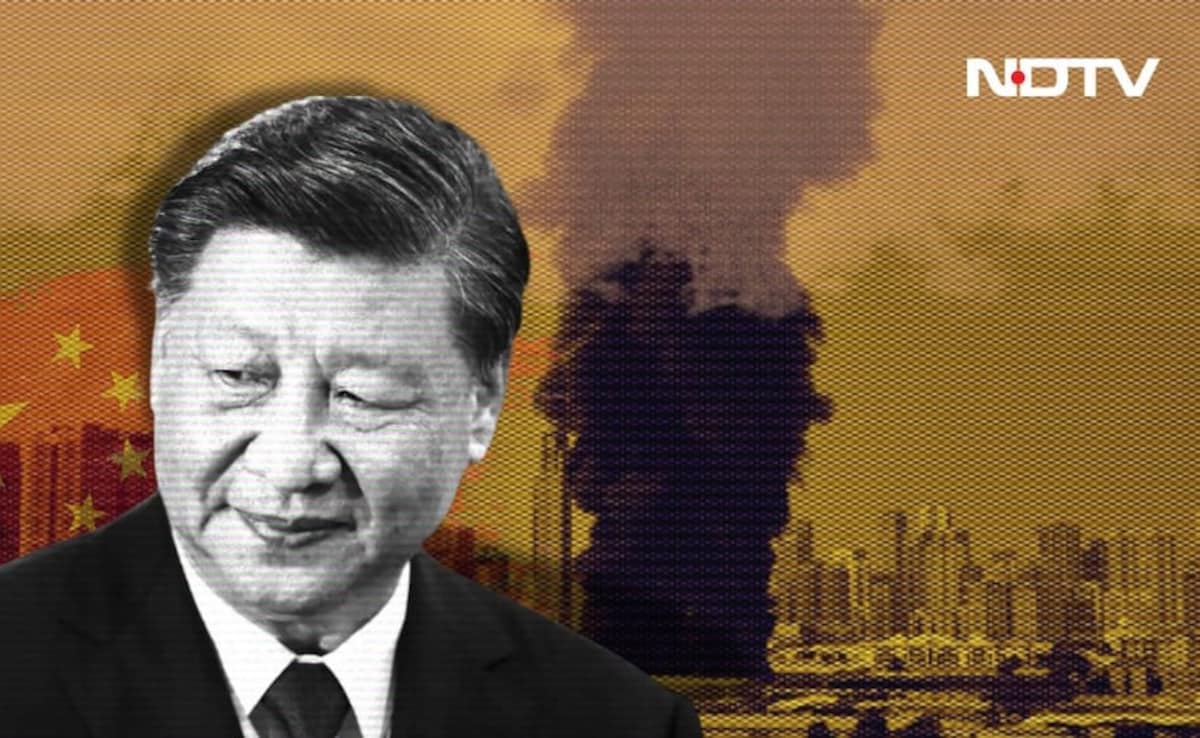
Donald Trump just declared a "total and complete victory" over Iran. After months of escalating airstrikes and threats of "obliteration," the White House confirmed a two-week ceasefire and the reopening of the Strait of Hormuz. When asked if the world’s second-largest economy—and Tehran’s primary customer—was the one that finally twisted the regime's arm, Trump’s response was uncharacteristically brief: "I hear yes."
That three-word admission confirms what oil markets and intelligence circles have suspected for weeks. Beijing is no longer a silent observer in the Persian Gulf; it is now the primary broker of Middle Eastern stability. While the Pentagon provided the kinetic pressure, it was China’s economic leverage that likely forced the Islamic Republic to accept a 10-point peace plan that looks remarkably like a tactical retreat.
The Economic Leash
China’s influence over Tehran is not a matter of shared ideology but of cold, hard math. Since the signing of the 25-year cooperation agreement in 2021, Beijing has become the solitary lifeline for an Iranian economy suffocated by Western sanctions. By late 2025, China was absorbing nearly 90% of Iran’s total oil exports.
In a war of attrition, the buyer holds the ultimate veto. If Beijing stops the payments, the Iranian war machine stops moving. Intelligence reports suggest that Chinese officials quietly signaled a willingness to throttle energy imports if Tehran didn't provide a "workable" path to de-escalation before the Strait of Hormuz became a permanent graveyard for global trade.
The 10-Point Gamble
The current truce is built on a 10-point proposal submitted by Tehran, which Trump has labeled "workable." While the specifics remain under wraps, the core trade-offs are coming into focus:
- The Strait of Hormuz: Immediate and safe opening for all commercial traffic.
- Enrichment Limits: Iran’s uranium stocks are to be "perfectly taken care of," a phrase implying external monitoring or removal.
- Sanctions Relief: A temporary suspension of certain US energy sanctions in exchange for the two-week pause.
This is not a final peace treaty. It is a tactical reset. Skeptics within the State Department note that the Iranian delegation, led by Abbas Araghchi, has used similar pauses in the past to reposition assets and dilute enriched uranium just enough to avoid a "red line" strike while maintaining the infrastructure for a future breakout.
The Washington-Beijing Pivot
Trump is scheduled to fly to Beijing in May to meet with Xi Jinping. The timing is not a coincidence. By crediting China for the ceasefire, Trump is signaling a return to the transactional diplomacy that defined his first term. He is effectively outsourcing the "containment" of Iran to the only power that actually has the keys to Tehran’s treasury.
However, this reliance comes with a steep price. Every time Washington relies on Beijing to settle a regional conflict, it validates China's "Global Security Initiative"—a framework designed to replace US-led security architectures with a networked system of economic interdependence.
The Military Reality on the Ground
Despite the "victory" rhetoric, the US military footprint in the region remains at its highest level in years.
The deployment of a second aircraft carrier and the erection of missile launchers at Qatar’s Al Udeid airbase were the "stick" that made China’s "carrot" effective. The deployment of Chinese-made YLC-8B anti-stealth radar systems within Iran further complicates the picture, showing that while Beijing wants the oil flowing, it is also ensuring its partner isn't completely defenseless.
The Fragility of Two Weeks
Fourteen days is barely enough time to move a carrier group, let alone dismantle decades of nuclear infrastructure. The "victory" Trump claims is currently a victory of logistics and lower oil prices, not necessarily a victory of long-term regional stability. If negotiations in Oman or Pakistan fail to produce a permanent framework by the end of the month, the "destructive force" Trump threatened will likely return to the flight decks.
For now, the world watches the Strait. The tankers are moving, the markets have rallied, and the phones in Beijing are ringing. The war hasn't ended; it has simply entered a phase where the most important battles are being fought in bank ledgers and diplomatic backrooms rather than the skies over Isfahan.
Watch the oil prices. They are the only honest poll in this conflict. If they stay low, the backchannel is working. If they spike, the two-week window is closing.