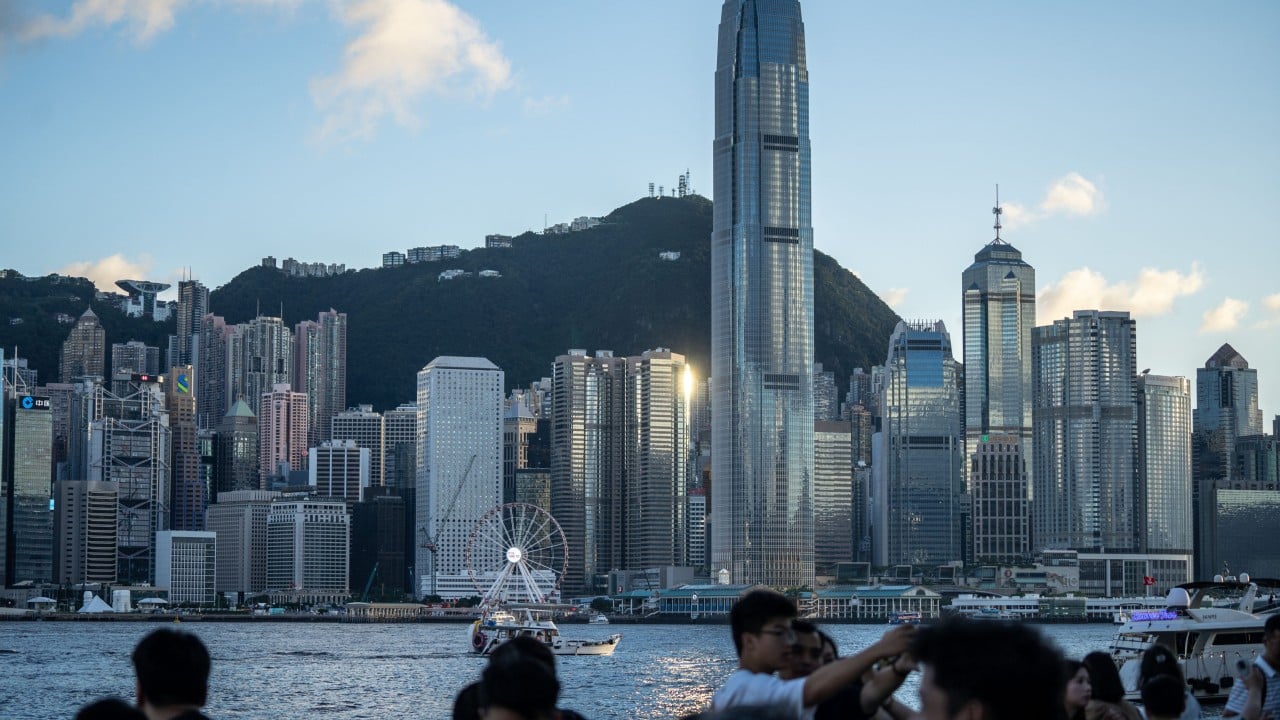
Hong Kong is preparing to list the first Shanghai free-trade zone bond in a high-stakes financial maneuver engineered by Beijing to preserve the city’s shrinking status as the premier offshore renminbi hub. The upcoming listing represents a calculated shift in state economic strategy, moving past traditional equity listings to tie the financial fate of the special administrative region directly to mainland onshore capital controls and experimental trade zones.
For months, the trading floors of Central have whispered about a quiet exodus. Liquidity has thinned. Capital has leaked toward Singapore and London. When Beijing decided that the premier offshore yuan center needed an emergency injection of mainland debt instruments, it did not choose a standard treasury issue. It reached directly into the architecture of the Shanghai Free Trade Zone, pulling out a specialized domestic bond structure designed to test the permeability of China's capital account.
This move is not merely a technical clearing mechanism or a routine cross-border listing. It is a desperate defense of a system under severe pressure.
The Anatomy of a Sinking Hub
Offshore renminbi liquidity in Hong Kong has faced relentless structural gravity. For years, the city functioned as the absolute tollbooth for international investors seeking exposure to Chinese currency. That monopoly fractured. Swap lines expanded globally, clearing banks sprouted across continents, and foreign institutions found alternative conduits that bypassed the traditional Hong Kong bottleneck.
At the same time, mainland authorities tightened domestic monetary policy to defend the onshore value of the currency against a surging dollar and stubborn domestic property sector headwinds. The consequence for Hong Kong was predictable. The pool of offshore yuan shrank. Deposits dwindled as corporate treasurers sought higher yields elsewhere, leaving local banks holding an uncomfortably quiet ledger.
Beijing cannot afford to let Hong Kong lose its crown. If the city ceases to be the undisputed window for internationalizing the yuan, China loses its primary firewall against sudden capital flight. The Shanghai free-trade zone bond is the chosen instrument to force liquidity back into the pipeline. By tethering an onshore experimental debt product to the offshore listing machinery of the Hong Kong Stock Exchange, regulators are attempting to stitch two distinct financial universes together without blowing the seams of China's strict capital controls.
Inside the Shanghai Free Trade Zone Mechanism
To understand why this listing matters, one must look closely at what a Shanghai free-trade zone bond actually is. These instruments operate in a parallel regulatory universe. They sit inside a ring-fenced zone designed to test capital convertibility without exposing the wider mainland economy to speculative attack.
When a corporate issuer floats a bond within this zone, the funds move under specialized rules. The interest rate dynamics differ fundamentally from standard onshore debt or offshore Dim Sum bonds. By bringing this specific paper to Hong Kong, authorities are essentially creating a synthetic bridge. International investors sitting in the former British colony can purchase an instrument backed by mainland enterprise cash flows, denominated or settled via mechanisms that skirt traditional mainland quota systems, while still remaining safely under the watchful eye of state planners.
The mechanics are messy. Currency conversion remains governed by rigid administrative fiat. Investors cannot simply treat these bonds like Eurobonds or US Treasuries. Every coupon payment and principal redemption requires navigating a labyrinth of regulatory approvals and specialized clearing banks designed to prevent unauthorized capital from spilling across the border.
Critics within major global institutions have privately pointed out the friction. Portfolio managers do not want administrative friction. They want liquidity, transparency, and the unfettered ability to exit a trade when macroeconomic conditions sour. Forcing a free-trade zone debt product onto the Hong Kong board does little to solve the underlying aversion foreign capital holds toward opaque regulatory environments. It merely dresses up a domestic financing requirement in international packaging.
The Geopolitical Urgency
Every major financial decision in Beijing now carries a profound geopolitical subtext. The push to defend Hong Kong's status as a currency hub is intimately tied to the broader campaign of de-dollarization. As Western sanctions freeze Russian reserves and weaponize SWIFT, Beijing views the internationalization of the renminbi as an existential necessity.
Hong Kong is the shock absorber for this grand strategy. If the shock absorber fails, the entire financial vehicle takes the impact.
By pushing the Shanghai bond into Hong Kong's listing queue, policymakers are attempting to kill two birds with one stone. First, they provide mainland municipal and corporate issuers with a fresh channel to tap foreign capital pools without triggering domestic debt alarms. Second, they signal to the global market that Hong Kong remains the preeminent gateway for Chinese fixed income.
Yet, this top-down engineering ignores market sentiment. Global institutional investors are currently reducing, not expanding, their exposure to Chinese mainland assets. Protracted real estate weakness, unpredictable regulatory interventions across technology and education sectors, and slowing macroeconomic growth have soured sentiment. Handing them a specialized free-trade zone bond does not change the risk calculus. It merely changes the ticker symbol.
The Structural Flaw in the Pipeline
The fundamental tension of the Hong Kong financial model has always been its dual identity. It tries to act as a global financial center while serving as a captive market for mainland monetary policy.
When those two roles align, the city thrives. When they diverge, the strain tears at the fabric of the market. The decision to list Shanghai free-trade zone bonds highlights this precise fracture. International capital does not flow efficiently through channels constructed primarily for bureaucratic control. By requiring foreign buyers to interact with the idiosyncratic plumbing of a domestic free-trade zone, the exchange is asking the market to accept handcuffs in exchange for yield.
Most institutional mandates forbid this level of structural obscurity. Asset managers operating under strict fiduciary duties cannot easily justify diving into ring-fenced debt products with untested secondary market liquidity. If a major holder needs to liquidate a position during a market panic, finding a buyer within the constrained ecosystem of a free-trade zone bond can prove nearly impossible.
The market knows this. Trading desks in London and New York have largely categorized these initiatives as political theater rather than genuine financial innovation.
The Road Ahead for the Yuan
The listing will happen. The ceremonial bell will ring on the trading floor, photographs will be snapped, and state media will declare a historic milestone in the integration of regional capital markets.
The real test begins the morning after.
Will secondary market volume materialize? Will international asset managers step up to bid for subsequent tranches, or will the order book rely entirely on captive state-owned banks and friendly institutional anchors directed to support the issuance?
If the bonds trade with zero organic velocity, the experiment will have proven that administrative mandates cannot manufacture genuine financial depth. Hong Kong will remain a hub, but it will be a hub propped up by scaffolding rather than organic market demand. The yuan will continue to circulate through state-directed channels, isolated from the deep, bruising realities of true global price discovery.
The defenders of the city's financial prestige are betting that sheer state willpower can bend global capital flows to meet strategic political objectives. History suggests that markets eventually find the cracks in every wall, no matter how thick the concrete.