Western analysts love a clean narrative. They want growth curves that march upward like a neatly groomed ladder, and when those numbers dip, they sound the alarm bells about systemic collapse. The latest consensus report from Washington declaring that China's economy is headed for a painful slowdown while global growth stays solid is a masterpiece of projection. It takes standard Western macroeconomic metrics, applies them to a state-directed system built on entirely different operating principles, and concludes that Beijing is failing.
The flaw in this logic is foundational. It assumes that because growth is cooling, growth is broken. For a different look, check out: this related article.
I have spent years watching institutions misread East Asian industrial policy because they view every economy through the lens of short-term quarterly consumer spending. When Beijing steps on the brake pedal, Wall Street interprets it as a crash. That is a dangerous misreading of the dashboard. China is not stumbling into a deceleration. It is intentionally engineering one.
The Growth Trap Nobody Wants To Admit
For three decades, the prevailing model across industrializing nations relied on volume. Build more housing complexes, pour more concrete, finance more debt-fueled infrastructure, and let the gross domestic product climb at eight percent a year. It worked until it did not. By the late 2010s, that old playbook had generated ghost cities, staggering corporate debt, and a real estate sector that devoured capital without producing proportional economic value. Further reporting on the subject has been provided by Business Insider.
When a think tank in Washington looks at Beijing shifting away from real estate stimulus and sighs about impending stagnation, they are mourning the death of a bubble they claimed was dangerous anyway. You cannot spend ten years warning that a housing market is a ticking time bomb and then panic when the government defuses it.
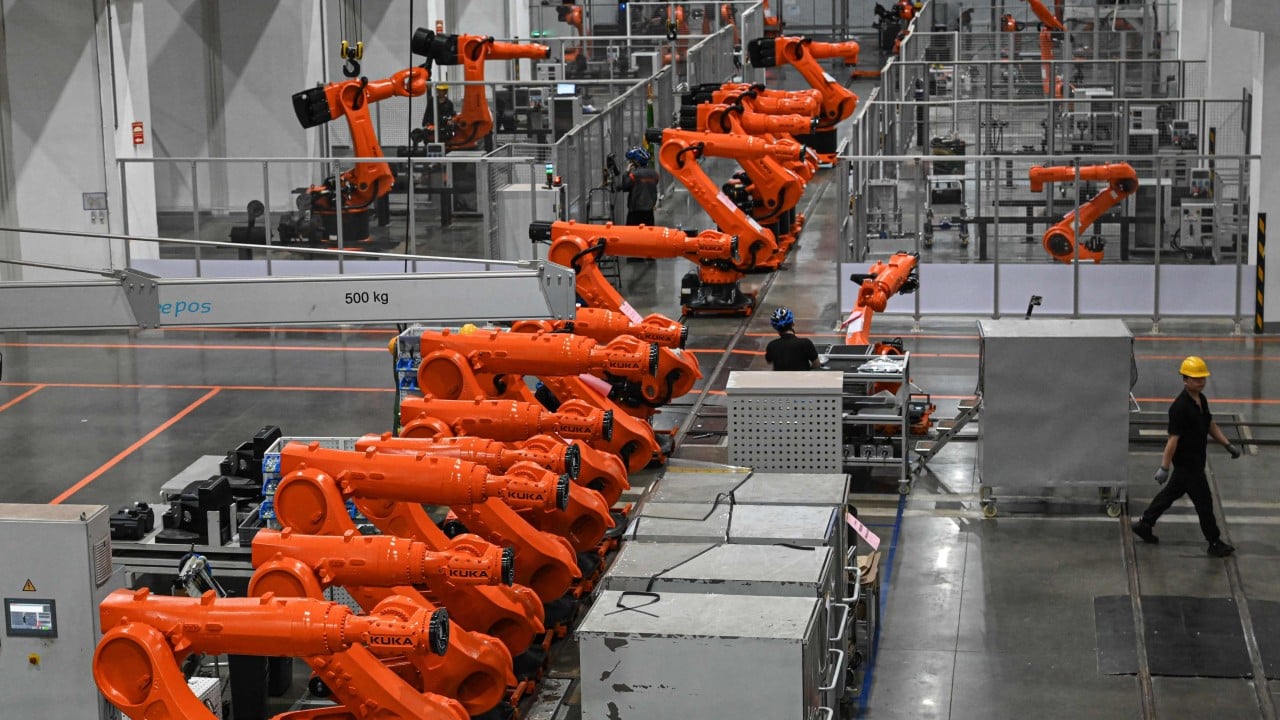
The structural transition happening inside mainland manufacturing districts is not a retreat. It is a pivot away from low-margin assembly toward advanced automation, proprietary semiconductor equipment, electric vehicle dominance, and green energy supply chains. Look at the balance sheets of industrial robotics firms and high-end engineering outfits in Shenzhen and Suzhou. They are not slowing down. They are accelerating precisely because capital is being forcefully diverted away from speculative property speculation and funneled directly into heavy tech manufacturing.
Chasing The Wrong Metrics
Why do smart economists get this so wrong? Because they insist on measuring industrial might with retail sales data.
Western economies are consumer-driven beasts. If shoppers stop buying flat-screen televisions at the mall, the GDP shatters. China operates on a producer-first architecture. The goal has never been to maximize immediate domestic consumption at the expense of national self-reliance. It is to build an unassailable fortress of production.
When a report warns that weak consumer sentiment will drag down overall output, it misses the quiet industrial revolution happening beneath the surface. Beijing is entirely comfortable trading soft retail numbers today for total dominance of global supply chains tomorrow. They are substituting consumer debt with industrial capacity.
To call this a weakness is to misunderstand what power looks like in the twenty-first century. Control over the physical inputs of the future economy—battery chemistry, rare earth refining, automated machine tooling, and commercial shipbuilding—matters infinitely more than whether middle-class families in tier-three cities are buying fewer luxury sedans this quarter.
The Export Pressure Cooker
Admitting the brilliance of the transition does not mean ignoring the friction. Every contrarian take worth reading must acknowledge its own vulnerabilities, and the glaring weakness in Beijing's strategy is domestic absorption.
By aggressively suppressing property values and shifting capital away from households into state-backed factories, domestic consumption remains suppressed relative to manufacturing output. This creates a massive structural surplus. Factories are producing more advanced goods than the local market can absorb.
The release valve for that surplus is global trade. Chinese firms are flooding international markets with solar panels, industrial machinery, and electric vehicles at price points Western legacy manufacturers cannot touch. This has triggered the current wave of tariff walls and protectionist anxiety in Brussels and Washington.
Washington thinks tariffs are a shield. They are actually a sedative. By forcing trade barriers, Western governments are insulating their domestic producers from competitive pressure, allowing them to fall further behind on cost efficiency and technological integration. Every time a trade barrier goes up, it buys time for inefficient incumbents while isolating Western consumers from cheaper, superior green technology. It is a protectionist trap that rewards domestic complacency at the expense of long-term competitiveness.
Stop Asking About GDP Targets
The next time you read a headline forecasting a gloomy future for the world's second-largest economy based on missed quarterly targets, ask yourself who benefits from that narrative. It comforts institutional investors who missed the pivot into advanced manufacturing and reassures policymakers who refuse to admit that their own industrial strategies lack discipline.
The old metrics are dead. A system can run a cooler headline growth rate while systematically capturing the commanding heights of global high-tech trade.
Stop looking at the real estate slump as a sign of terminal decline. It is the clearing of the forest floor. What grows back in its place is leaner, meaner, and entirely immune to Western consensus.