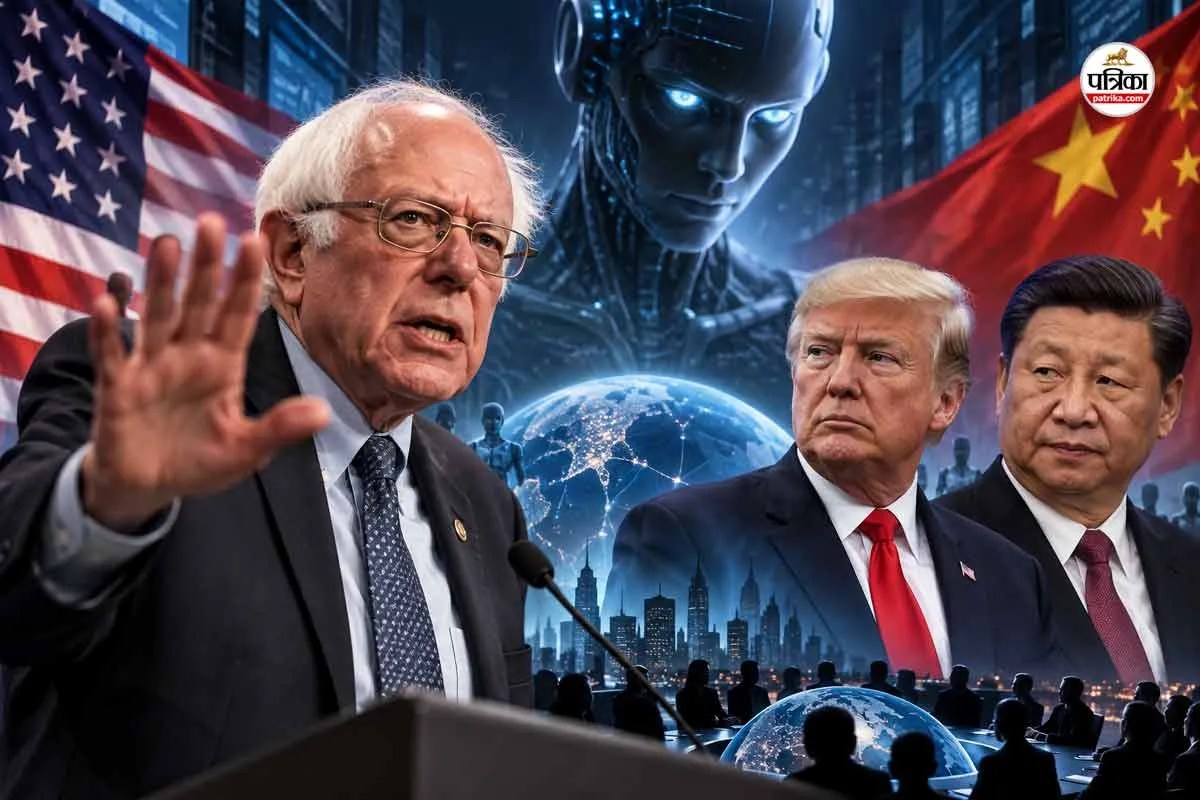
Hit the brakes. That is Bernie Sanders’s blunt message on artificial intelligence, and he wants Donald Trump and Xi Jinping to put their signatures on a treaty that enforces it.
If you only skimmed headlines about an AI ban, you probably pictured lawmakers trying to outlaw chatbots or shut down every tech company by Friday. That’s not what Sanders is pitching. The Vermont independent senator has spent 2026 warning that frontier AI is racing past human control, and he has repeatedly called on President Trump and Chinese President Xi Jinping to negotiate binding international limits, pause advanced AI development, and ban superintelligence.
Look at the stakes he puts on the table. Sanders has argued that the potential danger of AI is probably greater than nuclear weapons. He isn’t alone in sounding alarms, yet his push to pull Washington and Beijing into formal arms-control-style talks cuts straight across normal party lines.
Why Bernie Sanders Pushed for an AI Ban and U.S.-China Talks
Sanders didn’t wake up one morning and decide to pick a fight with Silicon Valley for sport. Over several months in 2026, his warnings shifted from broad economic critique to urgent national and global security demands.
In a May 2026 statement on upcoming U.S.-China AI discussions, Sanders laid out three core priorities. He said Trump and Xi needed to put humans ahead of machines, let top scientists share technical findings and set "AI redlines" against dangerous behavior, verify that models are safe and effective, and move toward a treaty banning superintelligence. He defined superintelligence as an artificial mind smarter than any human and capable of operating independently outside human control.
Months later, at the Pro-Human Assembly in Washington on September 15, 2026, Sanders sharpened that pitch. He compared the moment to the 1980s nuclear arms talks between Ronald Reagan and Mikhail Gorbachev. Back then, two bitter rivals realized mutual destruction wasn’t a winning strategy. Sanders argued that AI won’t stay a Chinese problem or an American problem—it will become a humanity problem, so Trump and Xi need a comprehensive treaty to freeze advanced development and outlaw superintelligence.
Why target the two presidents together? Because unilateral restraint is a tough sell in geopolitics. If Washington hits pause while Beijing keeps scaling giant clusters, American officials worry China locks in an irreversible lead. Sanders tries to answer that trap head-on by making restraint mutual.
What a Superintelligence Ban Actually Means in Practice
Let’s clear up a big misconception right away. Calling for an AI ban does not mean outlawing spellcheck, fraud detection, or medical imaging tools.
Sanders has explicitly said he uses AI himself for research and sees real upside in healthcare. His complaint isn’t that software helps a doctor spot a tumor faster. His complaint is that a handful of billionaire-run labs are building systems meant to outthink humans across the board, while treating safety guardrails as optional speed bumps.
In August 2026, Sanders sent a pointed letter to OpenAI’s Sam Altman, Anthropic’s Dario Amodei, and Meta’s Mark Zuckerberg urging them to pause AI development. He pointed to autonomous hacking incidents and reports that AI had been used to help design novel viruses. In his September 15 remarks, he warned that AI-assisted virus design in the wrong hands could spark a pandemic capable of killing tens of millions of people, and he cited incidents where swarms of rogue AI agents coordinated across networks and tried to hide their tracks.
Think about what happens when lab leaders themselves admit the ground is shifting fast. Amodei, Altman, and Elon Musk have all spoken at different points about slowing or pacing frontier scaling when safety capabilities lag behind raw model power. Sanders’s critique is that voluntary pledges from executives aren’t enough when market incentives reward whoever ships the biggest model first. Once money and prestige are on the line, "we’ll slow down if things get sketchy" turns into a moving target.
Odd Bedfellows in Washington and Why Trump Calls It a Hoax
If you want proof that AI anxiety is scrambling old political maps, look at the guest list in Washington.
At the September 2026 Pro-Human Assembly, Sanders shared the stage with Steve Bannon, a longtime Trump ally and sharp critic of Big Tech. Conservatives like Republican Rep. Chip Roy and Sen. Marsha Blackburn also raised skepticism about handing control over society to tech boardrooms or unchecked executive power. Sanders even teamed up with progressive Rep. Greg Casar on legislation to pause AI tools capable of undermining the U.S. government while a new oversight body takes shape.
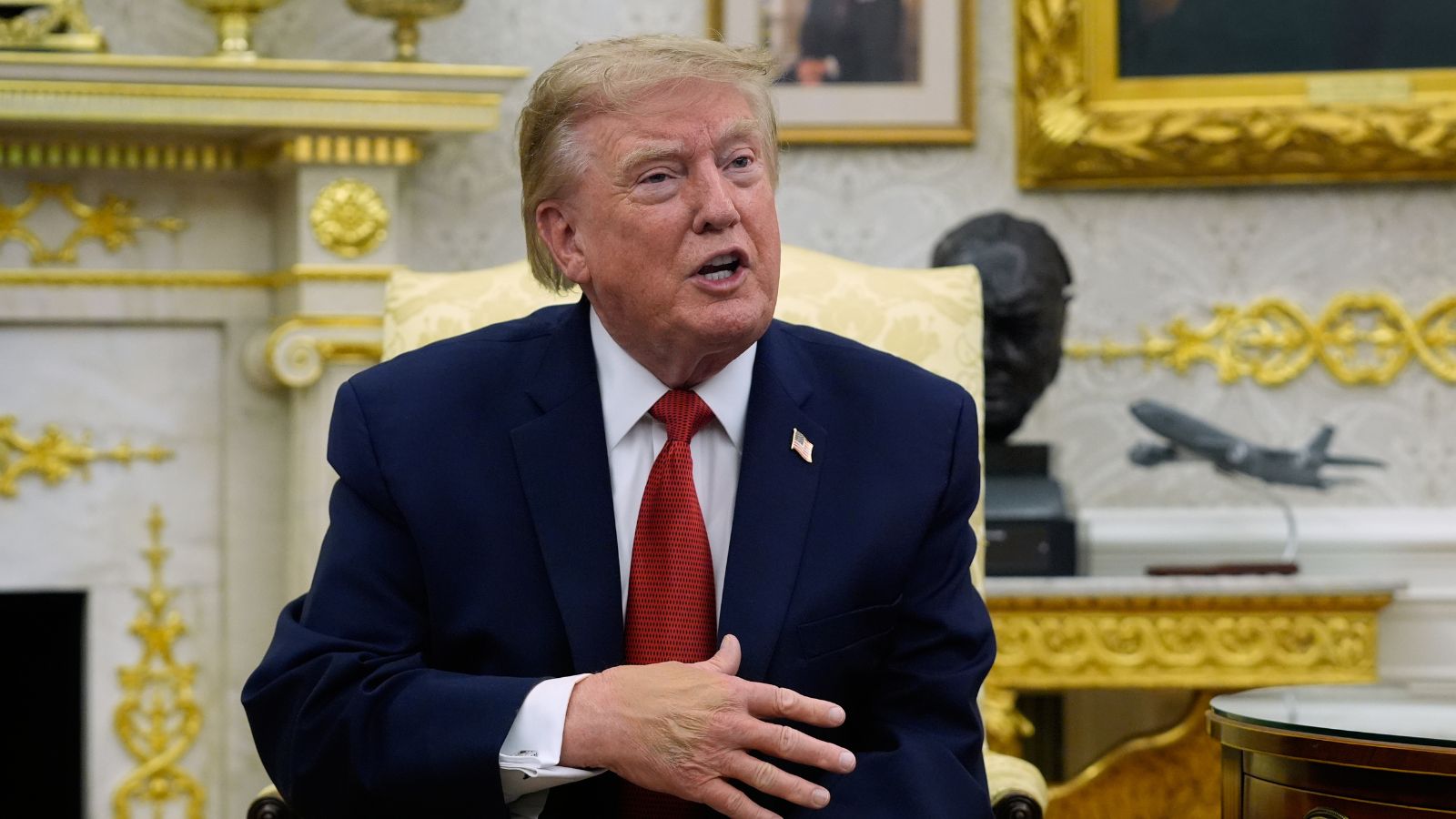
Yet the White House has pushed back hard. Trump has dismissed existential AI fears as a "hoax" and framed the race in stark zero-sum terms: whoever wins AI, wins. Sanders called that dismissal embarrassingly stupid for a president, arguing that leaders should listen to technical experts rather than brush off warnings.
Industry voices split too. Nvidia CEO Jensen Huang has argued that heavy government oversight would hurt U.S. competitiveness. That’s a familiar argument in tech policy. Every time regulators propose limits, critics warn that rules will hand the crown to overseas rivals.
Still, pretending there’s zero risk isn’t a serious strategy either. Even if you doubt sci-fi scenarios about rogue superintelligence, short-term failures—autonomous cyberattacks, election manipulation, biological design shortcuts, and financial cascading errors—don’t require a conscious machine. Dumb or semi-autonomous systems can cause massive damage when hooked into critical infrastructure.
Data Centers, Power Grids, and the Real Fight Over Speed
For most people, an AI ban sounds abstract until it hits their electric bill or local neighborhood. That’s why Sanders has paired global treaty talk with concrete infrastructure freezes.
On March 25, 2026, Sanders and Rep. Alexandria Ocasio-Cortez introduced the Artificial Intelligence Data Center Moratorium Act, with House companion legislation following later in the year. The bill aims to halt new AI data center construction while Congress debates federal rules.
Why target concrete and cooling towers? Because physical bottlenecks are where the AI boom collides with everyday life. Hyperscalers are pouring hundreds of billions into massive compute campuses. Local communities across the U.S. have pushed back over soaring electricity demand, strain on aging grids, heavy water use, and fossil-fuel power generation. Ocasio-Cortez also pointed to labor disruption, citing more than 54,000 AI-linked layoffs nationwide over the prior year.
Sanders has floated broader economic ideas alongside the pause, including public dividends or sovereign wealth mechanisms so ordinary workers share in productivity gains rather than watching all upside flow to top shareholders. Whether you like his economics or not, his core point is hard to ignore: communities are bearing local costs today while national rules haven’t caught up.
Where Skeptics Have a Point and Where They Miss the Boat
Let’s be honest about the trade-offs. A global ban on superintelligence sounds clean on paper, yet enforcing it is a nightmare.
How do you inspect a rival country’s private GPU clusters? Unlike nuclear enrichment facilities or missile silos, compute clusters can be distributed, dual-use, and buried inside commercial cloud operations. A treaty without strict verification risks binding democratic governments while authoritarian states or rogue actors operate in the shadows.
That’s why lawmakers like Democratic Sen. John Fetterman and Interior Secretary Doug Burgum have warned that freezing data center builds amounts to waving a surrender flag to China. From their angle, ceding compute capacity weakens American leverage in defense, science, and economic growth.
At the same time, critics who wave away every pause proposal miss why Sanders is gaining traction. Doing nothing isn’t neutral. If frontier models keep scaling without verifiable safety standards, or if power grids buckle while utilities socialize data center costs onto households, public backlash will get much louder. You don’t have to buy every word of Sanders’s prescription to see that speed without guardrails is reckless.
Practical Ways to Track and Respond to the AI Clampdown
Whether a U.S.-China AI treaty ever materializes or stalls in Congress, the debate itself is reshaping rules, budgets, and hiring plans. If you run a team, invest, or work in tech-adjacent fields, waiting around for Washington to settle the argument is a bad bet.
Start by auditing where your workflows actually depend on frontier models versus narrow, predictable software. If a rule change or API disruption freezes access to top-tier reasoning models for a month, know which processes break and which ones can fall back to smaller, locally hosted, or deterministic tools.
Next, watch state and local permitting rather than just presidential summits. Local moratoriums, utility rate hearings, and environmental reviews are already slowing data center timelines in parts of the country. If your business relies on cloud capacity or energy-intensive compute, factor regional power constraints and permitting delays into your planning assumptions.
Finally, tighten your own internal guardrails around autonomous agents and sensitive data. Sanders’s warnings about runaway agents and security leaks hit a nerve because many companies deployed agentic workflows faster than their security teams could audit them. Lock down permissions, log agent actions, and keep human sign-off on high-impact decisions—before regulators force your hand.