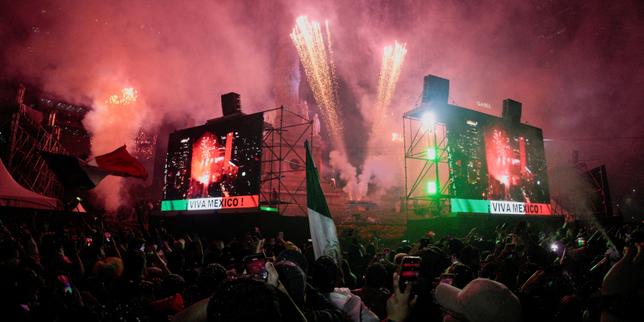
The concrete of the Estadio Azteca retains heat long after the sun dips behind the valley. It breathes. To stand in the upper tiers as the stadium fills is to feel a collective respiration—the smell of grilled corn, the faint sting of smog, the electricity of a hundred thousand people humming in unison. This place is a cathedral of global football. It watched Pelé reach apotheosis in 1970; it bore witness to Maradona’s divine theft and impossible genius in 1986.
Now, in the summer of 2026, the world has returned.
Yet, beneath the roaring green shirts and the thunderous choruses of "Cielito Lindo," a strange, quiet grief hangs over Mexico’s final match of this World Cup. It is a hangover that arrived before the party even ended.
Consider Sofia. She is a hypothetical fan, but you can see her face duplicated ten thousand times in the stands tonight. She is thirty-four, wearing a vintage Jorge Campos jersey, and she spent a significant portion of her savings to be here. She expected a feast. Instead, she feels like a guest who was invited to the house, asked to help clean the kitchen, and then told she can only stay for the appetizers.
The stadium around her is historic, but the tournament unfolding within it feels hollowed out, stripped of its soul by design.
Mexico is making history by co-hosting a third World Cup, a feat no other nation can claim. But history, it turns out, can be remarkably stingy. The numbers tell a story of mathematical disrespect. Out of more than a hundred matches in this newly bloated, 48-team mega-tournament, Mexican soil is hosting a mere handful. The lion's share—the quarter-finals, the semi-finals, the glittering finale—belongs entirely to the United States.
Tonight is Mexico's final match on home turf. The tournament is barely hitting its stride, the drama is just beginning to peak, and yet, the lights in Mexico City are effectively being turned off. The circus is packing up its main tents and moving north across the Rio Grande.
"Il aurait fallu être plus équitable." It should have been fairer.
That sentiment, whispered by officials and shouted by fans, is the defining epitaph of Mexico’s 2026 experience.
The unease began years ago when the North American bid was first engineered. It was sold as a grand, unified showcase of continental harmony. A trilogy of nations locking arms. But as the logistics hardened into reality, the partnership began to look less like a trio of equals and more like a corporate acquisition. The United States took the boardroom seats, Canada took the northern expansion, and Mexico was handed the legacy slot—a nod to tradition that felt increasingly like charity.
To understand why this hurts so deeply, you have to understand what football means to Mexico. It is not entertainment. It is not a hobby to be consumed between commercial breaks. It is a mirror of national identity, a weekly liturgy, a repository of joy and heartbreak for a country that has endured profound economic and social complexities. When the World Cup comes to Mexico, the country doesn’t just host it. The country dissolves into it.
In 1970 and 1986, the world came to Mexico to find the soul of the game. In 2026, the world came to Mexico to use its iconic backdrops for the opening credits before moving to the modern, sterile NFL stadiums of Texas and California for the actual show.
The structural inequality of the tournament mirrors a larger, global exhaustion. We see it everywhere: the hyper-commercialization of culture, where history is treated as a branding asset rather than something to be honored. FIFA wanted the prestige of the Azteca name, the B-roll footage of passionate fans in sombreros, and the mythos of Mexican football history. They just didn’t want to leave the lucrative knockout rounds there.
But the real problem lies elsewhere, rooted in a shifting economic reality that many fans are only now beginning to fully comprehend.
Modern sporting infrastructure is a game played in billions, and the currency isn't just cash—it's corporate hospitality suites, massive media compounds, and hyper-regulated logistical corridors. The United States possesses an endless supply of these ready-made, air-conditioned coliseums. Mexico, despite its frantic renovations and passionate promises, was judged by the cold calculus of Swiss executives who value luxury boxes over legacy.
The result is a tournament that feels geographically fractured and emotionally compromised.
As the referee blows the whistle to start the match, the noise inside the Azteca is deafening. It is a defensive roar. It is the sound of a people determined to squeeze every drop of joy out of a fleeting moment. They are singing louder because they know they are singing to an empty room tomorrow.
Sofia watches the ball zip across the grass. She cheers, she jumps, she clutches her neighbor’s shoulder when a shot grazes the crossbar. The passion is real. It cannot be faked, and it cannot be corporate-sponsored.
But during a lull in play, when the ball goes out of bounds and the stadium giant screen flashes a promotional ad for the semi-finals in Miami and New York, a collective sigh seems to ripple through the lower bowl. The fans know. They are being left behind.
There is a bitter irony that the country that has given the World Cup some of its most enduring imagery is relegated to an opening-act status. The tournament will continue for weeks. It will crown a champion in a stadium thousands of miles away, surrounded by a different crowd, a different energy, a different sky.
When the final whistle blows tonight, the fans will stream out into the cool night air of Mexico City. They will buy tacos from street vendors, they will honk their horns in the traffic jams, and they will debate the tactics of the match long into the morning. They will do what they have always done: love the game fiercely, without condition.
But the stadium behind them will go dark. The tournament will march on, wealthy, sprawling, and indifferent, leaving the Azteca to simmer quietly in the dark, remembering a time when it was the center of the world, rather than a beautiful pit stop on the way to a richer destination.


