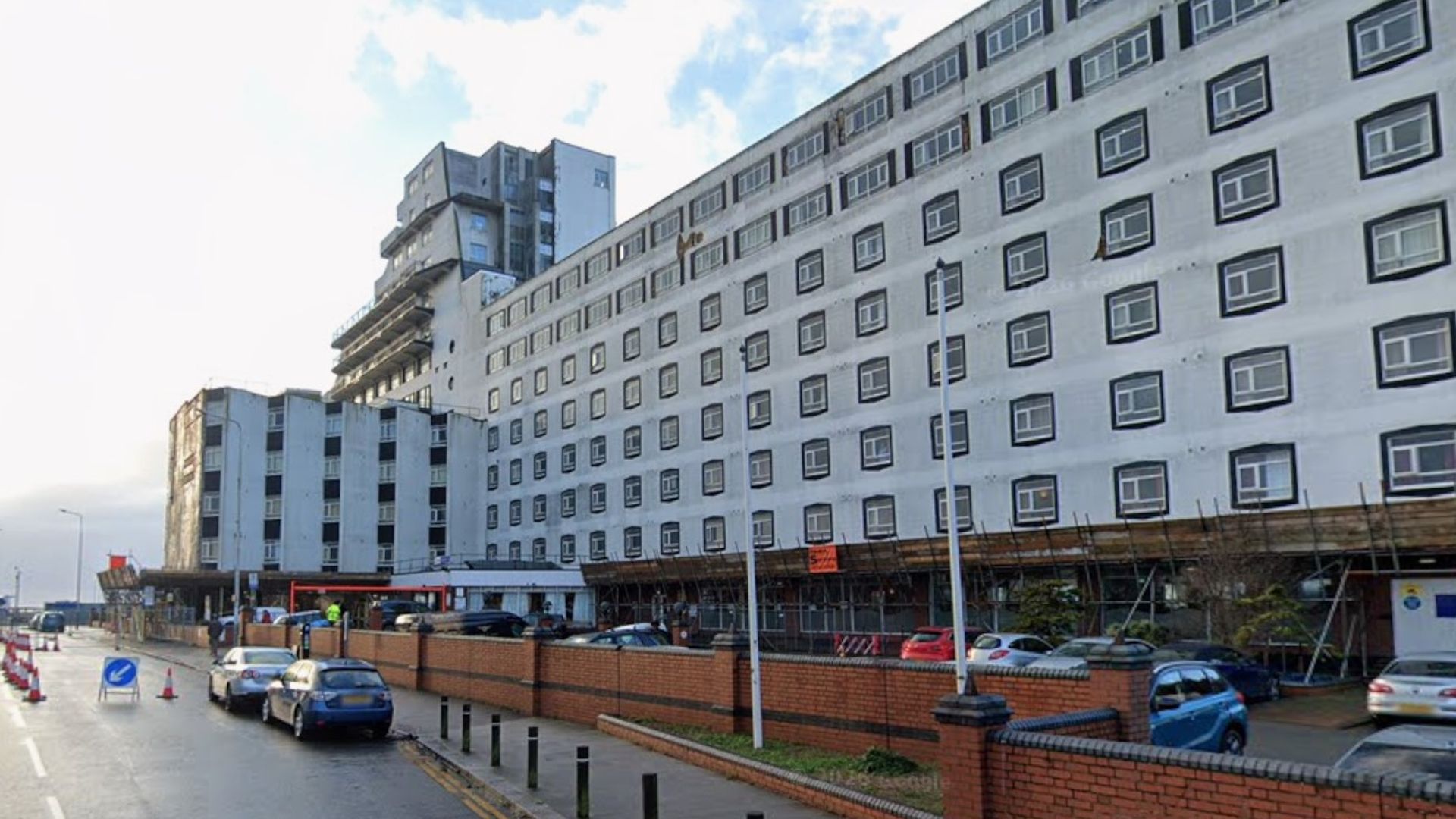
Two suspects get arrested after a plume of smoke swallows the Folkestone seafront. Local police slap cuffs on a 38-year-old man and a 21-year-old woman, media outlets flash emergency banners, and the public breathes a collective sigh of relief. Case solved, right? A couple of bad actors torched the notorious Grand Burstin Hotel, the emergency services played their part, and justice is marching on.
It is a tidy narrative. It is also a dangerous delusion.
The lazy consensus across every mainstream headline wants you to believe that a suspicious blaze at a 550-room monolith is merely a criminal anomaly. Point the finger at individual suspects, secure the arrests, and ignore the rotting structural decay of Britain's coastal tourism assets. We prefer our disasters packaged as crime stories because it lets us ignore the systemic dry rot underneath.
The Architecture Of Neglect
Let us strip away the police tape and look at the physical reality of these grand old coastal relics. I have watched corporate conglomerates and budget hotel operators milk properties dry for decades, extracting cash flow while deferring maintenance until buildings become ticking time bombs.
The Grand Burstin is not an isolated bad apple. It is a symptom of a neglected coastal economy where massive, aging hospitality structures are left to fend for themselves against rising operational costs, shrinking margins, and obsolete safety configurations. When you squeeze a building past its functional lifespan without pouring capital back into its core infrastructure, you do not need an outside arsonist to create a disaster. The physics of neglect will eventually do the job for you.
Consider the sheer scale of these operations. Pumping hundreds of people out into the dark at 1:20 AM because a basement or lower-level ignition point threatens a structural collapse exposes the fragile redundancy of modern budget hospitality. When 26 fire engines have to converge on a single marine-front location, the failure is not just about who struck a match. The failure is that these structures remain operational behemoths carrying outdated fire compartmentalization, stretched staffing levels, and zero tolerance for sudden anomalies.
The Convenient Scapegoat
Human beings crave villains. A criminal investigation with two local suspects gives a complex socioeconomic failure a clean face. It allows local authorities, corporate boards, and municipal planners to point outward instead of looking in the mirror.
Imagine a scenario where the police investigation quietly fizzles out due to lack of evidence—a frequent reality when fires start in neglected, debris-laden basements with failing electrical grids. Who takes the blame then? The structural reality is that many of these coastal dinosaurs are financially unviable under current safety and energy mandates. Turning them into temporary asylum housing or cheap weekend party depots without comprehensive overhauls creates a cocktail of high turnover and low accountability.
When you cram hundreds of transient guests into sprawling complexes managed on razor-thin operating margins, safety stops being an engineering priority and becomes a compliance checkbox. Smoke alarms ring, evacuation protocols scramble, and everybody acts surprised when a minor ignition turns into a major regional emergency.
Stop Treating Symptoms As Root Causes
If we want to fix the crisis on our coastlines, we need to stop treating every major hotel fire as a simple episode of local criminality.
- Audit the asset class. Municipalities need to mandate aggressive structural and fire-safety audits for all legacy coastal hotels built before modern material standards.
- End deferred maintenance protection. If a corporate operator cannot maintain basic safety systems across a 500-room property, the license to operate should be yanked before smoke starts billowing over the harbor.
- Acknowledge economic obsolescence. Some of these concrete blockhouses from past eras cannot be retrofitted cheaply or safely. Pretending they are viable long-term economic engines invites catastrophe.
Arresting two people makes for a clean news cycle. It closes the browser tab. But it does not save the British seaside from burning itself down from the inside out.