Every time violence strikes a checkpoint and bleeds into the transport chain, the commentary follows a predictable script. Analysts rush to microphones to decry the breakdown of security perimeters, politicians demand more concrete barriers, and editorial boards publish hand-wringing pieces about the collapse of humanitarian norms. Everyone focuses on the static defense point where the initial blast detonated. Everyone obsesses over the perimeter breach.
They are looking at the wrong end of the barrel.
Fixating on the checkpoint attack misses how modern asymmetrical violence systematically exploits the mechanics of logistical failure. When a secondary ambush hits an ambulance transporting the wounded, the standard narrative treats it as an isolated atrocity or an unpredictable secondary hazard. It is neither. It is a calculated stress test on an already brittle medical logistics infrastructure.
I have watched security architectures fail across high-risk zones, and the root cause is rarely a lack of concrete walls or extra guards. The failure lives in the illusion that emergency medical services operate outside the theater of conflict. They do not. When a state relies on ad-hoc civilian transport networks and reactive triage without hardened protocols, every ambulance becomes a high-value mobile target disguised as a humanitarian shield.
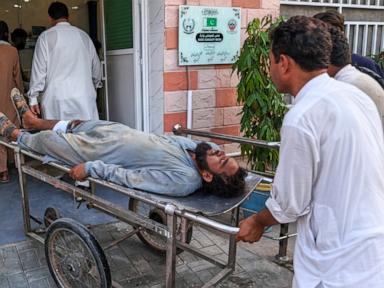
Look at the mechanics of how these incidents unfold. A primary strike occurs at a hardened node—a checkpoint, a gate, a fortified intersection. The immediate response protocol triggers automatically. Ambulances rush in, headlights flashing, sirens wailing, funneling down predictable transit corridors choked by debris and civilian panic. The attackers do not need to penetrate the hospital or outgun a military base. They simply wait for the logistical bottleneck. They wait for the predictable rush of unarmored, unescorted medical vehicles moving through predictable chokepoints.
The conventional response is to call for better protection of medical personnel. That sounds noble. It also completely ignores operational reality. Telling belligerents to respect the Red Cross or medical neutrality in a zone of active insurgency is like asking a hurricane to respect a picket fence. If protection relies purely on moral suasion or international conventions, you are not running a medical evacuation system; you are offering target practice.
To fix emergency response in high-threat environments, we have to stop treating medical logistics as an afterthought of civil defense and start treating it as tactical supply chain management.
First, stop the siren syndrome. In high-risk zones, screaming sirens and bright emergency lights do not signal safety or clearance; they broadcast a beacon to anyone monitoring the radio frequencies or visual corridors. Modern triage in contested areas requires operational obscurity, not theatrical urgency. Moving medical assets with minimal signature, decentralized staging, and randomized routing disrupts the kill chain of secondary ambushers.
Second, re-evaluate the perimeter obsession. Checkpoints are magnets for kinetic energy. The more fortified a checkpoint becomes, the more attractive it is as a symbol for asymmetric actors. When security forces bunker down behind reinforced concrete, they push vulnerability outward into the surrounding transit network. The civilians and medics caught in the periphery pay the price for a false sense of security inside the walls.
The uncomfortable truth is that traditional humanitarian corridors often fail because they are designed by bureaucrats who have never managed a supply chain under fire. They rely on fixed assumptions about safe passage that evaporated decades ago. Until emergency response agencies adopt the cold, calculating logistics discipline of military supply lines—where redundancy, armor, variable routing, and real-time intelligence dictate every movement—ambulances will remain sitting ducks in a theater that rewards predictability.
Stop asking for more sympathy for the wounded transport workers. Start demanding a complete overhaul of how we move bodies away from the blast zone before the secondary trigger goes off.