Every four years, political pundits dust off the exact same playbook. When a party loses Congress, the cable news panels instantly reduce fifty individual House races and a dozen statewide Senate battles into a single, lazy morality play about whoever sits in the Oval Office.
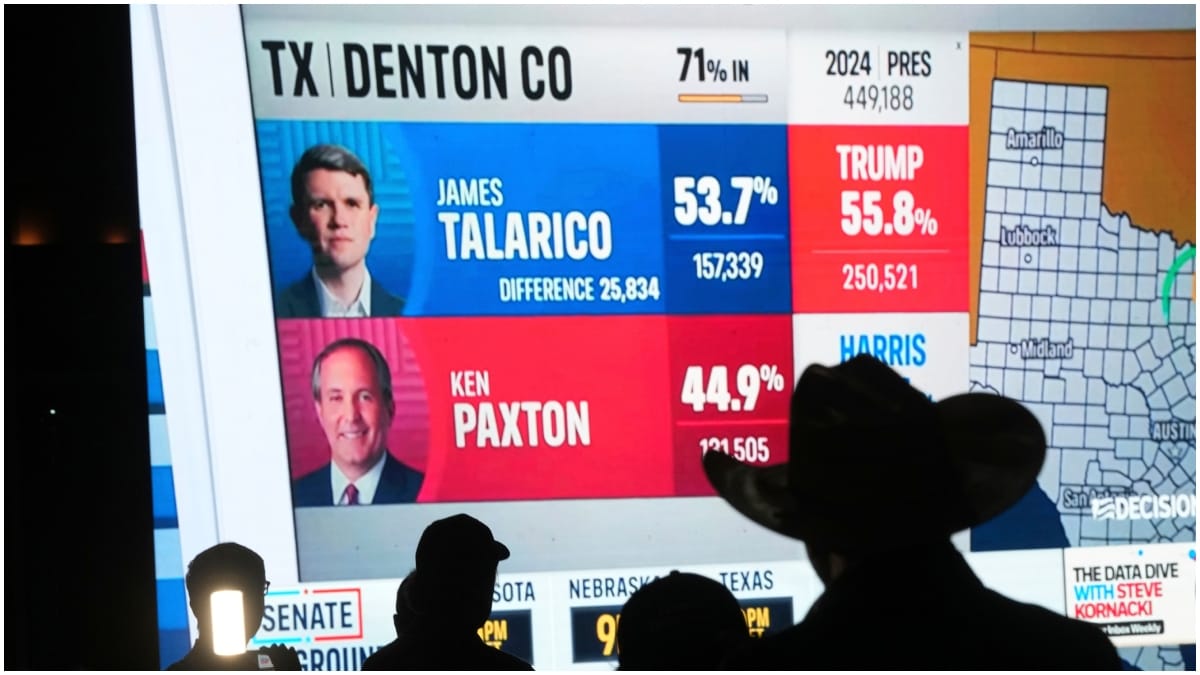
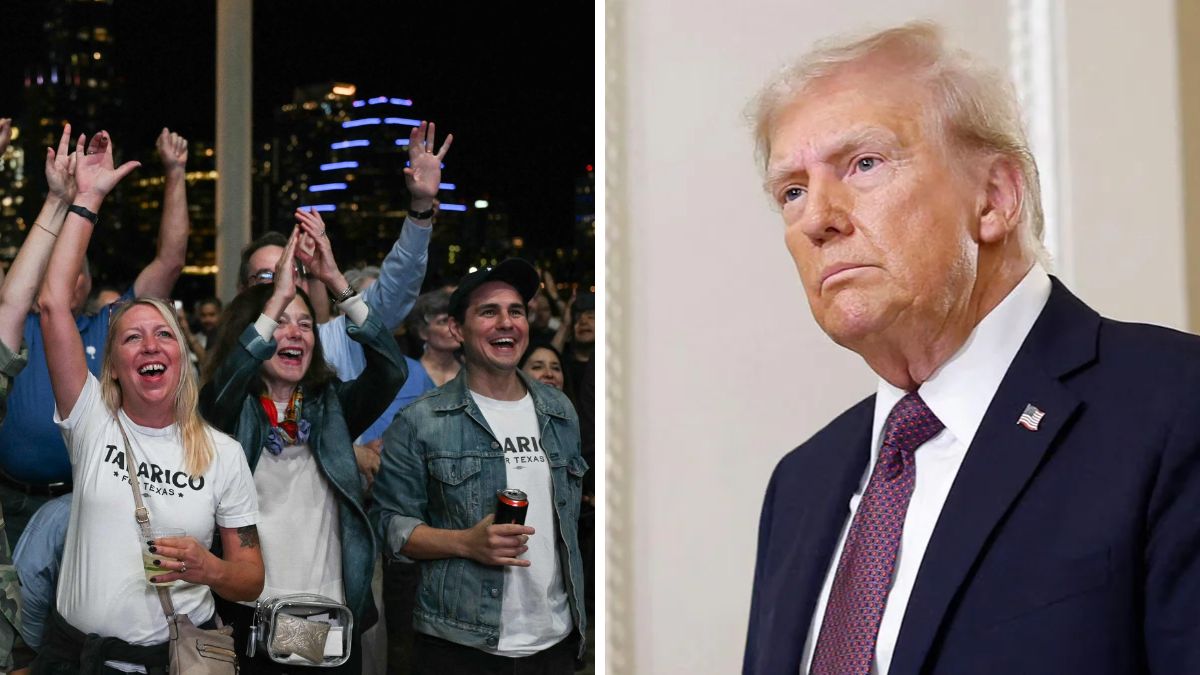
Right now, the consensus is deafening. Democrats flipped both chambers, and the establishment media has already carved the epitaph on the Republican Party's headstone. They call it a referendum on Donald Trump. They frame the blue wave as a moral reckoning for a polarizing president's rhetoric, tariffs, and governing style.
That narrative is comforting for Democratic strategists. It is also dangerously wrong.
If you actually look under the hood of how American midterm elections function, blaming Trump's personality for a congressional sweep is like blaming a match for burning down a house soaked in gasoline. The structural mechanics of midterm cycles, the economic realities of incumbent governance, and a massive, unreported failure in Republican campaign infrastructure decided this election long before a single ballot was cast.
I have spent nearly two decades dissecting campaign finance filings, precinct-level turnout models, and opposition research dumps. I have watched consultants burn hundreds of millions of dollars on vanity television ads while ignoring basic ground-game math. The story of how Democrats reclaimed majorities in the House and Senate is not a tale of Trump's sins catching up to him. It is a story of predictable thermostatic politics colliding with an institutional party that forgot how to run local campaigns.
The Myth of the Moral Referendum
Political scientists have tracked a phenomenon called thermostatic public opinion for decades. Formulated by researchers like Christopher Wlezien, the concept is brutally simple. Voters treat the federal government like a thermostat. When one party holds total power—the White House, the House, and the Senate—policy moves in their direction. Almost immediately, the electorate grows restless, perceives overreach, and turns the dial back the other way at the earliest opportunity.
Since the Civil War, the president's party has lost House seats in almost every single midterm election. The rare exceptions—1934, 1998, and 2002—required once-in-a-century events like the Great Depression, an unpopular impeachment backlash, or the immediate aftermath of September 11.
When pundits claim the GOP "paid the price" specifically for Trump's behavior, they are ignoring a century of political gravity. A Democratic president with the exact same unified control of Washington would have faced the exact same headwinds. In fact, we saw this exact movie play out in 2010 under Barack Obama and in 2022 under Joe Biden.
Treating a historical certainty as a unique moral indictment of one man is analytical malpractice. Voters did not suddenly wake up with a newfound set of ethics. They did what American voters always do when one party controls the entire scoreboard: they hired the opposition to act as a brake.
The Incumbency Trap and Economic Gravity
Voters vote with their wallets, not their consciences. Yet, the mainstream narrative insists this election was decided by cultural grievances and presidential tweets.
When you hold the trifecta in Washington, you own the economy. Every price hike at the grocery store, every fluctuation in mortgage rates, and every ripple from trade policy lands directly on the desk of the party in power. During a midterm cycle, the opposition party enjoys a massive structural advantage. They do not have to govern. They do not have to pass messy compromise bills or defend complex economic trade-offs. They simply point at whatever hurts the average household and promise to stop it.
Imagine a scenario where a traditional, button-down Republican—someone with the demeanor of a corporate board member—sat in the White House with the exact same economic conditions and unified congressional control. The suburban swing districts in Pennsylvania, Michigan, and Arizona would have swung in the exact same direction.
Why? Because negative partisanship drives modern turnout. Political scientist Alan Abramowitz has documented how modern voters are motivated far more by fear and anger toward the opposing party than by loyalty to their own. When your party holds the White House, your base gets complacent. Meanwhile, the out-of-power base is furious, motivated, and shows up in off-year elections at disproportionate rates.
The Democrats did not win because they presented an inspiring, unified vision for the future. They won because they were not in charge.
What Everyone Gets Wrong About Swing Voters
If you listen to the talking heads, you would think the American electorate is composed of millions of high-minded moderates sitting around reading policy white papers before deciding whether to punish the GOP.
Let's dismantle that illusion right now. True undecided voters represent a microscopic fraction of the electorate. Modern elections are not won by convincing a lifelong conservative to become a progressive, or vice versa. They are won by differential turnout—getting your low-propensity voters off the couch while the other side stays home.
Here is the brutal truth the Republican establishment refuses to admit: their base only shows up when Donald Trump's name is actually on the ballot.
In presidential years, Trump acts as a massive turnout engine, pulling working-class, irregular voters into the booths across the Rust Belt and Sun Belt. In midterm years, without him at the top of the ticket, that coalition fractures. Those voters revert to their historical habit of skipping off-year elections.
Meanwhile, the Democratic coalition has undergone a profound demographic realignment over the last decade. By trading working-class non-college voters for affluent, college-educated suburbanites, the Democratic Party accidentally built the ultimate midterm voting machine. College-educated voters consume more news, follow politics closely, and vote reliably in every single election—from presidential races down to local school boards.
The GOP lost the House and Senate not because voters rejected Trumpism, but because the Republican coalition is structurally terrible at voting when Trump is not running.
The Silent Collapse of GOP Campaign Infrastructure
While the media obsessed over national headlines, the real slaughter happened in the trenches of campaign operations.
Elections are logistical wars. They are won through voter registration drives, ballot chasing, early-vote banking, and hyper-local data modeling. Over the past several cycles, the Republican National Committee and state-level GOP apparatuses hollowed out their traditional field operations, starving state parties in critical battlegrounds like Michigan, Wisconsin, and Nevada of basic operational cash.
I have seen campaigns spend seven figures on glossy broadcast television commercials in October—when half the electorate had already voted by mail—while leaving their field offices unstaffed in August.
The Democratic Party, backed by an entrenched network of union organizers, permanent non-profit voter registration groups, and centralized data platforms like NGP VAN, treats campaigning as a year-round utility. Republicans treat it as a seasonal pop-up shop.
When the margins in two dozen House seats come down to fewer than five thousand votes, superior plumbing beats superior messaging every single time. You cannot overcome a structural deficit in early voting and ballot collection with rallies and cable news hits. The GOP did not just lose an argument; they got out-organized on the ground.
Why Candidate Quality Still Matters More Than National Branding
If the blue wave were purely a rejection of Donald Trump, every Republican running in a competitive district would have drowned at the exact same rate. They didn't.
Look closely at the ticket-splitting that occurred across the map. In several key states and districts, Republican governors, attorneys general, and moderate House incumbents comfortably outperformed the national environment. They survived—and in some cases thrived—because they ran localized, disciplined campaigns focused on regional economic issues, crime, and cost of living.
Conversely, the Senate seats and open House districts that flipped blue were overwhelmingly lost by candidates who treated their local races like auditions for prime-time television appearances.
Voters in swing states have a finely tuned radar for authenticity and competence. When a Senate candidate spends the entire autumn talking about national culture war grievances instead of local water rights, manufacturing jobs, or healthcare costs, independent voters pull the lever for the Democrat—even if they dislike the national Democratic brand.
Blaming Trump gives these failed candidates and their high-priced consultants a convenient scapegoat. It allows them to walk away from catastrophic campaigns without ever answering for why they failed to connect with the people they actually wanted to represent.
The Dangerous Trap Waiting for Democrats
Now let's examine the flip side of this coin, because the people celebrating this victory are walking straight into a trap of their own making.
By buying into the media narrative that voters handed them a sweeping moral mandate against Trump, Democratic leaders are misreading the room. A midterm victory built on anti-incumbent frustration is a rental, not a purchase. The voters who swung back to the Democrats in the suburbs did so to put a check on unified government—not because they suddenly fell in love with progressive tax policies or federal regulatory expansion.
If the new Democratic majorities in the House and Senate interpret their win as permission to overreach, launch endless performative investigations, or ignore the economic anxieties of working-class families, they will trigger the exact same thermostatic backlash in the next cycle.
History offers a clear warning here. After winning big in the 1994 midterms, Newt Gingrich's Republicans overplayed their hand, shut down the government, and paved the way for Bill Clinton's easy re-election in 1996. After the 2010 Tea Party wave, congressional gridlock alienated the exact suburban moderates who delivered the majority in the first place.
Voters hate arrogance more than they hate either party's platform. Right now, Washington is drowning in it.
The Contrarian Playbook for Winning the Next Cycle
To be completely transparent, the structural approach I am laying out has one massive flaw from a political consultant's perspective: it is boring, expensive, and takes years to pay off. You cannot put a data pipeline on a billboard, and nobody gets famous on cable news for managing a county-level ballot-chasing operation.
That is precisely why most political operatives ignore it—and why the ones who execute it dominate. If either party wants to break the cycle of volatile, short-lived majorities, they have to abandon the pundit class's obsession with national narratives and execute four unglamorous fundamentals:
- Treat voter registration as a 365-day business. Waiting until the summer of an election year to register new voters is surrender. Parties must build permanent, localized ground teams in high-growth suburban counties years in advance.
- Master the mechanics of how ballots are actually cast. Fighting against mail-in voting and early voting rules while your opponent uses them to bank hundreds of thousands of votes before Election Day is unilateral disarmament. Build the infrastructure to harvest and track every legal ballot within the rules of each state.
- Recruit candidates with local roots, not national profiles. Stop parachuting wealthy business executives and media personalities into swing districts. Recruit state legislators, mayors, and local prosecutors who already know how to win tough races and talk to normal people without sounding like a press release.
- Localize every single message. National talking points die in swing districts. Every ad, mailer, and speech must tie macro-economic policies directly to local employers, local schools, and local household budgets.
Stop Reading the Headlines and Start Reading the Precincts
The story of this midterm election is not a morality tale about one man's flaws. It is a textbook demonstration of how American political gravity works when one party holds too much power, fails to build durable local infrastructure, and runs candidates who forget where they live.
The pundits will spend the next two years writing endless think pieces about what this means for the soul of the Republican Party. Ignore them. Look at the turnout spreadsheets, look at the early-vote margins, and look at the money spent on ground operations versus television ads.
In politics, narrative is noise, and math is undefeated.