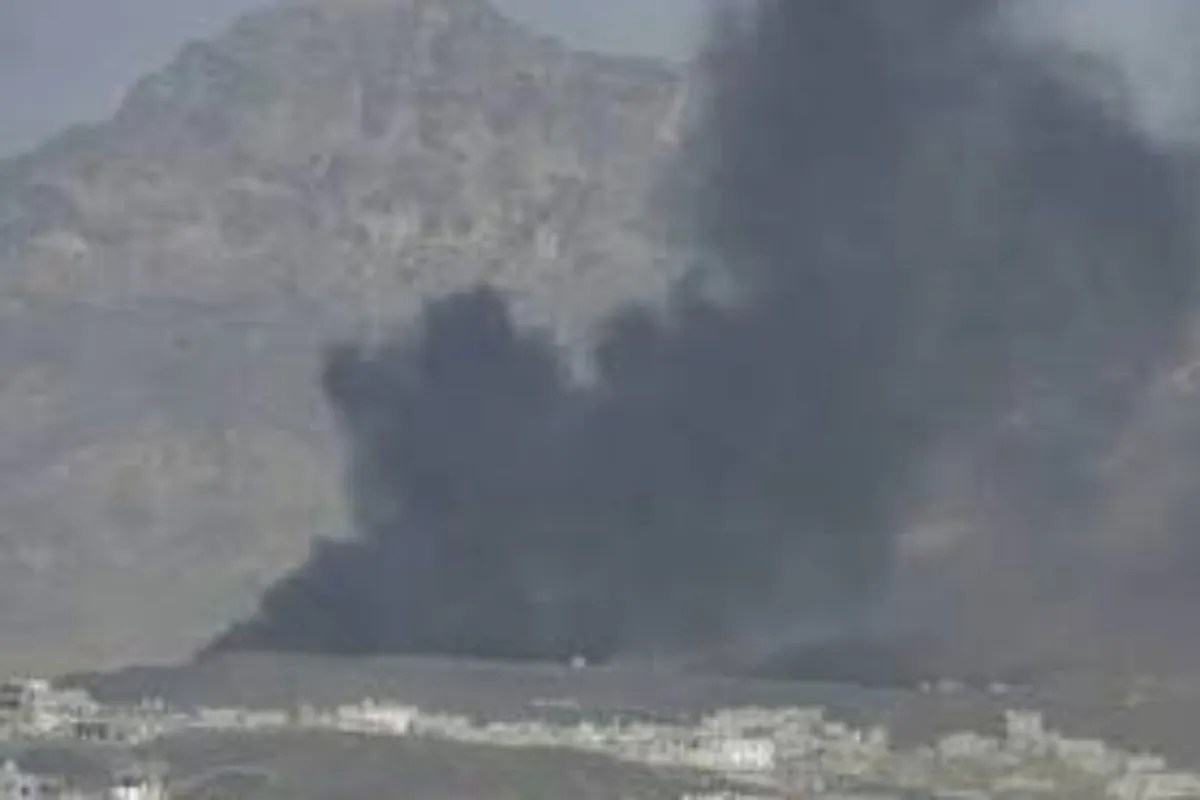
Every time a headline flashes across global news feeds claiming hundreds of militant casualties and wiped-out convoys, the geopolitical commentariat breathes a sigh of relief. They look at the tonnage dropped, the strike tallies, and the burned-out logistics, and they tell themselves the machinery of containment is working. It is a comforting fiction. It treats asymmetrical guerrilla warfare like an accounting sheet where if you subtract enough units, the problem disappears. That logic worked in the twentieth century. Today, it is obsolete.
Let us look past the breathless reporting of daily airstrike metrics in Yemen. When reports celebrate hundreds of sorties and dozens of destroyed technical vehicles, they are measuring output, not impact. The lazy consensus assumes that overwhelming air dominance translates directly to strategic degradation. History tells us the exact opposite.
If kinetic attrition worked against decentralized insurgencies, the map of the Middle East would look very different over the last two decades. Instead, every high-sortie campaign against embedded non-state actors acts less like a cure and more like a recruitment seminar wrapped in supply chain adaptation.
The Arithmetic of Asymmetric Resilience
To understand why traditional military reporting on the Houthi conflict is fundamentally misleading, you have to examine the economics of modern proxy conflicts. A multi-million-dollar precision-guided munition dropped on a dispersed pickup truck loaded with basic communications gear is not a favorable economic exchange. More importantly, it fundamentally misunderstands how decentralized networks operate.
Centralized militaries rely on infrastructure: command bunkers, fuel depots, railheads, and fixed airbases. When you strike those targets, you degrade operational capacity. But when your opponent relies on distributed cave networks, modular workshops, smuggled sub-components, and decentralized command cells, bombing surface assets is like punching water. You make a splash, but the liquid immediately fills the void.
I have spent years analyzing conflict logistics and defense procurement, and the recurring blind spot among analysts is treating weaponized ideology as if it were a balance sheet. You cannot bomb away an operational doctrine born out of decades of localized conflict. Every time an airstrike makes the morning news cycle with massive casualty claims, two things happen on the ground that the press ignores:
- The adversary hardens its shelter protocols, pushing deeper underground or dispersing further into civilian centers, effectively weaponizing the density of the urban environment.
- The narrative machinery hardens local resolve, turning tactical destruction into strategic fuel for mobilization.
The Myth of Decisive Air Campaigns
Airpower is an incredible tool for shaping battlespace conditions, but it has never won a strategic victory against a determined insurgency on its own. The persistent fantasy that you can pulverize an adversary into political submission from twenty thousand feet ignores the fundamental limits of kinetic force.
When media outlets regurgitate numbers like 474 airstrikes in 24 hours or thousands of casualties without independent verification, they are buying into a performance designed for domestic consumption. It projects strength. It creates an illusion of momentum. But ask any logistics officer or intelligence analyst who has looked at post-strike damage assessments away from the cameras: secondary explosions and secondary movements tell a much murkier story. Much of what gets hit are decoys, low-value transit nodes, or assets that have already been written off by commanders who anticipated the strike days prior.
The real danger of this reporting is that it breeds strategic complacency. It convinces political leaders that the problem is being solved by remote control, removing the urgency for genuine political or economic containment strategies.
Changing the Question
Stop asking how many strikes were flown. Stop asking how many vehicles were burned. Those are vanity metrics that soothe public anxiety while changing nothing about the balance of power on the ground.
Instead, ask the questions that make defense establishments uncomfortable:
- What is the cost per engagement for the coalition versus the adversary?
- How quickly does the opposing network reconstitute its destroyed command-and-control nodes?
- What diplomatic and maritime choke points remain unaddressed while aircraft burn fuel on tactical targets?
Until policymakers and commentators start answering those hard truths instead of celebrating daily body counts and sortie totals, the cycle will repeat. The strikes will continue, the headlines will echo the press releases, and the underlying strategic reality will remain entirely unchanged.
The next time you see a victory lap written about massive airstrike tallies, remember that in modern asymmetric warfare, counting the explosions is a substitute for thinking.
Cut the noise. Look at the logistics. The war isn't being won in the air; it is being prolonged there.