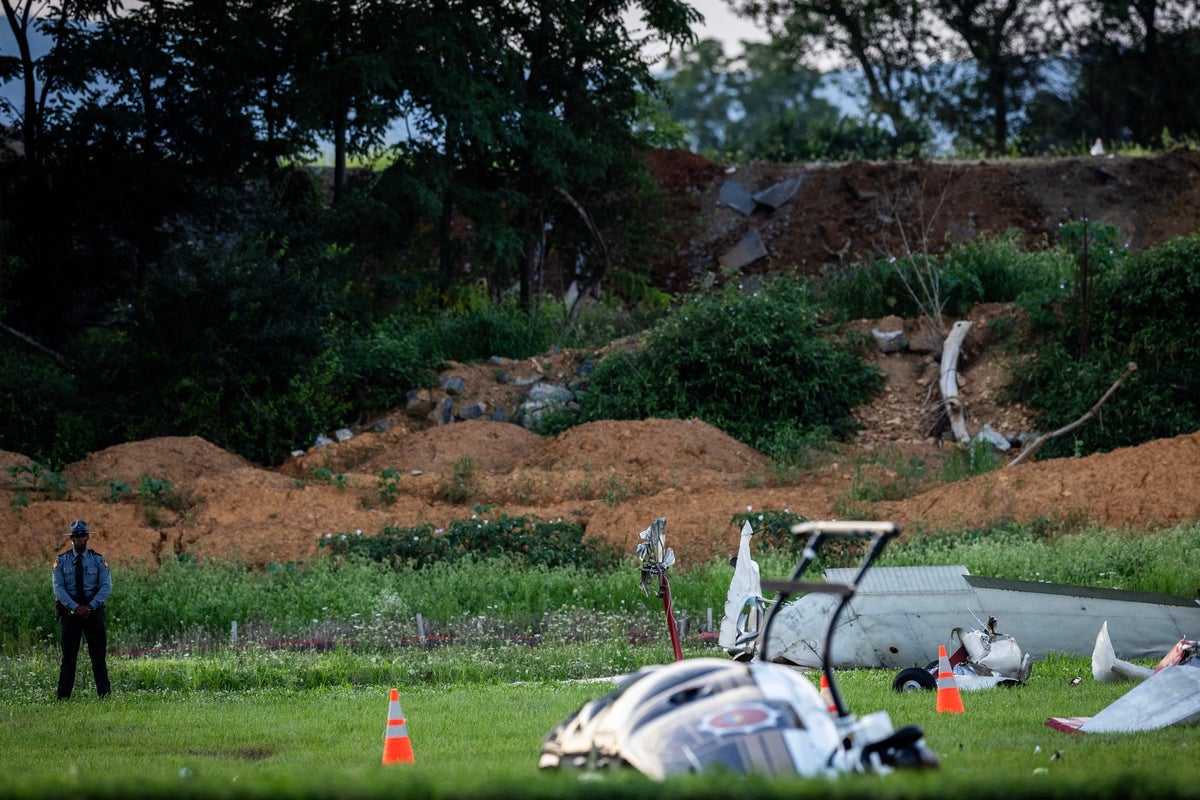
Another aviation tragedy hits the headlines, and the mainstream narrative rushes to adopt the laziest possible script. A Cessna 150 collides with a Pennsylvania State Police Bell 407 helicopter at Carlisle Airport, a pilot dies, and the immediate knee-jerk chorus points the finger entirely at cockpit error. The narrative spins a neat little tale about a small plane veering hard to the right and striking a hovering police chopper from behind.
Convenient. Tidy. And entirely wrong about how systemic failure actually kills people in general aviation.
Let us strip away the platitudes and look at the hard operational mechanics of uncontrolled airfields. I have spent years analyzing accident reports where regulatory complacency and structural design flaws combine to create invisible traps for pilots. Blaming a dead aviator for a collision with a low-hovering, state-operated aircraft during a training exercise lets the system off the hook.
The Uncontrolled Airfield Blind Spot
Carlisle Airport is a non-towered facility. That means there is no air traffic controller managing the airspace, sequencing arrivals, or separating high-performance state assets from light training aircraft. Pilots rely on Common Traffic Advisory Frequencies (CTAF) to broadcast their intentions, look out the window, and pray everyone else is playing by the same rules.
To call a collision between a landing fixed-wing aircraft and a low-hovering rotorcraft a simple failure of pilot vigilance is intellectually bankrupt.
Imagine a scenario where a state police helicopter is conducting tactical training maneuvers on or immediately adjacent to an active runway environment. Rotorcraft operating in ground effect or hovering low over grass areas near active infrastructure present an entirely different visual profile and kinetic hazard compared to a standard aircraft tracking a glide slope. The blind spots on a Cessna 150—especially with high wings blocking the overhead and rear quarters—are notorious. When a helicopter sits low in a transitional zone, it becomes a stationary trap disguised as moving traffic.
The lazy consensus claims the fixed-wing pilot should have seen them. The operational reality is that human visual perception is notoriously poor at detecting low-contrast, stationary, or slowly moving objects against complex ground backgrounds, a phenomenon known as motion camouflage or empty-field myopia.
State Assets Versus Civilian Traffic
There is an unspoken caste system in low-altitude airspace. On one side, you have cash-strapped general aviation hobbyists and student pilots flying decades-old airframes. On the other, you have well-funded state agencies running specialized tactical aircraft on intensive training schedules.
When these two worlds collide at small regional airports, the power imbalance dictates the post-accident narrative. Officials are quick to stand at podiums and detail how the civilian plane veered off course, but they rarely answer the harder question: What protocols govern state aviation units operating in congested civilian traffic patterns without active tower control?
If an elite police aviation unit is running drills at an uncontrolled field, the burden of deconfliction multiplies. A training exercise inherently demands high cognitive workload from the crew inside the cockpit—evidenced here by the fact that both troopers were temporarily trapped and required emergency extraction after the chopper rolled on its side. If the crew inside the helicopter is heavily task-saturated with their own internal training objectives, their ability to maintain external situational awareness drops off a cliff.
Yet, the entire safety margin is dumped onto the lone pilot in the Cessna, treating airspace as a self-regulating free-for-all where civilian eyes are expected to spot every institutional hazard.
Fixing The Real Vulnerability
Stop pretending that publishing preliminary National Transportation Safety Board updates and wringing our hands over pilot error solves anything. General aviation safety statistics will not improve until we stop treating midair collisions as unpredictable acts of God or pure individual negligence.
We need mandatory local tracking protocols for agency aircraft operating at non-towered fields, strict temporal separation between high-risk training and civilian arrival windows, and an end to the administrative habit of blaming the dead because they cannot defend their flight path at a press conference.
The system failed the moment a high-risk police training footprint overlapped with a standard civilian approach corridor without active mediation. Until aviation authorities admit that structural infrastructure gaps cause these crashes, more pilots will pay with their lives while the experts blame the view from the cockpit.