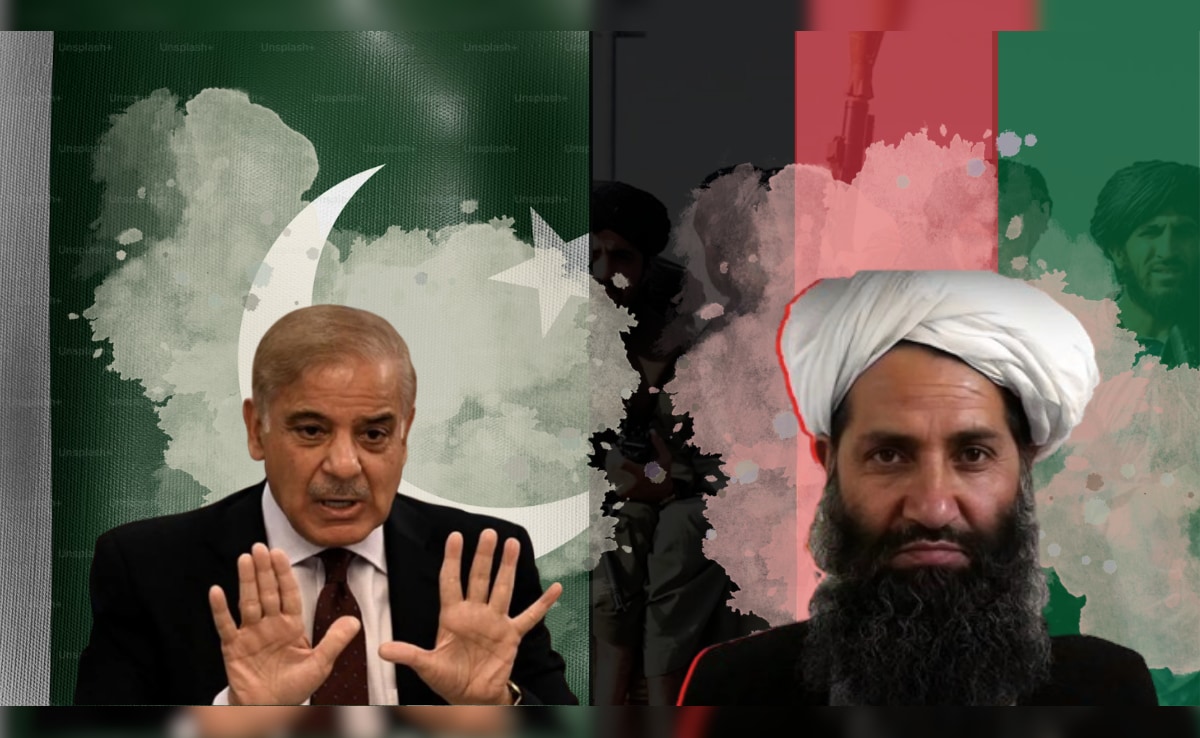
The strategic nightmare unfolding along the Durand Line is the result of a thirty-year gamble that finally went bust. For decades, Pakistan’s military establishment viewed the Afghan Taliban as a necessary proxy to ensure "strategic depth" against India. That investment has now curdled into a direct internal security threat. The shift from patron to protagonist in a cross-border shooting war isn’t a sudden change of heart by Islamabad; it is a desperate reaction to an emboldened insurgency that no longer takes orders from its former handlers.
The friction centers on the Tehrik-i-Taliban Pakistan (TTP), an ideological twin of the Afghan Taliban that seeks to overthrow the Pakistani state. Despite Islamabad's help in returning the Taliban to power in Kabul in 2021, the new Afghan government has refused to rein in the TTP. Instead, they have provided these militants with a safe haven and high-end military equipment left behind by retreating Western forces. This betrayal has forced Pakistan to transition from diplomatic sponsorship to conducting kinetic strikes inside Afghan territory, marking the end of a long-standing alliance.
The Myth of Strategic Depth
The concept of strategic depth was always a fragile hallucination. Pakistani planners believed that a friendly government in Kabul would provide a backyard for retreat and a wall against Indian influence. They ignored the reality that the Taliban are, first and foremost, Afghan nationalists with their own regional ambitions.
When the Taliban seized Kabul for the second time, the celebrations in Islamabad were short-lived. Former intelligence officials expected a subservient regime that would secure the border. Instead, they got a neighbor that disputes the very existence of the international boundary. The Durand Line, a 2,640-kilometer border drawn during the British colonial era, remains a fundamental point of contention. The Taliban do not recognize it. They tear down fences. They fire on border guards. To the Taliban, the border is an artificial wound through the Pashtun heartland; to Pakistan, it is the only thing maintaining their territorial integrity.
The TTP Problem
The TTP acts as the primary wedge driving these two entities apart. Since 2021, terror attacks within Pakistan have spiked by over 70 percent. These aren't just random acts of violence. They are coordinated strikes against military outposts and Chinese infrastructure projects, designed to bleed the Pakistani economy and demoralize the security forces.
Pakistan’s demand is simple: hand over the TTP leadership or kick them out. The Taliban’s response has been a masterclass in obfuscation. They suggest "talks" or offer to relocate the militants further from the border, all while the TTP continues to use Afghan soil to launch lethal raids into the Khyber Pakhtunkhwa province.
The Afghan Taliban cannot—and will not—betray the TTP. They fought alongside each other for twenty years against the Americans. They share the same Deobandi extremist ideology. For the leadership in Kandahar, turning over their "brothers in arms" to a state they view as a Western-lite security apparatus is a non-starter. It would cause a revolt within their own ranks.
The Economic Leverage Trap
Pakistan is currently grappling with a severe financial crisis, leaving it with fewer carrots and much larger sticks. In the past, Islamabad could offer trade concessions or transit routes to the sea. Now, the Pakistani government is weaponizing its economy in a way that targets the Afghan population to pressure the rulers.
The mass deportation of hundreds of thousands of undocumented Afghans was a calculated, albeit brutal, move. It was intended to create a domestic crisis for the Taliban, forcing them to integrate a massive influx of people into an economy already on the verge of collapse. It didn't work. The Taliban leadership remained unmoved, further souring the relationship and fueling a humanitarian catastrophe that has only increased anti-Pakistan sentiment among ordinary Afghans.
The Border as a Weapon
The closure of key trade crossings like Torkham and Chaman has become a routine diplomatic tool. For every TTP attack, Pakistan shuts the gates. Perishable goods rot in trucks. Traders lose millions. While this hurts the Afghan economy, it also devastates Pakistani businesses in the border regions, fueling local resentment against the central government in Islamabad.
The Taliban are diversifying. They are looking toward Iran, Central Asia, and China to bypass the Pakistani chokehold. If Afghanistan successfully reorients its trade routes, Pakistan loses its last piece of significant non-military leverage.
The Rise of Air Power and Sovereignty
The most significant escalation occurred when Pakistan launched airstrikes into the Khost and Paktika provinces. For a state that has historically complained about violations of its own sovereignty by US drones, this was a massive shift in doctrine.
By hitting targets inside Afghanistan, Pakistan signaled that the "brotherly" relationship is dead. The Afghan Taliban responded with heavy artillery fire across the border. We are no longer looking at a counter-terrorism problem; we are looking at the early stages of a conventional border conflict between two sovereign, heavily armed states.
The Taliban now possess an arsenal of Night Vision Goggles (NVGs), M4 carbines, and armored vehicles. This equipment, once belonged to the Afghan National Army, has significantly increased the lethality of both the Afghan border forces and the TTP insurgents. Pakistan’s technological advantage is shrinking in the rugged terrain where air power is limited and ground troops are vulnerable to sophisticated ambushes.
China and the Great Game 2.0
Beijing is the silent observer with the most to lose. The China-Pakistan Economic Corridor (CPEC) is the crown jewel of the Belt and Road Initiative. Constant instability and attacks on Chinese engineers threaten these investments. China has tried to mediate, hosting meetings between the foreign ministers of both countries, but their influence has limits.
The Taliban want Chinese investment in their mineral wealth, but they cannot provide the security Beijing demands. Pakistan wants China to pressure the Taliban, but Beijing is wary of getting bogged down in the Afghan quagmire. This leaves a vacuum where regional players like India and Iran can maneuver, further complicating Pakistan's security calculus.
The Radicalization of the Borderlands
The local population in Pakistan’s tribal districts is caught in the middle. They are tired of the "Good Taliban vs. Bad Taliban" narrative that has dominated Pakistani policy for decades. To them, the distinction is meaningless when their schools are bombed and their markets are shuttered.
The secular Pashtun Tahafuz Movement (PTM) has gained traction by pointing out that the military’s obsession with Afghan proxies has brought nothing but war to their doorsteps. If Islamabad continues to prioritize regional power plays over the safety of its own citizens, it risks a domestic uprising in the very areas it needs to secure.
The Failure of Intelligence
The Inter-Services Intelligence (ISI) once boasted about its ability to manage the Afghan theater. That hubris has been exposed. The belief that a Taliban victory would lead to a stable, pro-Pakistan neighbor was a catastrophic intelligence failure. The current leadership in Islamabad is now trying to manage a monster of its own creation, one that has no interest in being managed.
The Taliban are currently building the Qosh Tepa canal and other infrastructure projects that signal they are here to stay, with or without Pakistan's approval. They are behaving like a state, not a proxy. They are collecting taxes, enforcing their version of law, and conducting their own foreign policy.
The Inevitability of More Conflict
There is no easy diplomatic exit. The Taliban’s ideological commitment to the TTP is stronger than their need for a stable relationship with Pakistan. Conversely, Pakistan cannot tolerate a permanent sanctuary for militants who kill its soldiers and civilians daily.
We are entering a period of prolonged attrition. Pakistan will likely increase its use of drone strikes and targeted assassinations inside Afghanistan. The Taliban will likely respond by facilitating more TTP incursions and tightening the screws on border trade.
The shift from sponsor to enemy wasn't a policy choice; it was an inevitability. When you train a force to be ideologically driven and resistant to external pressure, you cannot be surprised when they eventually apply those traits to you. The Durand Line is no longer just a border; it is a front line.
Every attempt at a ceasefire has been used by the militants to regroup and rearm. The Pakistani military, now facing a disillusioned public and a collapsing economy, must decide how much more it can afford to spend on a conflict that has no clear victory condition. The "strategic depth" they sought has become a strategic grave.
Move more assets to the western border and prepare for a decade of low-intensity, high-cost warfare.