The anticipated purchase of 200 Boeing aircraft by Chinese state-owned carriers represents more than a simple recovery in sales figures. It is a high-stakes diplomatic maneuver designed to recalibrate the economic relationship between Washington and Beijing. After years of being effectively frozen out of the world’s fastest-growing aviation market, Boeing is finally seeing a path back to dominance. This deal, estimated to be worth billions, serves as a vital pressure valve for a manufacturer currently besieged by production delays and quality control scrutiny.
For China, the order is a pragmatic necessity. Domestic travel has surged past pre-pandemic levels, and the existing fleets of China Southern, Air China, and China Eastern are aging. While Beijing has invested heavily in its homegrown narrow-body jet, the Comac C919, the reality on the tarmac is that the domestic manufacturer cannot yet meet the sheer volume of demand. Boeing and its European rival, Airbus, remain the only players capable of supplying the hundreds of airframes required to keep China’s middle class moving.
The Geopolitics of the Hangar Floor
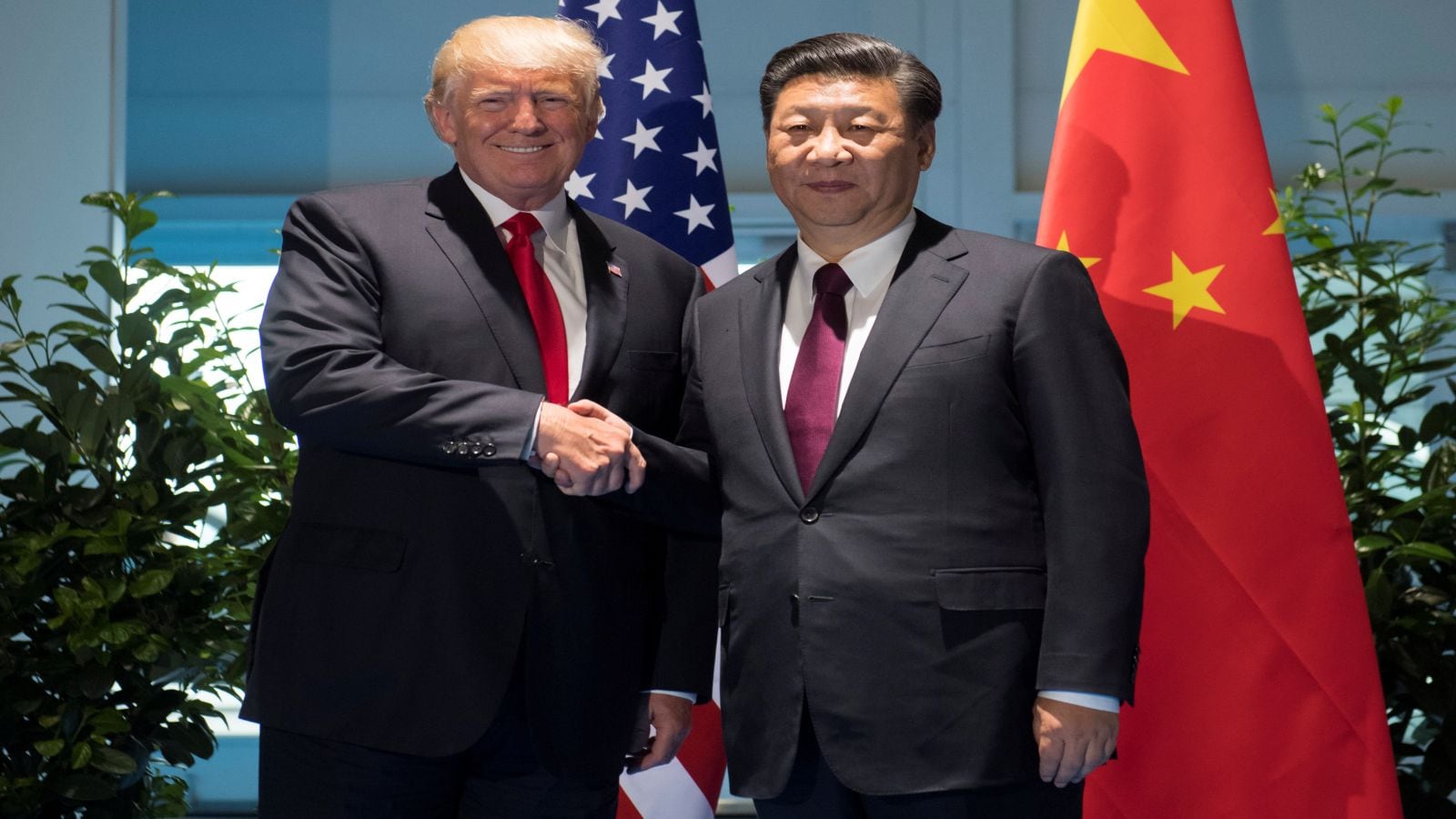
Aviation has always been the preferred currency of US-China diplomacy. When tensions flare, orders are canceled or redirected toward Toulouse. When a thaw is needed, a massive Boeing purchase is traditionally used as a signaling device. This current 200-jet agreement suggests a calculated cooling of rhetoric. Beijing knows that the US aerospace industry is a massive employer across dozens of states, making Boeing one of the most effective lobbying voices in the halls of Congress.
However, the strategy is not without risks. The US government continues to tighten restrictions on high-end semiconductor exports to China, a move that infuriates the Communist Party leadership. By placing this order now, China is testing whether economic interdependence can still be used as a shield against further sanctions. It is a game of "airplane diplomacy" where the stakes are measured in aluminum, carbon fiber, and political capital.
Beyond the Order Book
The numbers look impressive on a spreadsheet, but the execution remains fraught with complexity. Boeing has spent the last several years struggling to regain the trust of international regulators and airlines alike. The 737 MAX, which will likely comprise the bulk of this 200-plane deal, became a symbol of corporate negligence following two tragic accidents and subsequent groundings. While the aircraft is back in service globally, the shadow of those failures persists.
Supply Chain Bottlenecks
Even with a signed contract, Boeing faces the Herculean task of actually building these planes. The global supply chain for aerospace parts is still reeling from labor shortages and material scarcities. Titanium, essential for landing gear and engine components, has become harder to source since the invasion of Ukraine. If Boeing cannot ramp up production to meet this new demand, Airbus stands ready to snatch the capacity.
- Engine Availability: Both CFM International and Pratt & Whitney have dealt with durability issues and delivery delays.
- Labor Expertise: The retirement of veteran engineers has left a gap in manufacturing tribal knowledge.
- Regulatory Oversight: The FAA has increased its presence on Boeing’s factory floors, slowing down the pace of "delivery-ready" sign-offs.
The Comac Shadow
While the 200-plane deal secures Boeing’s immediate future in the region, the long-term outlook is increasingly crowded. The Comac C919 is no longer a paper project; it is flying commercial routes within China today. Beijing’s ultimate goal is self-sufficiency. They want to break the Western duopoly. Every Boeing or Airbus jet purchased today is viewed by Chinese planners as a bridge to a future where they no longer need to write checks to American or European companies.
Boeing’s strategy involves making itself indispensable before that transition can happen. By embedding its maintenance, training, and digital flight deck systems into the Chinese ecosystem, Boeing creates a level of technical "lock-in" that is difficult to reverse. Pilots trained on Boeing avionics and mechanics certified for Leap-1B engines represent a massive infrastructure that favors the incumbent.
Internal Pressure and Quality Control
The timing of this Chinese interest coincides with an internal crisis at Boeing. Following recent incidents involving door plugs and manufacturing defects, the company is under more scrutiny than at any point in its history. Some analysts argue that a massive influx of orders from China could actually be a distraction. If the company prioritizes hitting delivery targets for Beijing over fixing the fundamental culture of its production lines, it risks further reputational damage.
Investors are watching the "cash-burn" metrics closely. Boeing needs the advance payments and delivery milestones associated with this deal to stabilize its balance sheet. The company has taken on significant debt to survive the MAX grounding and the pandemic. A multi-billion-dollar infusion from China is a lifeline, but one that comes with strings attached. Beijing is a notoriously difficult customer, often demanding local assembly or technology transfer as part of the price of admission.
The Role of the 787 Dreamliner
While the 737 MAX handles the short-haul routes, the 787 Dreamliner is the crown jewel of the deal for long-haul international travel. China’s "Belt and Road" initiative requires reliable, fuel-efficient wide-body jets to connect Beijing and Shanghai with markets in Africa, Southeast Asia, and Europe. The Dreamliner’s fuel efficiency is unmatched in its class, providing the margins Chinese carriers need to compete with Middle Eastern giants like Emirates or Qatar Airways.
Evaluating the Counter-Arguments
Critics of the deal suggest that the US should not be selling high-tech assets to a strategic competitor. They argue that the dual-use nature of aerospace technology—where commercial innovations often bleed into military applications—makes these deals a security risk. However, the commercial aviation sector is highly regulated. The engines and avionics suites on these planes are "black-boxed," meaning Chinese engineers cannot easily reverse-engineer the proprietary code or metallurgy without triggering massive international legal consequences.
Furthermore, if the US blocks Boeing from selling to China, the result isn't a "win" for American security; it’s a windfall for Airbus. The European consortium has already established a final assembly line in Tianjin, giving them a significant home-court advantage. For Boeing to remain competitive, it must be allowed to participate in the Chinese market, or it risks becoming a regional manufacturer relegated to North American and certain European routes.
Operational Reality on the Ground
For the airlines themselves—Air China, China Eastern, and China Southern—this isn't about politics. It’s about seat-mile costs. The Chinese aviation market is notoriously price-sensitive. If an airline can save 15% on fuel by switching to the latest Boeing airframe, they will do it. The fleet commonality also plays a massive role. If a carrier already has 300 Boeing jets, the cost of retraining thousands of pilots to fly Airbus is a logistical nightmare that can take a decade to resolve.
Boeing’s advantage in China has always been its deep-rooted service network. They have spent forty years building relationships with Chinese maintenance crews and regulators. That institutional memory is something that cannot be replicated by a new entrant overnight. The 200-plane deal is a validation of that long-term investment, proving that despite the political noise, the technical and economic bonds between the two nations' aviation sectors remain remarkably resilient.
The success of this deal will ultimately depend on the stability of the 737 production line in Renton, Washington. If Boeing can prove that its "safety-first" pivot is more than just a PR slogan, it will secure its place as the primary architect of China’s skyward expansion. If it stumbles, it won't just be losing a contract; it will be surrendering the future of the industry to a competitor that is patient, well-funded, and increasingly capable of building its own wings.
The era of easy growth for Western aerospace in the East is over, replaced by a grueling contest of technical reliability and geopolitical endurance. Boeing must now build these 200 planes with a level of precision that leaves no room for doubt, because the world—and Beijing—is watching every bolt and rivet.